Maddow: Hegseth’s Firings Harm Military Safety Net
Rachel Maddow criticizes Pete Hegseth's "frenzy of firings" of top U.S. military leaders, arguing it undermines the military's ability to withstand political incompetence. This disruption, she warns, occurs at a critical time for national security, weakening the nation's defenses.

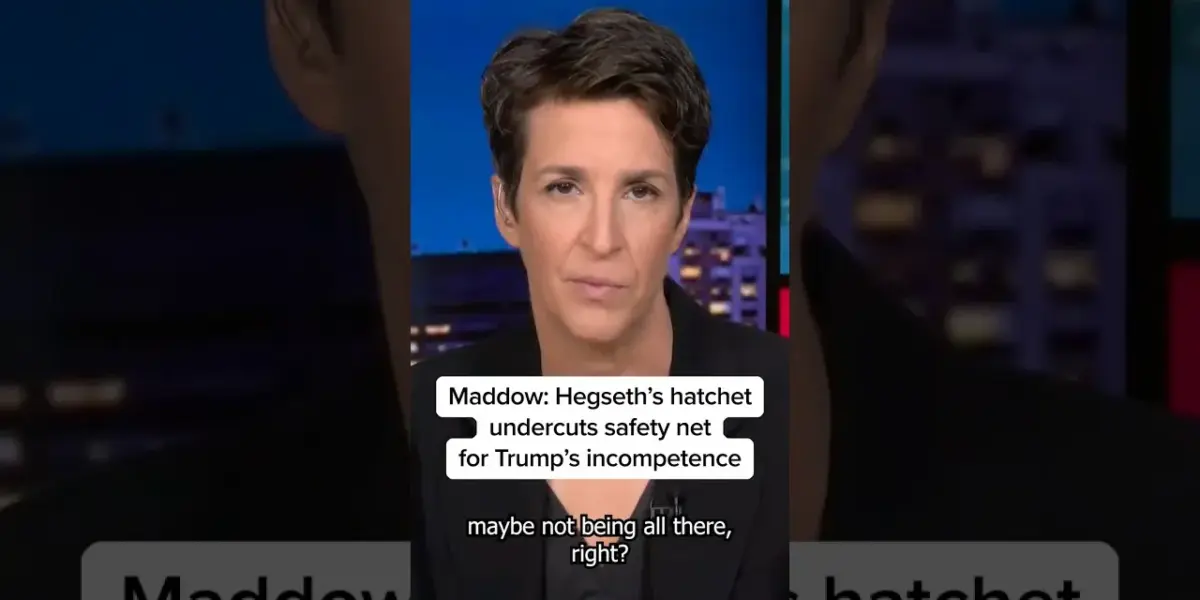
Maddow: Hegseth’s Firings Harm Military Safety Net
Rachel Maddow, in a recent commentary, has raised serious concerns about the impact of recent personnel changes within the U.S. military leadership. She argues that the actions of Pete Hegseth, specifically his role in the dismissal of top military officials, are weakening the very safety net designed to protect the country from political incompetence. This comes at a particularly critical juncture for national security.
Undermining Military Resilience
Maddow highlights a historical pattern: the U.S. military has often been able to withstand leadership shortcomings from politicians, including figures like Donald Trump. This resilience is usually built on a foundation of experienced and stable military command. However, Maddow suggests that the current wave of dismissals, driven by what she describes as Hegseth’s “frenzy of firings,” is actively dismantling this crucial support system.
“The U.S. military’s typical resilience to poor leadership by politicians like Donald Trump and Pete Hegseth is undercut at the worst possible time by the Hegseth’s frenzy of firings of top U.S. military leadership.”
This sentiment implies that while politicians may make mistakes or lack expertise, the professional military leadership usually provides a buffer. By removing these experienced leaders, the nation becomes more vulnerable to the negative consequences of political misjudgment. Maddow frames this not just as a personnel issue but as a direct threat to operational effectiveness and strategic stability.
Timing and National Security
The timing of these widespread firings is a central point of Maddow’s critique. She emphasizes that such actions are taking place “at the worst possible time.” This suggests a period of heightened geopolitical tension or significant ongoing military operations where a steady hand at the helm is most needed. The removal of seasoned leaders during such times can create uncertainty, disrupt established strategies, and potentially embolden adversaries.
When experienced military commanders are replaced hastily or without clear justification, it can send mixed signals both domestically and internationally. Allies might question U.S. commitment and stability, while potential adversaries might see an opportunity to exploit perceived weaknesses. This instability at the top can trickle down, affecting morale and operational readiness throughout the armed forces.
The Role of Pete Hegseth
Pete Hegseth is identified as a key figure in this disruption. Maddow’s description of his actions as a “frenzy of firings” paints a picture of rapid and perhaps indiscriminate dismissals. While the transcript doesn’t detail the specific reasons for these firings or Hegseth’s exact position of authority, it clearly positions him as the driving force behind the changes. The implication is that his personal agenda or political motivations are overriding the need for stable, experienced military leadership.
The commentary raises questions about the vetting process for high-level appointments and the influence of political appointees over military professionals. It suggests a potential conflict between political loyalty and professional competence, with the latter being sacrificed in the current climate. This dynamic can lead to a military force that is less capable of executing its missions effectively and less prepared to advise civilian leadership on critical security matters.
Broader Implications for Governance
Beyond the immediate impact on the military, Maddow’s analysis points to a larger issue concerning the relationship between political leadership and institutional strength. The military, as a vital national institution, relies on a degree of insulation from partisan politics to maintain its effectiveness. When this insulation is eroded, it can set a dangerous precedent for other government agencies.
The transcript implicitly warns that a pattern of prioritizing political alignment over expertise can weaken the entire governmental apparatus. This could lead to a decline in the quality of decision-making across the board, making the nation more susceptible to crises, both at home and abroad. The effectiveness of the U.S. in navigating complex global challenges is directly tied to the strength and stability of its core institutions.
Looking Ahead
Rachel Maddow’s commentary serves as a stark warning about the potential consequences of politicizing military leadership. The coming months will be crucial in observing whether these concerns are addressed and whether a more stable command structure can be re-established. The nation’s security and its standing in the world may depend on how these leadership challenges are resolved.
Source: Maddow: Hegseth's hatchet undercuts safety net for Trump's incompetence (YouTube)

Related Articles
Trump Faces Backlash as Allies Criticize His War Strategy
Donald Trump is facing increasing criticism from allies and political figures over his handling of a foreign conflict, with concerns mounting about his mental stability and decision-making. His wife, Melania Trump, has entered the discourse, calling for testimony from Epstein survivors, while figures like Marjorie Taylor Greene question his fitness for office. Reports also highlight issues with military preparedness and Trump's unique approach to international negotiations.
Rutte Faces Backlash: Trump Allies Criticize NATO Chief
NATO Secretary General Jens Stoltenberg's remarks on global safety and Iran's nuclear program have drawn fire from Trump allies. Former State Department official Christian Whiton called Stoltenberg the "odd man out" in Europe, questioning the substance behind his supportive words for U.S. policy. The debate also raises questions about potential U.S. troop realignments within the NATO alliance.
Canadian MP’s Fiery Speech Challenges U.S. Leadership
Former Canadian MP Charlie Angus delivered a powerful speech in Ottawa, criticizing Donald Trump's actions and urging global democratic action. He outlined ten steps for Canadians to protect their sovereignty and democracy.