25th Amendment: A Constitutional Safety Net Tested
Congressman Jamie Raskin breaks down the 25th Amendment, explaining its purpose and how Section 4 could be used. He discusses its limitations when dealing with loyalist cabinets and compares it to impeachment. Raskin also touches on transparency issues and legal battles.

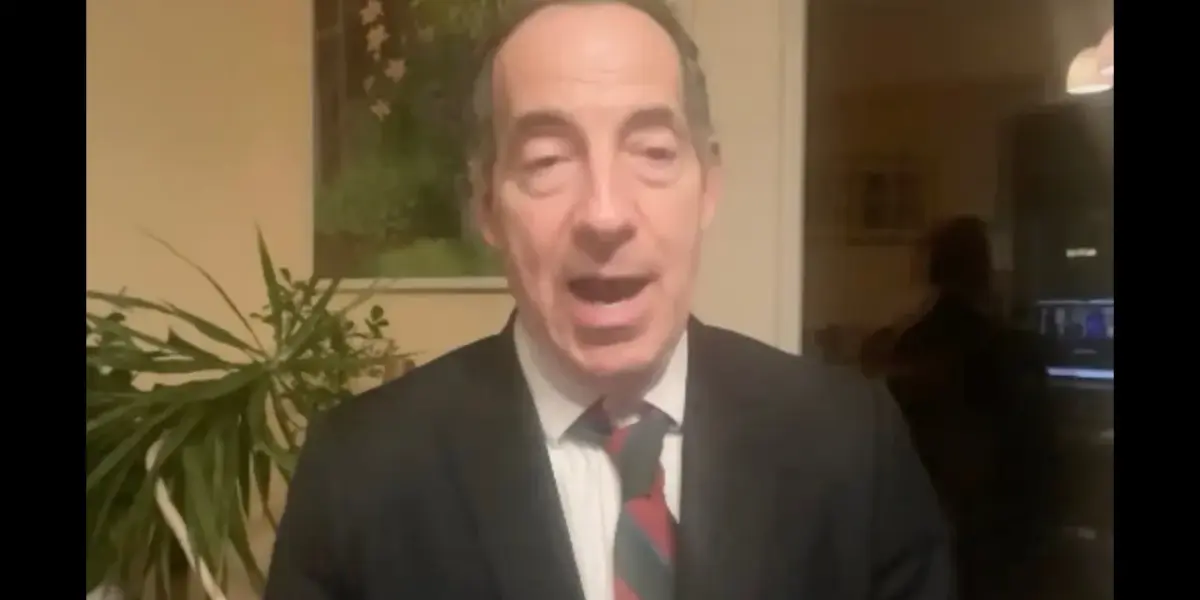
Congressman Raskin Explains the 25th Amendment’s Role
The discussions around Donald Trump’s presidency often brought up the 25th Amendment, a part of the U.S. Constitution designed to handle presidential disability or death. Congressman Jamie Raskin recently explained the amendment’s purpose and how its different sections work. He highlighted that the Constitution wasn’t originally built for someone like Trump, who he believes puts a lot of stress on the system. However, Section 4 of the 25th Amendment might be the closest tool available for dealing with a president who is unable to do their job.
Understanding the 25th Amendment
The 25th Amendment was added to the Constitution in 1967. Its main goal is to ensure stability and continuity in government. Here’s a breakdown of its key sections:
- Section 1: This section clarifies that if the president dies, resigns, or is removed from office, the Vice President immediately becomes the President. Before this, it wasn’t always clear if the Vice President was just acting president or the full president.
- Section 2: If the office of Vice President becomes empty, the President can choose a new Vice President. This choice must then be approved by a majority vote in both the House of Representatives and the Senate.
- Section 3: This deals with temporary presidential disability. Presidents can voluntarily transfer their powers to the Vice President if they are unable to perform their duties for a short time. This has been used when presidents needed to undergo medical procedures, like a colonoscopy, where they would be under anesthesia. They willingly sign over power until they recover.
- Section 4: This is the section most people were talking about. It allows the Vice President and a majority of the Cabinet to declare that the President is unable to carry out their duties. If this happens, the Vice President takes over as Acting President. The President can challenge this decision, and if they do, Congress must vote on it. A two-thirds vote in both the House and Senate is needed to keep the power with the Vice President.
Challenges and Proposed Solutions
Raskin pointed out a key detail in Section 4: it can be initiated by the Vice President and a majority of the Cabinet, OR by the Vice President and a special body set up by Congress. In 2017 and again in 2020, Raskin introduced legislation to create such a standing body. He envisioned it including former government officials and medical experts. This board would act alongside the Vice President if a crisis arose, whether it was medical, accidental, or psychological.
However, Raskin acknowledged that relying on a president’s cabinet can be difficult if the cabinet members are chosen for their loyalty rather than their judgment. He described some cabinet meetings as embarrassing, with members praising the president in a way that reminded him of Stalinist practices. This loyalty can make it hard for a cabinet to objectively assess a president’s fitness for office.
The Constitution is definitely not custom-built for somebody like Donald Trump. It’s taken us, you know, two and a half centuries to get to a president um who is imposing this kind of stress on our constitutional system.
Impeachment vs. the 25th Amendment
The conversation also touched on impeachment as another way to address presidential misconduct. Raskin noted that impeachment, which is for treason, bribery, or other high crimes, is a long process. It requires a majority vote in the House and a two-thirds vote in the Senate for conviction. This makes it less ideal for immediate emergencies.
He recalled the effort to impeach Trump after the January 6th Capitol attack. Even though the House passed a non-binding resolution calling on Vice President Pence to invoke the 25th Amendment, Pence refused. The subsequent impeachment trial, which Raskin helped lead, failed to convict Trump in the Senate, partly because some Republicans, like Mitch McConnell, felt they couldn’t try a former president, despite historical precedent.
Broader Checks and Balances
Beyond formal constitutional mechanisms, Raskin discussed other checks on presidential power. Elections are a crucial tool. He mentioned that Democrats have been performing well in recent elections, suggesting voters are responding to the political climate. He also pointed out that the military has a duty to reject unlawful orders, and he believes there are still individuals in the military who would uphold their oath to the Constitution.
Even figures outside the typical political spectrum, like Tucker Carlson, have acknowledged that the military must defy illegal orders, such as those that would lead to war crimes. Raskin emphasized the importance of the First Amendment rights—freedom of speech and assembly—as ways for people to organize and speak out across party lines. He believes a political party that stands for constitutional democracy and the rule of law can offer a home for these concerned citizens.
Legal Battles and Transparency
The discussion also shifted to legal matters, specifically concerning former Attorney General Pam Bondi and the Department of Justice (DOJ). Raskin questioned the DOJ’s reasoning for allowing Bondi to avoid a deposition related to the Epstein files. He argued that if a subpoena names an individual, that person must appear, regardless of their former title.
Raskin suggested that Bondi might be better off invoking the Fifth Amendment (the right against self-incrimination) rather than executive privilege, especially if she was involved in a cover-up. He explained that executive privilege can only be invoked by the president and applies in very specific circumstances, usually regarding advice given to the president. He also noted that claiming privilege for routine questions, like stating one’s name, is not permissible.
He expressed concern that the DOJ seems to be engaged in a cover-up, failing to fully comply with the Epstein File Transparency Act. The act requires the release of all files, but the DOJ has only provided half, with many pages redacted. Raskin believes that if Bondi or others invoke the Fifth Amendment when asked about their actions, it could be seen as an admission of wrongdoing and could lead to future investigations.
Why This Matters
The conversation around the 25th Amendment and the legal challenges involving figures like Pam Bondi highlight the ongoing struggle to maintain accountability and transparency in government. Raskin’s explanation of the 25th Amendment shows that while it provides a framework for dealing with presidential incapacity, its effectiveness can depend on the willingness of key figures, like the Vice President and Cabinet members, to act. The difficulty in impeaching a president and the potential for legal maneuvers to avoid accountability underscore the fragility of democratic checks and balances.
Implications and Future Outlook
The willingness of individuals to take oaths seriously and uphold the Constitution, even when it’s politically difficult, remains a crucial factor. The reliance on elections as a fundamental check on power is evident, with recent Democratic successes suggesting voter engagement. However, the need to protect the integrity of the electoral process itself is paramount, especially given past attempts to undermine it.
The legal battles surrounding transparency, like the Epstein files, show how powerful institutions can sometimes resist public scrutiny. The argument that actions taken by officials, even if they seem to be following legal advice, could still be investigated if they appear to be part of a cover-up, is an important one. Ultimately, the health of a democracy depends on citizens and their representatives demanding accountability and working to ensure that the rule of law is applied equally to everyone, regardless of their position or political power.
Source: Jamie Raskin drops 25th Amendment BOMB on Trump (YouTube)

Related Articles
Trump Faces Backlash as Allies Criticize His War Strategy
Donald Trump is facing increasing criticism from allies and political figures over his handling of a foreign conflict, with concerns mounting about his mental stability and decision-making. His wife, Melania Trump, has entered the discourse, calling for testimony from Epstein survivors, while figures like Marjorie Taylor Greene question his fitness for office. Reports also highlight issues with military preparedness and Trump's unique approach to international negotiations.


Rutte Faces Backlash: Trump Allies Criticize NATO Chief
NATO Secretary General Jens Stoltenberg's remarks on global safety and Iran's nuclear program have drawn fire from Trump allies. Former State Department official Christian Whiton called Stoltenberg the "odd man out" in Europe, questioning the substance behind his supportive words for U.S. policy. The debate also raises questions about potential U.S. troop realignments within the NATO alliance.


Canadian MP’s Fiery Speech Challenges U.S. Leadership
Former Canadian MP Charlie Angus delivered a powerful speech in Ottawa, criticizing Donald Trump's actions and urging global democratic action. He outlined ten steps for Canadians to protect their sovereignty and democracy.