Humanoid Robots Enter Auto Plant, Reshaping Manual Labor
Humanoid robots are now taking on manual jobs in U.S. factories, with Schaeffler in South Carolina employing a robot named Digit for auto parts handling. While the company reskills human workers for higher-tech roles, experts warn of potential job displacement for lower-skilled workers. Safety and cost remain key factors as the technology continues to advance.

Robots Join Workforce in South Carolina Auto Plant
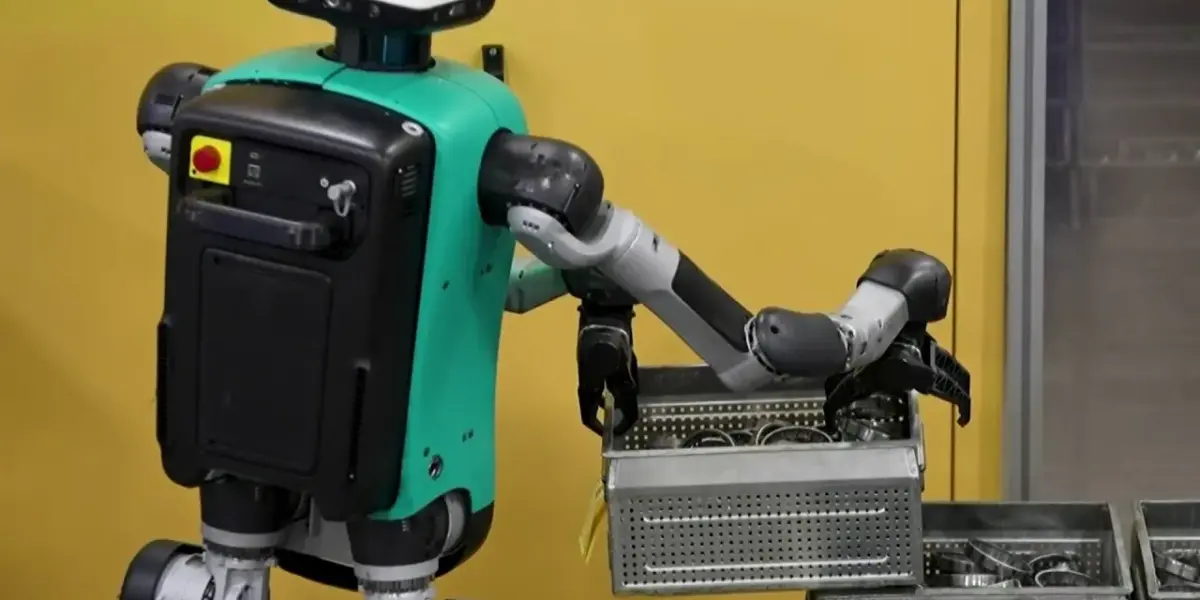
Humanoid robots are no longer just a concept from science fiction; they are now performing manual labor in factories. In Cheraw, South Carolina, the auto parts manufacturer Schaeffler has introduced a new type of worker: a humanoid robot named Digit. This 5-foot-7, 205-pound robot, made by Agility Robotics, is now handling tasks that were previously done by people.
Digit’s Role in the Factory
Digit’s job involves moving metal baskets filled with auto parts from a stamping press to a conveyor belt. The robot squats down, picks up a basket weighing up to 25 pounds, walks a short distance, and places it on a conveyor. This process feeds the parts into a large washing machine for cleaning. Digit uses a lidar sensor in its neck and a camera on its chest to understand how high to lift the basket when placing it on the conveyor belt.
Human Workers Reskilled for New Roles
Dave Kerr, Schaeffler’s President of Humanoid Robotics, explained what happens to the human employees whose jobs are taken over by robots. “That particular person was reskilled,” he stated. “So, so reskilled to, we would call it upskilling to, to a more favorable job or a higher tech job.” Schaeffler plans to use robots like Digit in its 100 plants for repetitive, physical tasks, aiming to keep its human workforce numbers steady by moving employees into new roles.
Economic Impact and Job Displacement
Economist Laura Ulrich notes that robots are likely to first replace workers in lower-skilled, lower-wage jobs. “There is no doubt that the the lowest level of tasks that robots will be able to do first will displace some lower skilled, lower wage workers,” she said. Ulrich hopes that companies will retrain these workers so they can remain employed. However, the rise of AI tools like ChatGPT in office jobs also poses a significant threat to desk-based employment. A Deloitte report found that nearly three out of four companies plan to use autonomous AI agents within two years.
The Growing Presence of Humanoid Robots
Humanoid robots are becoming more common, with estimates suggesting over 2 million will be in use by 2035 and 300 million by 2050. Manufacturing has long used robots for difficult physical labor, and companies like Amazon use them for heavy lifting in warehouses. This trend is partly driven by a need to fill jobs due to an aging population and increased demand for U.S. manufacturing.
Other Companies Embracing Robotics
Other major companies are also investing in humanoid robots. Mercedes-Benz is partnering with Applied Autonomy, and Hyundai is working with Boston Dynamics, known for its dog-like robot, Spot. These companies see robots as a solution to labor shortages in manufacturing. However, some experts believe robots are not yet ready for home use.
Going into the home is a mistake. We want to go into factories first, then work towards consumer-facing service industries, and then go into the home.
Robot Reliability and Future Costs
Engineers highlight the reliability of robots like Digit. “You can throw your back out, you can get sick. Digit doesn’t have to worry about any of that,” said engineer Courtney Bain. While robots don’t need breaks like humans, the company noted that Digit stops when humans are on their lunch break, suggesting a coordinated workflow. The maker of Digit hopes to eventually produce the robot for around $30,000, a cost significantly lower than a human employee’s annual salary.
Safety Concerns Remain
Safety is a major consideration. The video showed Digit operating within a protective enclosure, indicating concerns about potential accidents, such as the robot tripping and falling onto a co-worker. This highlights that while humanoid robots are advancing rapidly, they are not yet fully integrated into all work environments without careful safety measures.
Source: Humanoid robots take over manual job at auto parts plant (YouTube)

Related Articles

AI Clones Replace Workers: China’s New Battleground for Jobs
AI chatbots capable of cloning workers' skills and likeness are emerging in China, raising concerns about job security. While the US lacks federal protections, some states are introducing laws, but the evolving landscape requires vigilance from all workers.


How to Use AI to Boost Your Job Security
Discover how AI is changing the job market and why it might not replace your role. Learn to use AI as a tool to boost your job security and enhance your career.


AI Leaders Warn of Risks, Sparking Global Debate
AI leaders like Sam Altman are warning about job losses and new disease threats, sparking global debate on regulation. Experts discuss the complex motives of AI developers and the real dangers of cyber and biological attacks. The rapid advancements necessitate careful consideration of ethical development and international cooperation.