John Carpenter’s ‘In the Mouth of Madness’ Masterfully Blurs Reality
John Carpenter's 'In the Mouth of Madness' is a mind-bending horror classic that masterfully blurs the lines between reality and fiction. Featuring Sam Neill, the 1994 film explores the terrifying power of storytelling and the subjective nature of sanity.

John Carpenter’s ‘In the Mouth of Madness’ Masterfully Blurs Reality
John Carpenter’s 1994 cult classic, In the Mouth of Madness, continues to haunt audiences with its labyrinthine narrative and existential dread. More than just a horror film, it’s a meta-commentary on storytelling, belief, and the terrifying elasticity of reality itself. Even decades after its release, the film’s intricate web of symbolism and its unsettling descent into madness solidify its status as a genre masterpiece that has only grown in stature with age.
Released in 1994, In the Mouth of Madness was part of a trifecta of Carpenter films that explored themes of encroaching doom and societal decay, alongside In the Mouth of Madness and Village of the Damned. While it may not have set the box office ablaze upon its initial release, grossing a modest $8 million domestically against a reported $8 million budget, its enduring legacy is undeniable. The film has since found a devoted following, celebrated for its audacious meta-narrative and its chillingly prescient exploration of how fiction can bleed into reality.
A Descent into the Unwritten
The film centers on John Trent (Sam Neill), an insurance investigator tasked with locating the famously reclusive and wildly successful horror author Sutter Cane. Cane’s novels, particularly the ominously titled The Hobb’s End Horror, have a devoted, almost fanatical following, with fans rioting for new releases. Trent’s investigation quickly spirals into a nightmarish journey as he finds himself inexplicably drawn into the fictional world of Cane’s stories, specifically the cursed town of Hobb’s End. As Trent delves deeper, the lines between his reality and the horrors he’s reading about begin to blur, leading him to question his own sanity.
Carpenter, a legendary figure in the horror genre, co-composed the film’s score with Dave Davies and Jim Lang. Notably, Carpenter initially aimed to use Metallica’s “Enter Sandman” for the opening, but after failing to secure the rights, he created his own driving rock theme. This choice was deliberate: he wanted to avoid overtly spooky music, allowing the unsettling nature of the world to gradually seep in as Trent’s sanity erodes. This mirrors the film’s meta-commentary; the audience, like Trent, is not given foreboding hints but is instead plunged into the unfolding madness.
Meta-Layers and Ominous Omens
The film is steeped in meta-references, both within its narrative and in its production. The very concept of a book about the film, with in-universe publisher notes and a final page depicting a cinema scene, highlights the film’s self-awareness. Even the barcode on the printed Sutter Kane novels reads “1 2 3 4 5 6 7 8 9 0,” subtly suggesting the artificiality of the world Trent inhabits. The tagline for Cane’s book, “If this book doesn’t scare you to death, then you’re already dead,” echoes the poster for the 1979 film Phantasm, further cementing the film’s playful engagement with horror tropes.
Sam Neill, fresh off his superstardom from Jurassic Park, was a deliberate casting choice. Carpenter crafted the role of John Trent specifically for him after their collaboration on 1992’s Memoirs of an Invisible Man. Neill’s casting leveraged his newfound fame, helping to secure studio backing. His initial confusion upon arriving in Toronto, whisked away via a private car, speaks to the pre-internet era’s staggered release dates and the surreal disconnect he must have felt.
The film is also rich with nods to other horror classics. The character Dr. Stephen Pine (John Glover) shares a name with Dr. Abraham Sapirstein from Rosemary’s Baby. The use of the Carpenters’ “We’ve Only Just Begun” during Trent’s initial breakdown in the asylum is a subtle, ironic wink to the director’s wife and producer, Sandy King, and her name. Furthermore, the casting of David Warner as Dr. Warren provides a delightful meta-connection to The Omen, where Warner played photographer Keith Jennings and Neill later portrayed an adult Damien Thorn in The Omen III: The Final Conflict.
Shattered Realities and Lovecraftian Echoes
Carpenter masterfully employs visual symbolism to convey Trent’s fracturing psyche. The repeated motif of shattering glass—first in the asylum, then when Trent is attacked by an axe-wielding maniac—serves as a potent metaphor for the breakdown of reality and the fragmentation of his mind. This echoes Carpenter’s use of mirrors as portals to evil in Prince of Darkness, suggesting that reality itself can become a gateway to chaos.
The film draws heavily from H.P. Lovecraft, with Sutter Cane’s work being a clear homage to the cosmic horror master. Titles like The Hobb’s End Horror and The Whisper in the Dark directly reference Lovecraft’s “The Horror at Red Hook” and “The Whisperer in Darkness,” respectively. The very title, In the Mouth of Madness, is a direct nod to Lovecraft’s “At the Mountains of Madness.” Cane’s fictional town, Hobb’s End, is a dark parallel to Stephen King’s Castle Rock, further weaving a tapestry of literary influences.
The narrative explores the dangerous intersection of fiction and belief. A news report questioning whether Sutter Cane is a “harmless pop phenomenon or a deadly mad prophet” foreshadows Cane’s own later pronouncements about his writing’s power to shape reality. This theme resonates with Carpenter’s own observations about societal anxieties and the potential for rigid ideologies—or in this case, fictional narratives—to exert an almost religious influence over their followers.
The Unraveling End
As Trent becomes more engrossed in Cane’s novels, the dreamlike and real worlds become indistinguishable. A recurring vision of a mutated police officer and homeless individuals wielding axes, led by Cane’s publisher, culminates in a brutal act of violence that mirrors a scene from Night of the Living Dead, further blurring the lines between fiction and horrific reality. These scenes suggest a societal decay where individuals transform into monstrous beings, consuming one another—a chilling allegory for the breakdown of society.
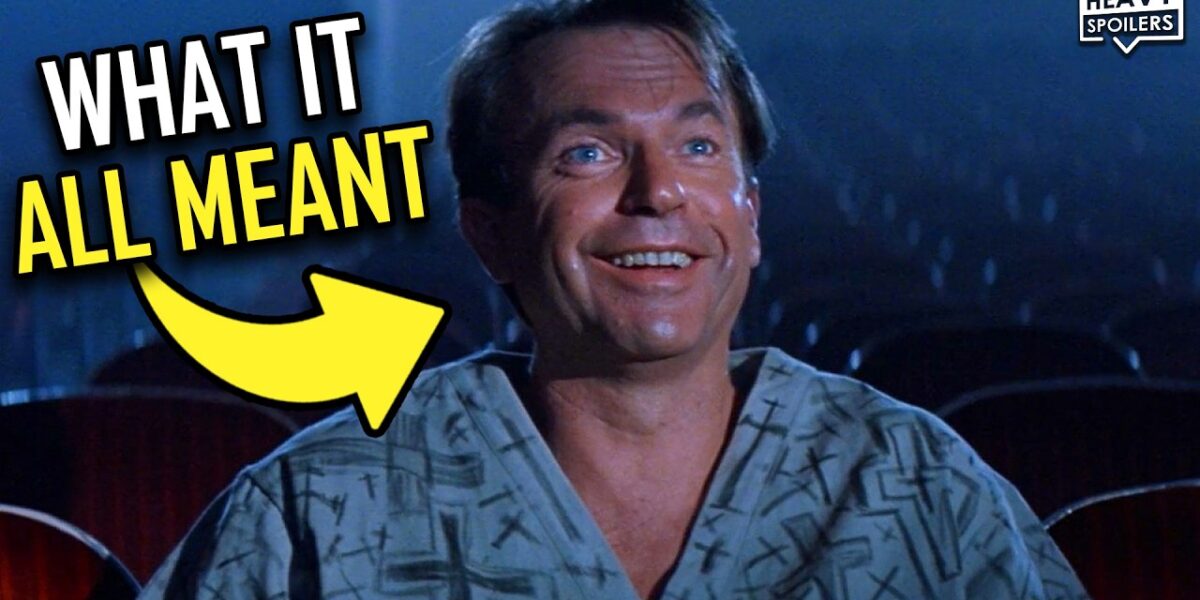
The film’s climax sees Trent finally reach Hobb’s End, a town lost in time and consumed by Cane’s narrative. He witnesses Cane himself, a figure who has seemingly transcended his own creation, revealing that he wrote Trent into existence to be the catalyst for the apocalypse. Trent, realizing he is merely a character in Cane’s story, is driven to the brink. In a final, devastating act of meta-commentary, Trent finds a movie theater playing In the Mouth of Madness. He watches himself on screen, realizing his entire existence has been a fabricated narrative for the amusement of an unseen audience.
The film concludes with Trent, having succumbed to the madness he investigated, weeping uncontrollably in a movie theater as Cane’s apocalyptic narrative unfolds on screen. This ending is a perfect encapsulation of the film’s themes: the power of stories to shape reality, the subjective nature of sanity, and the terrifying possibility that we are all merely characters in a grander, perhaps malevolent, narrative. In the Mouth of Madness remains a testament to John Carpenter’s visionary storytelling, a film that challenges viewers to question the very fabric of their perceived reality long after the credits roll.
Source: IN THE MOUTH OF MADNESS (1994) Breakdown | Ending Explained, Analysis, Hidden Details & Easter Eggs (YouTube)

Related Articles

Dr. Sleep Delivers Chilling Sequel to The Shining
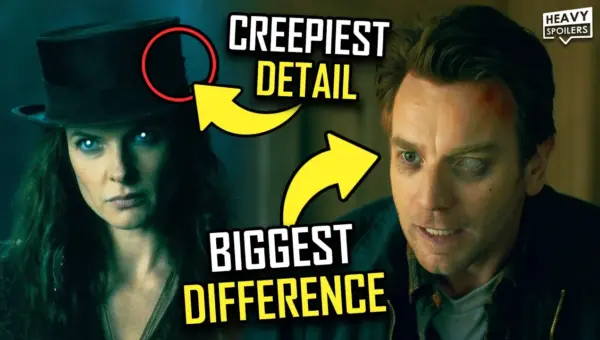
Mike Flanagan's 'Doctor Sleep' offers a complex and haunting sequel to 'The Shining,' masterfully blending Stephen King's novel with Kubrick's iconic film. The story follows a traumatized adult Danny Torrance as he confronts new psychic vampires and his own past, delivering chilling scares and a powerful message of redemption.
Big Trouble: John Carpenter’s Cult Classic Gets Honest
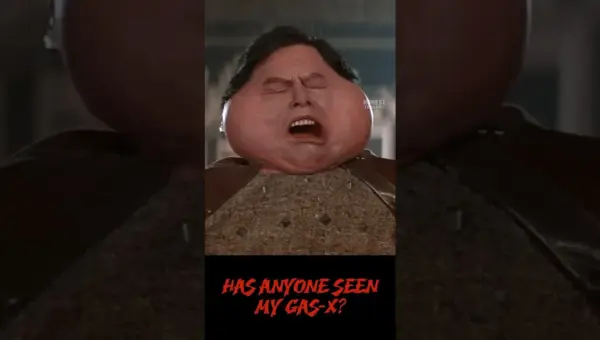
John Carpenter's 1986 cult classic 'Big Trouble in Little China' is revisited by Honest Trailers, highlighting its bizarre humor and Kurt Russell's iconic role. Despite a poor initial reception, the film's unique blend of action and comedy has cemented its status as a fan favorite.


Big Trouble: Why Carpenter’s Cult Classic Still Rules
John Carpenter's 1986 cult classic 'Big Trouble in Little China' is celebrated for its unique blend of action, comedy, and magic. Starring Kurt Russell as the hilariously out-of-his-depth Jack Burton, the film follows a mystical battle in San Francisco's Chinatown. Despite a weak box office start, it has become a beloved favorite for its memorable characters and quotable lines.