Iran Deal Falters: Strait of Hormuz Stays Shut
A recent US-Iran ceasefire is mired in confusion, with conflicting accounts on key issues like the Strait of Hormuz and uranium enrichment. The lack of clear, documented terms has led to public skepticism and questions about the true nature of the agreement.

Ceasefire Woes: Conflicting Accounts Emerge
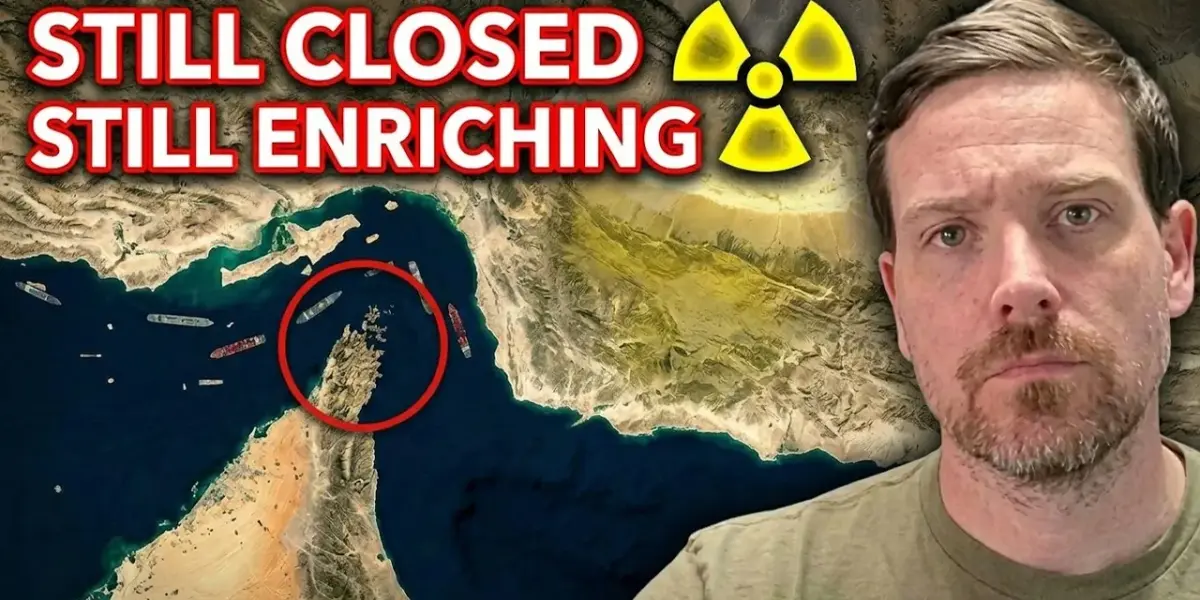
A recent ceasefire between the United States and Iran, announced with much fanfare, is already showing cracks. While the fighting may have paused, the underlying issues remain unresolved. A key point of contention, the Strait of Hormuz, a vital waterway for global oil transport, remains effectively closed. This contradicts a central claim made to secure the initial agreement: that Iran would reopen the strait.
Adding to the confusion, Iran has stated that under the new terms, they will continue enriching uranium. This directly clashes with what many in the US administration, including President Trump, had indicated. It appears that different parties involved in the negotiations are operating with entirely different understandings of what was agreed upon. Some reports even suggest that crucial details were never formally written down, leading to this widespread misinterpretation.
A Deal Built on Shifting Sands?
President Trump announced a two-week ceasefire based on Iran’s 10-point plan. However, this plan, if adopted as presented by Iran, would have been a strategic disadvantage for the US. It did not address Iran’s missile program or its support for regional proxies. Instead, it focused on the US and Israel ceasing attacks on these groups, a stark contrast to the US proposal of cutting ties and funding.
Adding another layer of complexity, US officials later suggested the deal was not based on the publicly circulated Iranian plan, but a different, unreleased 10-point plan. This ambiguity has fueled distrust. Iran, for its part, claims the US and Israel have already violated the spirit of the agreement. They point to continued fighting in Lebanon, an Israeli drone incident over Iranian airspace, and the US stance on uranium enrichment as breaches.
Lebanon: In or Out of the Ceasefire?
The inclusion of Lebanon in the ceasefire agreement is another point of major disagreement. While a joint statement involving Pakistan, a mediator, mentioned Lebanon, both Israel and the US quickly stated it was not part of the deal. Israel, in fact, conducted what it called the largest strikes against Hezbollah in southern Lebanon since the recent fighting began, asserting their right to act independently.
However, in a surprising turn, Israeli Prime Minister Netanyahu later announced plans to enter peace talks with Lebanon. This adds further confusion, suggesting Lebanon might now be considered part of a broader diplomatic effort, even if not explicitly part of the initial US-Iran ceasefire.
The Strait of Hormuz: A Symbol of Unresolved Conflict
The opening of the Strait of Hormuz was presented as a cornerstone of the ceasefire announcement. Yet, shipping data tells a different story. While officials claimed the strait was open, only a handful of ships passed through, far fewer than normal. In fact, the number of vessels decreased after the ceasefire was declared, directly contradicting claims of increased free commerce.
Reports suggest Iran will limit passage through the strait to about 15 vessels per day, all requiring approval from the Iranian Navy. This level of control is a far cry from an open and free waterway. The situation has led to renewed calls for European allies to provide military support, including warships, to ensure passage through the strait. This brings back the very problem the ceasefire was supposed to alleviate.
Public Skepticism and Partisan Divide
The narrative of a US victory has not resonated with everyone. Even within outlets generally supportive of President Trump, like Fox News, op-eds celebrating a win have been met with strong criticism in the comment sections. Readers expressed disbelief, questioning the reality of the victory and pointing to the continued closure of the Strait of Hormuz and Iran’s ongoing nuclear activities.
Comments highlighted the disconnect between official pronouncements and observable facts. Many felt misled, citing the lack of tangible progress and continued Iranian assertiveness as evidence that the deal was not a win. This public skepticism underscores the difficulty in framing the current situation as a clear success, especially when key objectives, like reopening the Strait of Hormuz, remain unmet.
Why This Matters
The apparent lack of clear, agreed-upon terms in the US-Iran ceasefire highlights the dangers of informal diplomacy, especially in high-stakes international relations. When parties operate on different assumptions and crucial details are not documented, misunderstandings can quickly escalate into mistrust and renewed conflict.
The situation in the Strait of Hormuz is particularly critical. As a chokepoint for a significant portion of the world’s oil supply, its closure or restricted passage can have severe economic consequences globally. The inability to secure its free flow, despite claims of a ceasefire, suggests that Iran continues to hold significant leverage in the region.
Historical Context and Future Outlook
Tensions between the US and Iran have a long and complex history, marked by periods of confrontation and fragile diplomatic efforts. The Strait of Hormuz has frequently been a focal point, with both sides using it as a means of exerting pressure. Iran has, in the past, threatened to close the strait, and the US has maintained a naval presence to ensure its openness.
The current situation, with a ceasefire hanging by a thread and conflicting interpretations of its terms, suggests a precarious balance. If the ceasefire collapses, the region could see a further escalation of hostilities. The ongoing debate over Iran’s nuclear program and its regional activities will continue to shape these dynamics. The reliance on undeclared agreements and the public’s growing skepticism point towards a challenging path forward in de-escalating tensions and achieving lasting stability in the Persian Gulf.
The future outlook remains uncertain. The effectiveness of the current, or any future, diplomatic efforts will depend on the clarity of terms, mutual trust, and the willingness of all parties to adhere to documented agreements. Without these fundamental elements, the cycle of conflict and fragile ceasefires is likely to continue.
Source: Strait of Hormuz Stays Shut Despite Ceasefire (YouTube)

Related Articles

Trump Escalates Iran Conflict, Threatens Blockade
Former President Donald Trump has escalated tensions with Iran by threatening to blockade the Strait of Hormuz following failed negotiations led by Senator JD Vance. This move is marked by significant contradictions and raises concerns about global economic stability and the risk of wider conflict.

Trump Blocks Iran’s Oil, Bombers Ready for War
Negotiations between the US and Iran have collapsed, leading President Trump to announce a blockade of the Strait of Hormuz. The US Navy is preparing for potential strikes, with bombers loaded and on high alert.
US Naval Blockade Looms as Iran Talks Collapse
Failed U.S.-Iran talks have led to the potential for a U.S. naval blockade of the Strait of Hormuz. Both sides entered negotiations with leverage, resulting in a stalemate. Key sticking points include the Strait's control, enriched uranium, and frozen Iranian assets. The U.S. may need to recalibrate its strategy beyond military pressure.