Meta Bets Big on AI: Muse Spark Launch Ignites Revenue Hopes
Meta has launched its new AI model, Muse Spark, a key product from its Superintelligence Lab. The company plans to monetize the technology through paid API access, aiming to generate new revenue streams and compete with AI leaders like Google and OpenAI.

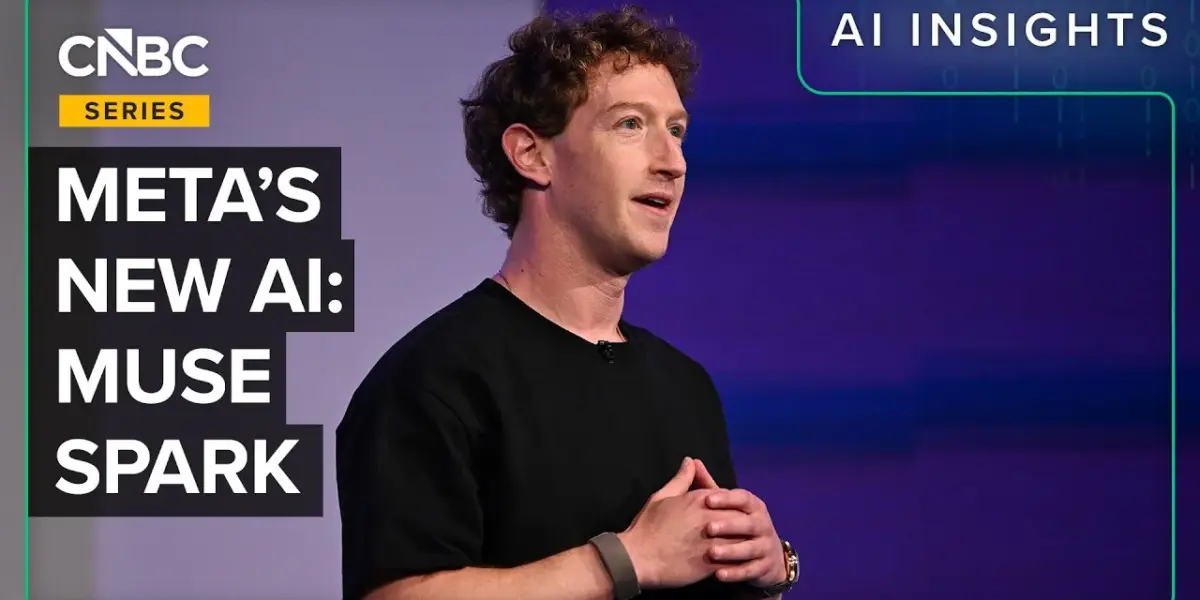
Meta Rolls Out Muse Spark AI, Eyes New Revenue Streams
Meta has launched its newest artificial intelligence model, Muse Spark, a project initially codenamed “avocado.” This advanced AI is now active on the Meta AI app and website. In the coming weeks, it will also become available across Meta’s other popular applications and its AI-powered glasses.
The introduction of Muse Spark is a significant move for Meta. It marks the first product to emerge from Meta’s Superintelligence Lab, led by Chief AI Officer Alexandr Wang. This lab is Meta’s primary research and development division. Meta established it after bringing Wang, the former CEO of Scale AI, onto the team. The company also invested $14 billion in Wang’s previous company.
This launch occurs during a period of intense competition among leading AI companies. It also comes as Meta faces scrutiny over its rapidly increasing spending on AI. The company plans to spend as much as $135 billion on capital expenditures this year. That’s almost double the amount spent last year.
Muse Spark follows less successful AI models from Meta, such as Llama. Meta claims Muse Spark is its most powerful AI model to date. However, instead of releasing a highly advanced model to directly challenge giants like ChatGPT and Google’s Gemini, Meta is taking a more gradual approach. This phased rollout allows Wang to introduce his team’s work systematically.
Muse Spark’s Initial Focus and Future Potential
Currently, Muse Spark appears designed to enhance Meta’s existing applications. It includes a special mode for online shopping. This feature can suggest ideas from content creators that users already follow. Additionally, the AI offers visual coding tools. These tools will let users create simple websites or small games to share with friends.
Meta seems to be managing expectations and addressing potential criticism, especially given its substantial AI investments. The company stated that this release is just the beginning. Larger, more advanced models are already under development. These include a sophisticated “contemplating mode” for Muse Spark. Meta says this mode will compete with top-tier AI models like Gemini, DeepMind, and GPT Pro. This advanced version is expected to be released soon.
Opening Doors to AI Monetization
Considering the massive scale of its AI investments, Meta needs diverse ways to generate income from its AI technology. Muse Spark is designed to open up new avenues for AI-related revenue. The company plans to eventually charge for access to the model’s API (Application Programming Interface).
An API acts like a messenger that allows different software programs to communicate with each other. By offering paid API access, Meta follows a model similar to companies like Anthropic with its Claude AI and Google with Gemini. These companies provide access to their powerful AI models for developers to build upon, often for a fee.
In contrast to Meta’s earlier Llama models, which were freely available to the open-source community, Muse Spark will be proprietary. This means Meta will keep its core technology exclusive. However, Meta has expressed hope for releasing open-source versions of the model in the future.
Long-Term Vision: Superintelligence and Talent Attraction
Looking ahead, Meta clearly aims to be a major player in the advanced AI space. The company wants its AI models to compete directly with the most sophisticated frontier models available. This is crucial for several reasons.
Maintaining a strong reputation in AI helps Meta attract top engineering and research talent. Such technical capabilities are also essential for achieving Meta’s ambitious long-term goals. CEO Mark Zuckerberg and Alexandr Wang envision achieving “personal superintelligence.” This refers to an AI assistant capable of helping any individual with their most important tasks, regardless of location.
While the Muse Spark model released this week may not yet surpass current performance benchmarks, Meta sees it as a foundational step. It will serve as the framework for developing more powerful and capable AI models on the path toward their ultimate vision of personal superintelligence.
Market Impact
Meta’s significant investment in AI, highlighted by the $135 billion capital expenditure forecast, signals a strategic pivot. The launch of Muse Spark, while initially focused on enhancing existing products, lays the groundwork for future monetization through API access. This move positions Meta to compete more directly with rivals who are already generating revenue from their AI platforms. The proprietary nature of Muse Spark, unlike its open-source predecessors, suggests a shift towards controlling its AI assets for commercial advantage. Investors will be watching closely to see how effectively Meta can translate its AI investments into tangible revenue growth and maintain its competitive edge in the rapidly evolving AI landscape.
What Investors Should Know
Investors should understand that Meta’s AI strategy involves massive spending with a long-term payoff horizon. The Muse Spark launch is an early step in this journey. Key points to consider include:
- Increased CapEx: Meta’s projected $135 billion in capital expenditures this year underscores its commitment to AI infrastructure and development.
- Revenue Diversification: The plan to offer paid API access for Muse Spark indicates a strategy to create new income streams beyond advertising.
- Competitive Landscape: Meta is investing heavily to keep pace with rivals like Google and OpenAI in the AI race.
- Proprietary vs. Open Source: The shift to a proprietary model for Muse Spark, compared to Llama, suggests a focus on commercialization.
- Long-Term Vision: The ultimate goal of “personal superintelligence” is a significant undertaking requiring sustained innovation and investment.
While Muse Spark itself might not be a market disruptor today, it represents Meta’s foundational investment in future AI capabilities and revenue generation. The success of this strategy will depend on the development of more advanced models and the adoption of its API services by developers.
Source: Why Meta's New AI Model Is Such A Big Deal (YouTube)

Related Articles

OpenAI CEO Sam Altman’s Truthfulness Questioned in New Report
A new profile in The New Yorker raises serious questions about OpenAI CEO Sam Altman's truthfulness and leadership. The report, based on interviews with over a hundred sources, details allegations of deception and conflicting business practices. This scrutiny comes as OpenAI's influence grows in a largely unregulated AI industry, prompting calls for greater transparency and accountability.


Mind Control Tech Frees Man From ALS Paralysis
A groundbreaking brain implant from Neuralink has enabled Brad Smith, who lost his ability to speak due to ALS, to communicate and control computers using only his thoughts. The technology allows him to type, play games, and even have his AI-cloned voice speak for him, significantly improving his quality of life and independence.


AI Models Can Now Learn Like Humans Do
New AI models can now learn and adapt like humans, building on past knowledge without forgetting. This "continual learning" avoids the costly retraining needed for current AI and promises more versatile and efficient AI systems for various applications.