Heated TV Debate Unpacks Education Crisis, Student Protests, and Government Accountability
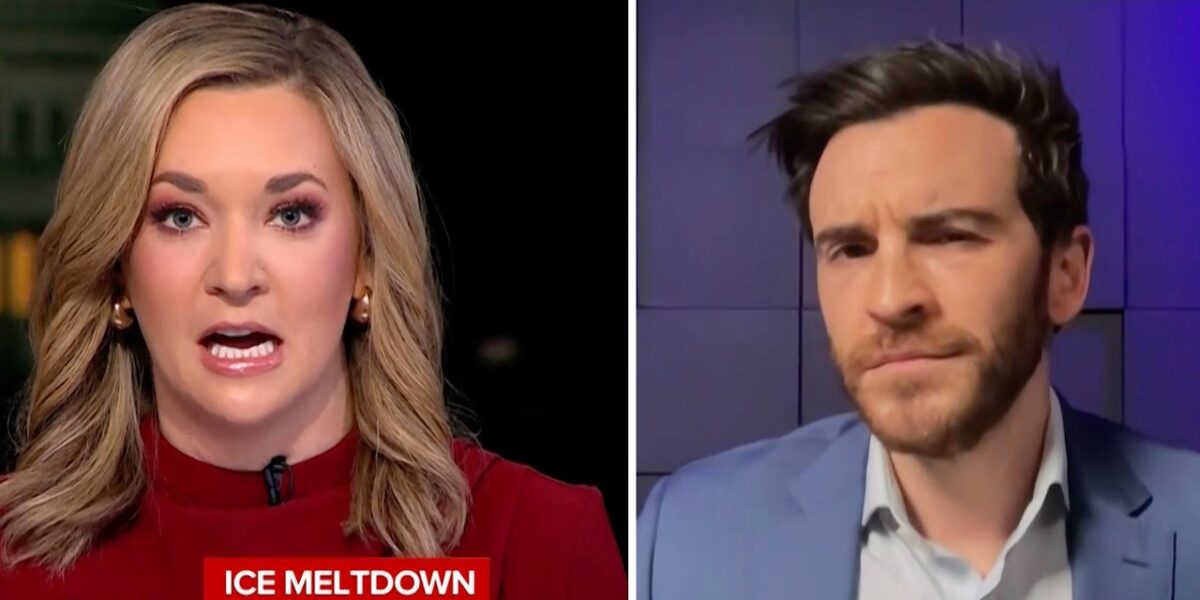
A recent television debate on NewsNation between Brian Tyler Cohen and host Katie Pavlich delved into contentious issues surrounding national literacy rates, education funding, student protests, and the accountability of federal agencies like ICE. The exchange saw Cohen fact-check claims on illiteracy, highlight education disparities between red and blue states, and defend First Amendment rights while challenging perceived hypocrisy on government overreach and the use of force by federal agents.

Heated TV Debate Unpacks Education Crisis, Student Protests, and Government Accountability
A recent television exchange on NewsNation, featuring political commentator Brian Tyler Cohen and host Katie Pavlich, spiraled into a contentious debate, dissecting critical issues ranging from national literacy rates and education funding to the legality of student protests and the accountability of federal agencies like Immigration and Customs Enforcement (ICE). The segment, which began with an accusation of left-wing radicalization of students, quickly pivoted to a fact-check on educational statistics and a sharp critique of government overreach.
The Spark: Student Protests and Literacy Claims
The discussion was ignited by Pavlich, who referenced a recent incident involving an alleged "unprovoked attack on a mother" during an "unpeaceful protest" outside a school. She questioned why "the left" was "radicalizing these students to not only leave school where the country has a 54% rate of not being able to read in order to go out and then attack people." This opening statement laid the groundwork for a broader critique of student activism and educational standards.
Brian Tyler Cohen immediately challenged the host's core premise regarding literacy. While acknowledging the "dismal" state of literacy scores in the U.S., he swiftly corrected the asserted 54% illiteracy rate, clarifying that the actual figure is closer to 19%.
This correction underscored a common challenge in political discourse: the casual dissemination of unsubstantiated statistics that can significantly distort public perception of complex issues. The National Center for Education Statistics (NCES) provides comprehensive data on adult literacy, often highlighting varying levels of proficiency rather than a binary "literate" or "illiterate" classification, but even by the most generous definitions, the 54% figure is not supported by official data.
Education Disparities: Red vs. Blue States
Beyond the initial statistical correction, Cohen steered the conversation towards the geographic distribution of educational challenges. He pointed out that "the lowest literacy scores in this country are in red states run by Republican governors and Republican legislators," specifically citing Oklahoma, Arkansas, Mississippi, and Louisiana. This claim directly countered the host's implied critique of "blue states" and their educational systems.
The host attempted to pivot, asserting that Mississippi, despite its "red state" status, was "much better than the majority of the blue states in this country in terms of education." However, Cohen maintained his stance, citing data from the National Assessment of Educational Progress (NAEP), often referred to as "the Nation's Report Card." According to Cohen, the top five states in NAEP scores are consistently "blue states" such as Massachusetts, New Jersey, Colorado, New Hampshire, and Connecticut. Conversely, he noted that, with the exception of Delaware and New Mexico, the bottom ten states are predominantly "red states," including Alaska, West Virginia, Oklahoma, Alabama, Texas, Florida, Mississippi, and South Carolina.
This point highlights a persistent and often politicized debate about educational outcomes and the impact of state-level governance. Factors such as funding levels, teacher salaries, curriculum choices, and socioeconomic conditions all contribute to these disparities, making education a battleground for ideological and policy differences between political parties.
Republican Policies and Education Underfunding
Cohen further contextualized the education crisis by attributing significant blame to recent Republican administrations, particularly that of former President Donald Trump. He accused the Trump administration of actively undermining the nation's educational infrastructure. His points included:
- The dismantling of the Department of Education, a move often advocated by conservatives seeking to reduce federal involvement in education.
- The illegal withholding of nearly $7 billion in federal education funding in July 2025, which impacted after-school programs, English language learners, and teacher training.
- The rescinding of $2.5 billion in American Rescue Plan elementary and secondary school emergency relief funds that Congress had already authorized.
- The abrupt termination of $106 million in K-12 education funding for Massachusetts, citing an arbitrary deadline, which affected mental health services, tutoring, school security, and HVAC upgrades.
- Threats to withhold federal funds from schools continuing Diversity, Equity, and Inclusion (DEI) initiatives, including those supporting LGBTQ+ students and students with disabilities.
Cohen argued that these actions, totaling hundreds of terminated grants and billions in cuts, demonstrate a "hellbent" approach to ensuring that "kids can't read." This perspective frames the education debate not just as a matter of state performance but as a deliberate political strategy with national implications, linking the underfunding of education to broader conservative policy goals.
Student Activism and the First Amendment
The debate also delved into the legitimacy of student protests. While the host argued that children "shouldn't be leaving school to go and protest ICE when they can't read, write, or do arithmetic," Cohen strongly defended the students' First Amendment rights. He asserted that if "kids want to use what platform they have to step out of school to protest the overreach of a tyrannical government and a lawless rogue agency, then I support their ability to do that."
Cohen drew parallels to historical and contemporary examples of athletes using their platforms for social and political commentary, stating, "We have a long proud history in this country of people like athletes, for example, standing up at the Olympics going back decades and decades and decades." This stance emphasizes the importance of civic engagement and the right to dissent, regardless of age, and challenges the notion that certain groups should "shut up and dribble" or remain silent on political matters.
The discussion also touched upon the issue of violence in protests. Both participants agreed that violence is unacceptable. However, the host's initial framing of the protest as "unpeaceful" and involving "attack[ing] people" contrasted with Cohen's broader defense of peaceful assembly and expression, even when it involves school walkouts.
ICE Accountability and the "Tyrannical State" Paradox
Perhaps the most potent point of contention revolved around the actions of ICE and the concept of government tyranny. Cohen confronted the host with her own 2013 tweet: "Anyone who believes the United States can never be a tyrannical state has their heads in the sand." He then juxtaposed this past statement with her current defense of "a rogue secret police force… Allowed to murder people with impunity."
This dramatic rhetorical move highlighted what Cohen perceived as political hypocrisy. He suggested that the host and her "Republican friends were talking about [tyranny] all these years ago, but apparently they were only upset about the prospect of tyranny happening if it wasn't at the hands of their own political party."
The debate intensified when specific incidents involving ICE were brought up:
- Rene Good: The host claimed Good "arguably tried to run over an ICE officer with her car."
- Alex Prey: Cohen raised the case of Alex Prey, who was reportedly shot by ICE agents. The host attempted to justify this by alleging Prey was violent at a prior protest (kicking a tailgate 11 days earlier) and was "getting in the middle of a federal investigation."
Cohen vehemently rejected the idea that "kicking a tailgate 11 days prior is justification to kill somebody" or that it justifies being "shot at point-blank range 10 times." He dismissed the "ongoing investigation" defense as an excuse that "will amount to nothing." This segment underscored deep concerns about law enforcement accountability, the use of lethal force, and the perceived impunity of federal agencies.
The Broader Implications for American Democracy
The heated exchange on NewsNation is a microcosm of the broader political and cultural divides in the United States. It reflects the challenges of conducting fact-based discussions in a polarized media landscape, where statistics can be weaponized and past statements re-contextualized for political advantage.
Cohen's concluding remarks underscored his core concerns: the importance of demanding accountability from those in power, regardless of political affiliation; the fundamental right to protest and exercise First Amendment freedoms; and the critical necessity of adequately funding education to secure the nation's future. He lamented what he sees as an allegiance to a single political figure (referring to "one man" in the context of MAGA) that overshadows these foundational American principles.
The debate highlights the ongoing struggle to define the balance between individual liberties and government authority, the role of education in a democratic society, and the standards of conduct for federal agencies. As political discourse continues to evolve, the ability to engage with complex issues through evidence-based arguments remains paramount for an informed citizenry and a healthy democracy.
Source: Brian Tyler Cohen SCHOOLS rightwing host ON HER OWN SHOW (YouTube)

Related Articles
States Risk Billions by Rejecting Education Tax Credits
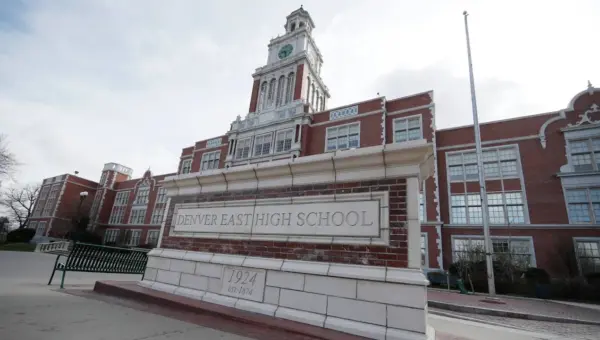
States that decline to join the federal Education Freedom Tax Credit program risk losing billions in potential education funding. This program uses tax credits to encourage private donations for student scholarships, and its rejection limits options for families seeking alternatives to traditional public schools.
Author Urges Democrats to Seize Power, Not Seek Compromise
Brian Tyler Cohen's new book, "The Day After," argues that Democrats must aggressively wield power to protect democracy. It criticizes past Democratic administrations for relying on compromise with Republicans, a strategy the author deems ineffective and dangerous. The book outlines a blueprint for structural reforms and policy changes needed to strengthen democratic institutions.

Gaines Accused of Xenophobia in Immigration Debate
Brian Tyler Cohen challenged conservative commentator Riley Gaines' definition of 'American' during a debate, arguing that qualifying Americanness based on assimilation or political views is un-American. Cohen suggested the focus on immigration is a political distraction from economic failures.