Bondi Dodges Epstein Files Deposition: A Test for Accountability
Former Attorney General Pam Bondi is refusing to appear for a deposition related to the Epstein files, citing her departure from public office. This move has ignited a debate about accountability, with critics arguing that individuals should not be able to evade scrutiny by simply leaving their positions. The situation highlights a potential double standard in how subpoenas are enforced and raises questions about the future effectiveness of congressional oversight.

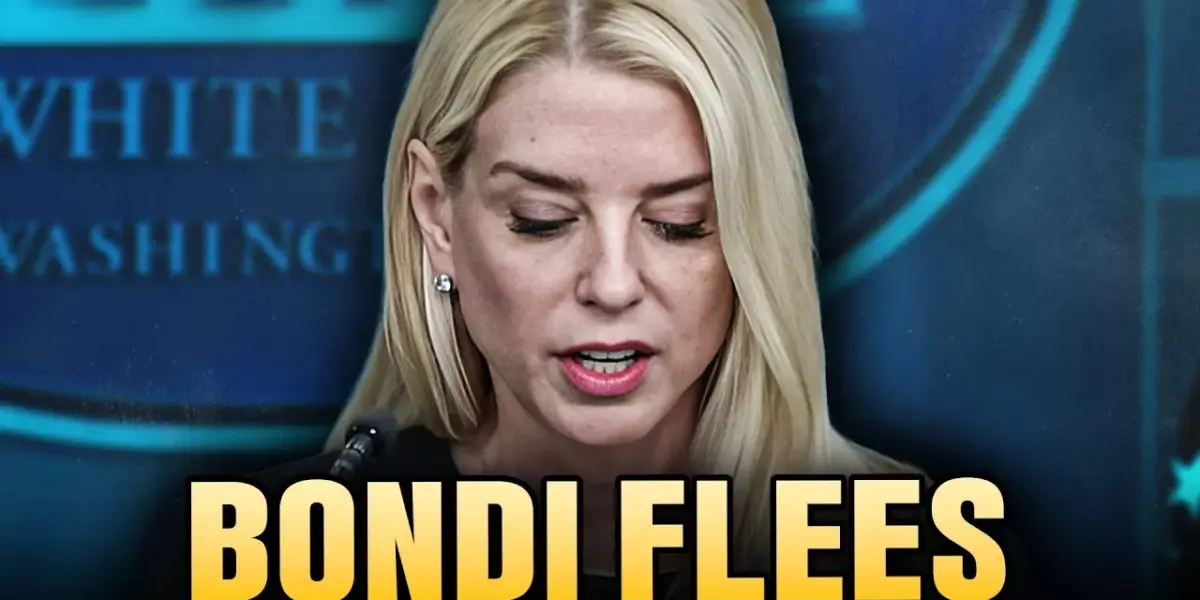
Pam Bondi Skips Epstein Deposition, Raising Questions of Accountability
Former Attorney General Pam Bondi recently announced she would not appear for a deposition related to the Epstein files, scheduled for April 14th. This decision has sparked debate about whether individuals can evade accountability simply by leaving public office. The House Oversight Committee had subpoenaed Bondi by name, not by her former title, leading many to question the validity of her refusal.
The DOJ’s Role and Shifting Standards
The Department of Justice (DOJ) stated that since Bondi is no longer Attorney General, she is not required to appear. This stance contrasts sharply with past actions. A few weeks prior, the same committee threatened to hold individuals in contempt of Congress for refusing subpoenas. Notably, Bill and Hillary Clinton, also no longer in office at the time, eventually complied with their subpoenas under threat of prosecution.
This creates a perceived double standard. When individuals previously refused to testify, the committee was ready to pursue legal action. Now, with Bondi’s refusal, the committee chairman, James Comer, seems to be accepting the DOJ’s reasoning. This has led to accusations that the committee is not applying the same pressure to all individuals, regardless of their past or present positions.
“Leaving office doesn’t mean you get to dodge accountability. Pam Bondi was subpoenaed by name, not by title.” – Nancy Mace
Subpoenaed by Name, Not Title
Critics argue that the subpoena was directed at Pamela Bondi as an individual, not at the office of Attorney General. Nancy Mace, a member of the committee, emphasized this point, stating that leaving office should not be an excuse to avoid answering questions. Even if Bondi were working at a different job, like at McDonald’s, the subpoena issued to her personally would still be valid.
The core of the issue lies in the nature of the subpoena itself. It was addressed to a specific person, Pamela Bondi. The subpoena did not include a clause stating that compliance was dependent on her holding the position of Attorney General on April 14th. Therefore, her departure from that role should not invalidate the legal order to appear.
Bondi’s Past Role and Unfulfilled Obligations
Even though Bondi no longer holds the title of Attorney General, she is still expected to answer for actions taken during her tenure. Congress had tasked her with releasing specific files related to the Epstein investigation. If redactions were necessary, she was legally required to provide explanations for what was removed and why. This legal obligation was reinforced by a law signed by then-President Donald Trump.
The transcript suggests that Bondi has failed to fulfill these obligations. She is being asked to account for her decisions and actions that occurred while she was in a position of power. The argument is that she cannot simply avoid these responsibilities because she is no longer in that specific office. She must still face questioning under oath regarding her past conduct.
Why This Matters
This situation highlights a critical tension between public service and personal accountability. When individuals hold positions of power, they are entrusted with significant responsibilities. The public has a right to know how those responsibilities were handled, especially in cases involving sensitive investigations like the Epstein case.
If former officials can avoid scrutiny simply by leaving their posts, it could create a loophole that undermines the oversight functions of government. It raises questions about the effectiveness of subpoenas and the willingness of government bodies, like the DOJ, to support congressional investigations. The principle of accountability should extend beyond the duration of one’s public service, particularly when past actions have significant implications.
Implications and Future Outlook
The handling of Bondi’s deposition could set a precedent for future investigations. If individuals can successfully avoid testifying by claiming they are no longer in office, future subpoenas might become less effective. This could embolden others to refuse cooperation, making it harder for Congress to gather information and conduct oversight.
Chairman Comer faces pressure to either enforce the subpoena or explain why the committee is not doing so. His response will signal how seriously the committee takes its investigative powers and its commitment to holding individuals accountable for their actions while in public office. The outcome could influence how future subpoenas are issued and enforced, potentially leading to clearer guidelines on accountability for former public servants.
Historical Context
The Epstein case has been a subject of intense public interest and numerous investigations. The individuals involved, and those who interacted with them, often face scrutiny regarding their conduct. Historically, congressional committees have used subpoenas as a key tool to gather testimony and evidence. Refusal to comply can lead to serious consequences, including charges of contempt of Congress.
The comparison to the Clintons’ situation is significant. When powerful figures are perceived to be evading accountability, it can fuel public distrust. The committee’s actions, or inactions, in this instance will be closely watched and judged against its previous efforts to compel testimony from other individuals, regardless of their political affiliation or current employment status.
Source: Bondi RUNS AWAY From Epstein Files Deposition (YouTube)

Related Articles
Melania Trump Denies Epstein Ties in Bizarre Statement
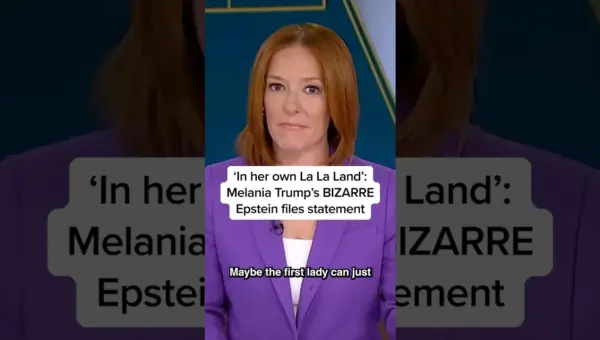
Former First Lady Melania Trump has issued a statement denying any direct involvement or knowledge of Jeffrey Epstein's crimes. In a review of her remarks, commentator Jen Psaki described Trump's statement as an attempt to distance herself from the scandal while portraying herself as a survivor advocate. The statement comes as legal documents related to the Epstein case continue to be unsealed, bringing numerous names into public view.


Melania Trump’s Shock Epstein Statement Stuns Observers
Melania Trump has surprised observers with a statement on the Jeffrey Epstein files, a move analysts are dissecting from multiple angles. Explanations range from strategic damage control to a potential act of sabotage or simply "pure chaos" stemming from her typically withdrawn political stance.


Melania Trump Calls for Public Hearings for Epstein Survivors
First Lady Melania Trump has called for public Congressional depositions of Jeffrey Epstein's survivors, a move that departs from the White House's previous calls to move on from the issue. The statement, made with little prior notice, also addressed her own past acquaintance with Epstein, denying any close relationship. Her remarks come as former Attorney General Pam Bondi refuses to comply with a Congressional subpoena related to the Epstein files.