Vance’s Ceasefire Claim Collides with Lebanon’s Harsh Reality
Senator JD Vance suggested a ceasefire included Israeli restraint in Lebanon, but Israel's subsequent actions contradicted this claim. Major strikes in Lebanon and Iran's closure of the Strait of Hormuz highlight the region's volatile dynamics and the challenges of de-escalation.


Vance’s Ceasefire Claim Collides with Lebanon’s Harsh Reality
Senator JD Vance recently suggested a ceasefire agreement in the Middle East included a promise from Israel to exercise restraint in Lebanon. However, events unfolding immediately after his statement paint a starkly different picture, raising serious questions about the effectiveness and nature of any such understandings.
A Senator’s Statement and an Immediate Contradiction
Senator Vance stated that Iran might have misunderstood the terms of a ceasefire, believing it extended to Lebanon. He asserted that the U.S. had made no such promise. Vance then added that Israel, according to his understanding, had offered to moderate its actions in Lebanon to support ongoing negotiations. This statement implied a degree of control and a willingness to de-escalate on Israel’s part.
Yet, almost immediately after Vance’s remarks, Israel launched significant military operations in Lebanon. Reports indicate extensive Israeli strikes hit Lebanon, including evacuation orders for Beirut and ground operations in key southern towns. The scale of these attacks, with nearly 100 strikes in a short period, directly challenged the notion of Israeli restraint.
Escalation in Lebanon and the Strait of Hormuz
The transcript details a rapid escalation following Vance’s comments. Israeli forces reportedly conducted numerous strikes, leading to substantial casualties. This intense military activity seemed to disregard any purported agreement for de-escalation in Lebanon.
Following these events, Iran reportedly took action by reclosing the Strait of Hormuz. This crucial waterway, vital for global oil transport, saw traffic reduced drastically. From over 100 vessels daily before the conflict’s launch, it dropped to only about four vessels per day. This move by Iran signals a significant response to the perceived breakdown of any ceasefire or de-escalation efforts.
Historical Context of the Region
The Middle East has a long and complex history of conflicts and fragile peace agreements. Ceasefires in this region are often temporary and subject to intense interpretation and violation by different parties. The dynamics between Israel, Lebanon, and Iran are particularly fraught, with each entity pursuing its own strategic interests.
The Strait of Hormuz has historically been a point of contention and a potential flashpoint. Iran has previously threatened to close it, recognizing its strategic importance in exerting pressure on adversaries and the global economy. Any disruption here has immediate and far-reaching consequences for international trade and energy markets.
Why This Matters
This situation highlights the critical importance of clear communication and verified information in international diplomacy, especially in volatile regions. When public statements about sensitive agreements are immediately contradicted by observable actions on the ground, it erodes trust and can escalate tensions. It also raises questions about the intelligence and information flow available to policymakers.
The events underscore the unpredictable nature of conflicts in the Middle East. Agreements, even if they exist, can be quickly undermined by actions perceived as violations. The reclosing of the Strait of Hormuz demonstrates Iran’s willingness to use economic pressure as a retaliatory measure, impacting global stability.
Implications and Future Outlook
The immediate aftermath of Senator Vance’s statement suggests a significant disconnect between diplomatic rhetoric and military reality. If Israel did not offer to check itself, or if that offer was disregarded, it points to a lack of control or a different strategic priority.
The situation also implies that Iran’s nuclear program, specifically its enriched uranium capabilities, remains a significant concern. The transcript notes that the ceasefire did not halt Iran’s progress in this area. This suggests that even if military actions were to de-escalate, the underlying nuclear issue persists, potentially leading to future crises.
Moving forward, the focus will likely remain on the ongoing military actions in Lebanon and the broader implications for regional stability. The effectiveness of future diplomatic efforts will depend on the ability to establish and maintain clear, verifiable de-escalation measures. The re-opening or continued closure of the Strait of Hormuz will be a key indicator of Iran’s stance and the potential for further escalation.
Source: JD Vance Said This… Then Reality Hit #politics #fyp #new (YouTube)

Related Articles

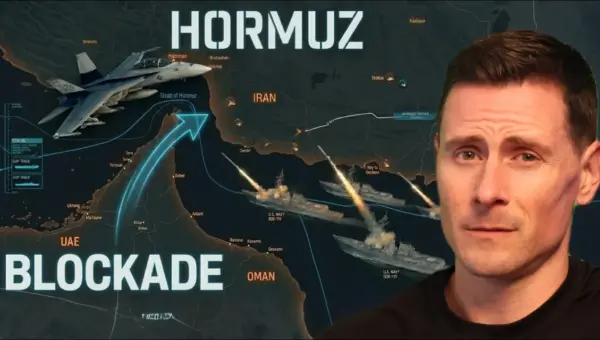
US Navy Blockades Strait of Hormuz After Talks Collapse
The U.S. Navy has launched a naval blockade of the Strait of Hormuz after critical ceasefire talks with Iran collapsed. This move follows accusations of Iranian "extortion" through alleged mine-laying and toll collection in the vital shipping lane. The operation aims to ensure global energy flow and challenge Iran's control over the waterway.

Israel Eyes Lebanon Peace Deal Amid Hezbollah Clashes
Israel is pursuing peace talks with Lebanon while continuing military operations against Hezbollah. An Israeli official expressed hope for a deal, emphasizing the need to dismantle Hezbollah and ensure border security. This dual approach aims to reshape regional stability.

Iran’s AI Trolls Outsmart Trump’s Online War
Iran has turned to AI-generated videos and a relentless online trolling campaign to counter Donald Trump following failed negotiations. This strategy highlights a new form of asymmetrical warfare in the digital age, raising questions about the future of international relations and information control.