The Shining: Kubrick’s Chilling Masterpiece Deconstructed
Explore the labyrinthine horror of Stanley Kubrick's 'The Shining.' This deep dive unpacks the film's unsettling hotel design, psychological terror, and enduring mysteries. Discover hidden details and theories that continue to fuel debate.

The Shining: Kubrick’s Chilling Masterpiece Deconstructed
Stanley Kubrick’s 1980 horror classic, The Shining, continues to haunt audiences decades after its release. Despite Stephen King’s infamous dislike for the adaptation, the film has cemented its place as one of cinema’s most iconic and analyzed horror films. From its labyrinthine hotel layout to its unsettling characters, every element of The Shining is meticulously crafted to induce dread and unease.
A Hotel Designed to Deceive
The Overlook Hotel itself is a character, a sprawling, seemingly impossible structure that disorients both its inhabitants and the audience. Inspired by Stephen King’s own unsettling experience at the Stanley Hotel, Kubrick and his team designed the Overlook with a deliberately illogical layout. Corridors loop back on themselves, doorways lead to nowhere, and rooms overlap in ways that defy architectural sense. This intentional design flaw, as explored in-depth by film analysts, creates a subliminal feeling that something is fundamentally ‘off’ about the hotel, contributing significantly to its eerie atmosphere.
Examples of this spatial trickery abound. The famous bike ride taken by Danny through the hotel’s second floor, where he appears to pass the same balcony multiple times, highlights the impossibility of the hotel’s design. Further examination reveals that doors within corridors don’t align with the exterior views, and the thickness of walls contradicts the number of rooms they supposedly contain. Even the infamous Room 237, a focal point of the hotel’s supernatural activity, is shown to have interior spaces that don’t match its exterior placement, adding another layer to the hotel’s disorienting nature.
Beyond the Shadows: A Different Kind of Horror
Unlike traditional horror films that rely on darkness and cramped spaces, The Shining often presents its horrors in vast, brightly lit spaces. The long, wide corridors of the Overlook, coupled with Kubrick’s signature long takes and centered framing, create an unnerving sense of exposure. Characters are often seen in close-up, forcing the audience into an uncomfortable, prolonged gaze that feels almost voyeuristic. This deliberate choice eschews jump scares for a pervasive psychological tension, making the audience feel as trapped and scrutinized as the characters themselves.
Kubrick’s intention was to create an authentic, lived-in feel rather than a conventionally spooky movie set. The Overlook, with its peculiar layout and expansive, yet unsettling, interiors, was designed to generate unease through its very architecture, a testament to Kubrick’s masterful control over atmosphere.
The Torrance Family: Trapped by Trauma
At the heart of The Shining is the fractured Torrance family. The film delves into the complexities of their isolation and the psychological toll it takes. Stephen King’s novel drew heavily from his own experiences with alcoholism and anger issues, which deeply affected his family life. Kubrick’s adaptation, however, streamlines Jack Torrance’s motivations, a decision that King felt minimized the character’s internal struggles and personal demons, contributing to his initial dissatisfaction with the film.
The concept of ‘shining,’ a psychic ability that allows individuals to perceive supernatural occurrences, is central to the narrative. King’s idea for the term originated from the John Lennon song ‘Instant Karma!’ where ‘We all shine on.’ This concept suggests that people leave an imprint on the world, and the Overlook, a place marked by past atrocities, becomes a nexus for these lingering energies.
The Overlook’s Malevolent Influence
The Overlook is portrayed not merely as a haunted location but as a sentient entity that feeds on psychic energy. It absorbs the souls of those who have suffered or died within its walls, forcing them to relive traumatic events or act out its will. This is exemplified in Doctor Sleep, where Danny encounters his father as a spectral bartender, forever trapped by the hotel’s influence.
The novel details how the Overlook ‘swallows’ the Torrance family, emphasizing its predatory nature. The film suggests that Jack, an alcoholic struggling with his inner demons, was particularly susceptible to the hotel’s manipulation. His forced sobriety at the Overlook awakens his dormant psychic abilities, making him vulnerable to the hotel’s spectral inhabitants and its ultimate goal: to claim Danny’s powerful ‘shine.’
Jack’s past, as detailed in the book, includes instances of extreme violence, such as breaking Danny’s arm and brutally beating a student named George Hatfield, leading to his dismissal from his teaching position. These events, coupled with Wendy’s contemplation of leaving him due to his alcoholism and abusive tendencies, paint a grim picture of his pre-Overlook life. The film hints at this darker past through Jack’s own unreliable narration and his struggle with sobriety, suggesting a cycle of violence fueled by both his personal demons and the hotel’s malevolent influence.
Cycles of Violence and Reincarnation
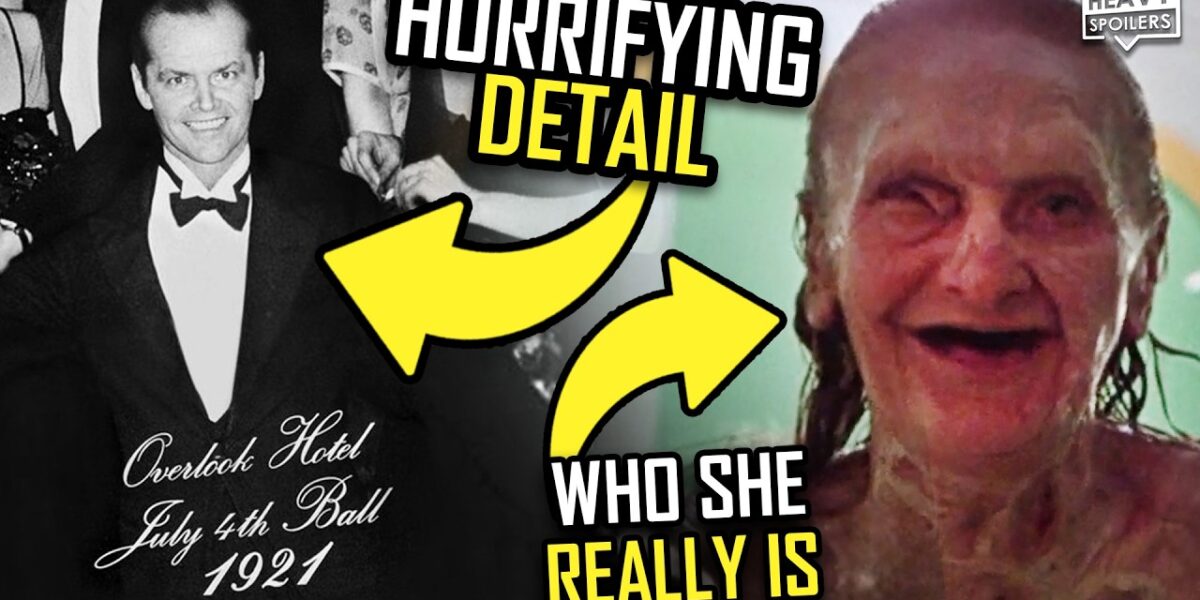
The film’s haunting final photograph of Jack at the Overlook’s Independence Day ball in 1921 has fueled theories of reincarnation. His pose, with one arm raised and the other pointing down, has been linked to occult symbolism, specifically Baphomet. This suggests that Jack, and potentially other characters, may be trapped in a perpetual cycle of rebirth within the hotel’s temporal anomaly.
The recurring motif of the Grady family adds another layer to this theory. The spectral Charles Grady, who axed his twin daughters, shares a name with a previous winter caretaker who also murdered his family. The film presents the twins as menacing figures who appear to Danny, and later a man identifying as Grady appears in the bathroom. This suggests that the hotel may recycle souls, with individuals like Grady and Jack repeating patterns of violence across different timelines.
The line, “You’ve always been the caretaker,” spoken to Jack, and his own feelings of déjà vu, further support the idea that he is part of a recurring cycle. The novel posits that time itself does not function linearly within the Overlook, allowing different eras to coexist simultaneously.
Alternate Endings and Hidden Meanings
An abandoned alternate ending would have seen Danny and Wendy in a hospital, with Mr. Hallorann assuring them that the horrors were not real and that the hotel was perfectly fine. This ending, which offers a more conventional resolution, was ultimately rejected, preserving the film’s ambiguous and terrifying conclusion.
The very name ‘Overlook’ carries a double meaning: it refers to the hotel’s scenic location but also implies a deliberate act of ‘overlooking’ or ignoring the sinister truths lurking within. This plays into the film’s voyeuristic perspective, with the camera often stalking the characters, mirroring the hotel’s watchful, predatory gaze.
Kubrick’s Vision and King’s Discontent
The Shining marked a return to commercial filmmaking for Kubrick after the underperformance of Barry Lyndon. Despite its critical reception at the time, the film has since been re-evaluated and is now considered a masterpiece. However, the rift between Kubrick and King remained, exacerbated by King’s belief that Kubrick fundamentally misunderstood and altered his source material. King’s creation of a more faithful TV miniseries adaptation in 1997 further underscored their divergent interpretations.
Kubrick’s additions, such as the iconic twin girls, are often seen as his own creative imprint on the story. Some interpretations suggest subtle digs at King, like the crushed red beetle near a crash site, potentially referencing King’s novel ‘R’lyeh (Red Rum), though this remains speculative.
Conspiracy Theories and Enduring Mystique
The documentary Room 237 brought to light numerous conspiracy theories surrounding The Shining, ranging from Kubrick’s alleged involvement in faking the moon landing to the film being a metaphor for the genocide of Native Americans or even the Holocaust. While some theories, like the Native American genocide, resonate with elements within the film, others are more speculative.
The Native American burial ground on which the Overlook is built is a significant plot point, with theories suggesting the river of blood represents the repressed history and violence buried beneath the hotel. Visual cues, such as Native American imagery in paintings and on products, along with the chanting-like music, reinforce this interpretation. The Adler typewriter Jack uses, which changes color from tan to blue-gray, has also been linked to the Holocaust, symbolizing the bureaucratic process of extermination.
The film’s enduring mystique is also attributed to its complex editing and the existence of different versions. For years, a cut-down version was prevalent in the UK, omitting key scenes like the skeleton sequence with Wendy. The meticulous craftsmanship and layers of symbolism ensure that The Shining continues to be a subject of fascination and debate, solidifying its status as a landmark achievement in horror cinema.
Source: THE SHINING (1980) Breakdown | Ending Explained, Easter Eggs, Creepy Hidden Details & Film Analysis (YouTube)

Related Articles
Twisted Endings: Movies That Shocked Audiences
From Shutter Island to The Sixth Sense, these films delivered shocking plot twists that redefined their stories. Discover the most ironic movie endings that left audiences stunned.
Movie Secrets You Totally Missed: A Deep Dive
Movie magic is in the details! Discover hidden clues in films like 'Joker,' 'Watchmen,' and 'John Wick' that most viewers miss. These subtle details add layers to the stories and connect cinematic worlds.
These 10 Movies Insulted Audiences’ Intelligence
Some movies just don't respect their audience's intelligence. From nonsensical plots to characters making baffling decisions, these films push the limits of believability. We count down ten movies that assume viewers will just accept anything without question.