Trump’s ‘Peace’ Claims Crumble Amidst Escalating Regional Conflict
Claims of a ceasefire holding in the Middle East are being challenged by ongoing military actions and escalating tensions. The analysis scrutinizes reports of dishonesty from both the Trump administration and mainstream media, questioning the narrative of peace amidst continued strikes and regional instability. It also explores the constitutional implications of executive war powers and the broader impact on international relations.


Claims of Ceasefire Collapse Under Reality of Ongoing Strikes
Reports suggesting a ceasefire is holding in the Middle East are being challenged by a starkly different reality on the ground. Despite claims from some media outlets and the Trump administration, evidence points to continued military actions, including strikes in Lebanon causing significant casualties. These actions escalate regional tensions, contradicting any narrative of peace or withdrawal from conflict.
The United States appears to be the only major player that has ceased firing. However, this pause is overshadowed by ongoing exchanges of fire involving other regional actors, such as Iran and Lebanon, with increased missile activity reported. This situation makes the claims of a successful peace deal or a US exit from the war seem hollow, especially as the region appears more volatile than it was just 45 days ago.
Historical Context: The Allure and Peril of Quick Wars
Historically, leaders have often sought swift military victories to bolster their political standing. The initial presentation of this conflict, as described, suggested an easy operation with a clear exit strategy, promising control over key waterways like the Strait of Hormuz and even regime change. This echoes past instances where optimistic assessments of military campaigns led to prolonged engagements and unintended consequences.
The belief that a conflict could be contained and resolved quickly, often based on assurances from allies or internal advisors, has a long history in international relations. When these predictions prove false, the resulting quagmire can damage a leader’s credibility and destabilize the region further. The current situation, with escalating tensions and conflicting reports, highlights the dangers of underestimating the complexities of foreign conflicts.
Political Maneuvering and Congressional Inaction
The situation has also exposed deep divisions within the U.S. Congress regarding war powers. While Democrats have attempted to pass resolutions to halt the conflict, these efforts have been blocked. A notable instance involved a Republican presiding over a session who left without allowing a vote on a war powers resolution, effectively preventing Congress from formally weighing in on the continuation of the war.
This obstructionism is seen by some as a deliberate tactic to avoid taking a public stance on war funding and authorization. The argument is that by refusing a vote, lawmakers can avoid being recorded as either for or against the war, a convenient way to sidestep accountability. This contrasts with efforts by Democrats to assert congressional authority over military actions, a power often sidelined by executive decisions.
The Role of Media and Public Trust
A central theme is the alleged dishonesty surrounding the conflict’s reporting. The discrepancy between claims of a holding ceasefire and reports of ongoing strikes raises serious questions about media integrity and the public’s right to accurate information. The transcript points to a coordinated effort to portray a more peaceful situation than what is actually occurring.
This disconnect between official narratives and on-the-ground realities erodes public trust. When media outlets report conflicting information or present a misleading picture, it becomes difficult for citizens to understand the true cost and implications of foreign policy decisions. The call for honesty and truth is presented as a fundamental right for the American people.
Constitutional Powers and Executive Overreach
The conflict also brings to the forefront constitutional questions about the executive branch’s authority to initiate military action without explicit congressional approval. The transcript suggests that the war was started without proper congressional debate or authorization, leading to negative consequences. This raises concerns about the balance of power between the President and Congress in matters of war and peace.
The War Powers Act of 1973 is mentioned as a critical legal framework that requires congressional authorization for prolonged military engagements. The approaching 60-day mark of the conflict, without clear congressional action, suggests a potential disregard for this established law, further fueling debates about executive overreach.
International Relations and Shifting Alliances
The current geopolitical climate, as described, is one where traditional allies are being pushed away while adversaries may be benefiting. Countries that could potentially support a more democratic and stable world are being alienated. Meanwhile, nations like Russia, China, and Iran are seen as potentially gaining influence or economic advantage through the ongoing instability.
The situation with Israel is particularly complex. While presented as an ally, its actions, including alleged war crimes and rejection of ceasefire terms, have led to a position where the U.S. appears to be following its lead rather than dictating terms. This dynamic raises questions about U.S. leadership and its ability to influence events on the global stage effectively.
Future Outlook: Volatility and the Need for Truth
The prediction made is that the United States will likely be drawn back into striking within the next month, indicating that the underlying tensions remain unresolved. The Strait of Hormuz, a vital global shipping lane, is seen as being under precarious control, subject to the leverage of a single nation. This suggests that the war, far from being over, is in a state of dangerous escalation.
The piece concludes with a call to remember these events when heading into future elections, emphasizing that the current path is making the world more volatile and less safe. The underlying message is a plea for truth, accountability, and a foreign policy that prioritizes human dignity and international cooperation over perpetual conflict.
Why This Matters
This analysis is crucial because it challenges official narratives surrounding a significant international conflict. It highlights the potential for misinformation to shape public opinion and policy, and it raises important questions about the balance of power between the executive and legislative branches in matters of war. The ongoing volatility in the Middle East has global implications, affecting international trade, security, and diplomatic relations. Understanding these dynamics is essential for informed citizenship and for advocating for a more peaceful and stable world order.
Source: He’s totally lost control.. (YouTube)

Related Articles

Congress Must Curb Trump’s War Powers Now
Concerns are mounting over President Trump's actions regarding Iran, prompting calls for Congress to reclaim its constitutional war powers. Senator Schumer is forcing a vote to highlight this issue, putting Republicans in a tough spot during an election year. This debate is crucial for maintaining the balance of power in U.S. foreign policy.
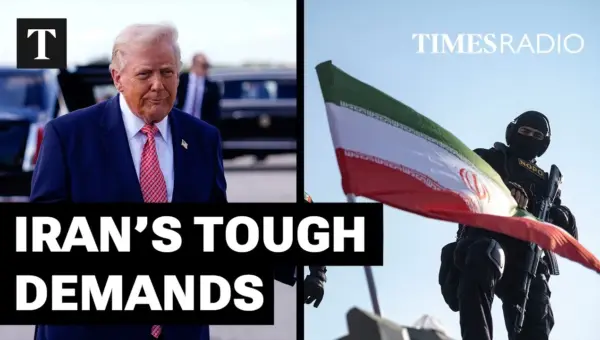
Iran Demands Full Control Over Strait of Hormuz
Iran is pushing for maximum control over the Strait of Hormuz, presenting a maximalist demand in ongoing negotiations. Deep disagreements persist between key global players, particularly concerning Iran's nuclear ambitions and the stability of a potential ceasefire. The clarity and unity of negotiating teams remain uncertain, adding further complexity to the delicate geopolitical situation.


WTO Crumbles, Ushering In Global Trade Wars
The World Trade Organization is collapsing, signaling a return to global trade wars and regional economic blocs. This shift is driven by changing U.S. priorities and the WTO's own structural flaws, forcing countries to find new economic and political models.