Ukraine War Footage Reveals Terrifying Frontline Exfil Missions
Exclusive footage reveals the terrifying reality of Ukraine's front-line exfiltration missions, showcasing the constant danger soldiers face. The video also highlights concerns from Russian military bloggers about escalating soldier losses, suggesting a potential need for wider mobilization. Analysis of battlefield reports indicates a slow war of attrition with significant costs for both sides.

Ukraine War Footage Reveals Terrifying Frontline Exfil Missions
New video footage offers a stark, heart-pounding look at the dangerous reality of Ukraine’s front lines. It shows Ukrainian soldiers conducting risky missions to get to and from the fighting. This footage also highlights concerns from Russian military bloggers about their own increasing soldier losses.
Inside the Danger Zone
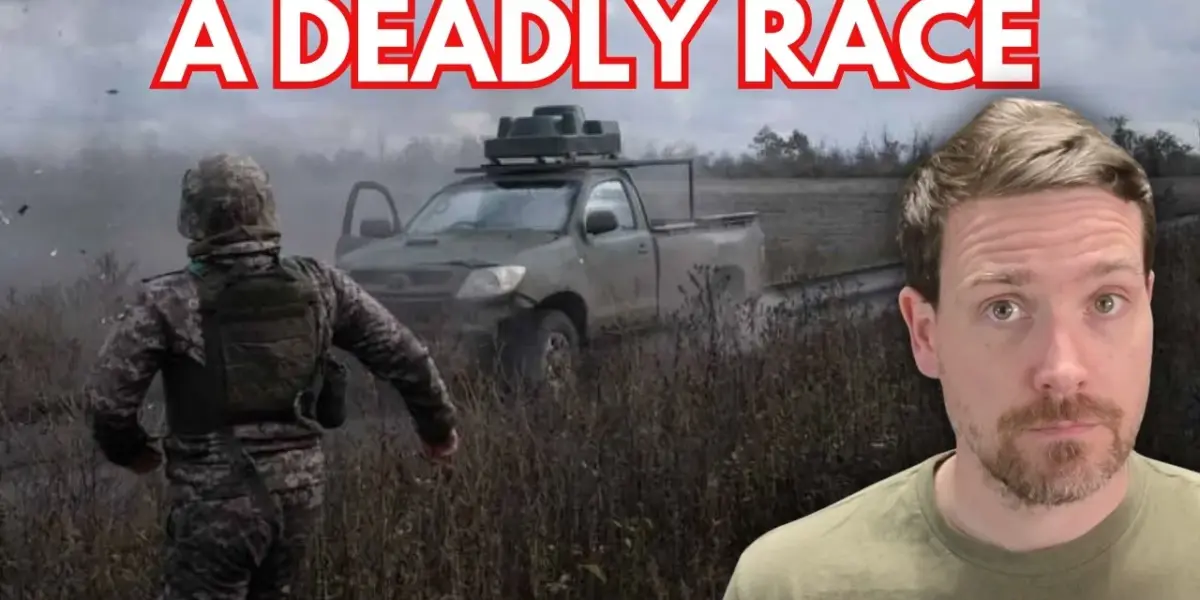
One video shows the 104th Territorial Defense Brigade using a vehicle, provided through a group called Cars for Ukraine, to pick up soldiers near the front. The clip captures the intense speed and chaos of this operation. Watching it, you can feel how terrifying this process must be for the soldiers involved.
The vehicle itself is equipped with an electronic warfare suite. This system jams signals to prevent Russian drones from targeting the vehicle as it moves. Early in the video, you can see remnants of netting that once covered the roads. However, closer to the fighting, this netting is gone, likely destroyed by constant drone attacks.
The road itself is a scene of destruction. Cars, pickup trucks, vans, and even armored vehicles are damaged or destroyed. This highlights how dangerous these key routes are for moving troops and supplies. The soldiers quickly pile into the back of a pickup truck, with about eight men loading up in a rush to get away.
The exfiltration is not a smooth ride. The road is full of potholes and debris. The soldiers are moving fast, making it hard to spot dangers. One significant threat is a “waiter drone.” This is a drone that flies forward and lands on the ground. While soldiers might be looking up for aerial threats, the waiter drone waits on the ground, then pops up to attack passing vehicles.
For these soldiers, being in a pickup truck is better than walking. If they weren’t in a vehicle like this, they would be on foot, exposed. This shows why efforts to provide vehicles, like the fundraising campaigns for Cars for Ukraine, are so crucial. These vehicles are literally helping to save lives.
A Glimpse of Russian Concerns
Shifting focus, a Russian military blogger named Romanov has expressed concern about Russia’s soldier losses. He noted that Ukraine is reportedly killing over 30,000 Russians per month. Romanov believes Russia is approaching a point where it might need to call up more soldiers through mobilization. He thinks this could create significant problems for Russia.
Kremlin spokesperson Dmitry Peskov has stated that mobilization is not being discussed. However, Romanov argues that the difference between official reports and the reality on the ground is measured in soldiers’ lives. He warns that if Russia doesn’t change course, the consequences will be severe this year.
The idea of Russia’s army collapsing has been a question throughout the conflict. Historically, even earlier losses might have been expected to cause Russia to reconsider. However, the conflict has continued. Romanov’s comments suggest that a large-scale mobilization could be a tipping point.
If Ukraine can maintain its pace of inflicting heavy losses, Russia’s army could effectively be shrinking each month. This situation could force Russia’s hand regarding mobilization. Other possibilities for Russia include increasing payments to soldiers or trying to recruit more soldiers from abroad.
Battlefield Updates and Analysis
Looking at the battlefield, analysis from experts like Rob Lee and Dimmitro Putiata provides insight. Their detailed updates track the fighting across different sectors.
In March, Russian forces occupied 27% more territory than in February. The most intense fighting and Russian assaults occurred in the Brusky, Konstantinovka, and Velyka Novosilka sectors. The Velyka Novosilka sector saw the greatest advances.
The fighting is particularly heavy in the eastern Zaporizhzhia region, which accounted for 24% of all Russian assaults in March. Other key areas of fighting include Sloviansk and Pokrovsk. Attacks in Pokrovsk are decreasing, but there are also issues reported in the Kursk sector, near the border with Sumy.
Even though the Sumy region has seen fewer Russian assaults, it accounted for 13% of all territorial losses in March. This suggests that even smaller areas of conflict can be costly.
At the current pace of advancement, one analysis suggests it would take Russia until December 2029 to capture the rest of Donetsk Oblast. To achieve this, Russia would need to gain significantly more territory each month than it has in the first three months of the year.
The area around Konstantinovka is especially difficult for Ukraine to operate in. The road from Druzhkivka to Konstantinovka is heavily targeted by Russian drones. This makes it hard to bring in supplies or evacuate wounded soldiers. This area is becoming a concern as it is closer to Kramatorsk and Sloviansk, which are key Ukrainian strongholds in the east.
In the western Zaporizhzhia region, Russian sources report that the situation continues to worsen for them. Despite Russian counterattacks, Ukrainian forces remain active. Russian media has had to admit that Ukraine has regained control of areas like Novokalinovka and Pologi, which Russia had previously claimed to hold or were contested.
Russian reports also mention Ukrainian pressure in the direction of Stepove towards Plavskyi. There’s a pattern of Russian media making premature claims about liberating settlements, which often turn out to be inaccurate. This has been a recurring theme in Russian communications.
In the Kupyansk sector, Russia has claimed recent successes in reducing Ukrainian bridgeheads east of the Oskil River. This is territory that Russia had previously claimed to control almost a year ago. Now, they are fighting to reopen areas north of Kupyansk, celebrating progress that essentially means recapturing lost ground.
Overall, the battlefield is seeing constant changes. Ukraine continues with targeted, small-scale counterattacks. Russia appears to be searching for effective tactics, shifting from dismounted assaults to more armored ones, though these are not frequent.
As the snow melts and mud season begins, movement across the land becomes difficult. Russia is likely preparing for future offensives. The coming weeks will be important to see what strategies Russia employs for any potential operations this year.
Why This Matters
The footage of the exfiltration mission underscores the immense bravery and danger faced by Ukrainian soldiers daily. It highlights the critical need for practical support, like vehicles, that directly impacts their ability to survive and fight. The ongoing fundraising efforts for organizations like Cars for Ukraine are not just about providing equipment; they are about enabling survival and maintaining operational capacity on the front lines.
Furthermore, the Russian blogger’s comments offer a rare, albeit concerning, admission of heavy losses from the Russian side. If these losses are indeed unsustainable and lead to broader mobilization, it could significantly alter the course of the war. It suggests that the conflict’s human cost is becoming a critical factor, even for the aggressor. The battlefield updates show a slow, grinding war of attrition, where small gains come at a high price and strategic objectives remain distant for both sides.
Looking Ahead
The coming months will likely see continued intense fighting, especially as weather conditions improve. Russia’s potential move towards further mobilization, driven by high casualties, remains a significant unknown. Ukraine’s ability to maintain its current level of offensive pressure and logistical support will be crucial. The war continues to be a test of endurance, resources, and the will to fight, with the daily reality for soldiers on the ground as captured in the video, remaining incredibly perilous.
Source: Heart Pounding Ukraine Exfil Footage (YouTube)

Related Articles


Ukraine Strikes Crimea’s Last Rail Ferry
Ukraine is escalating its campaign against Russian logistics, disabling key infrastructure like the last rail ferry to Crimea and employing drone-only tactics to destroy bridges. Simultaneously, Ukraine is increasing its long-range drone attacks inside Russia, forcing a parallel expansion of Russia's drone forces. These actions, alongside growing vulnerabilities in Russia's Black Sea Fleet and unexpected economic windfalls from oil prices, are reshaping the battlefield dynamics.


Ukraine Strikes Cripple Russian Oil Revenue
Ukraine's drone strikes are crippling Russia's oil revenue and exposing defensive vulnerabilities. These attacks are shifting battlefield dynamics, making Russia desperate and potentially hastening the end of Putin's regime. Meanwhile, international alliances face strain amidst evolving geopolitical strategies.


Ukraine Drones Inflict Heavy Russian Losses
Ukrainian drone units inflicted 29% more losses on Russian forces in March than in February, marking a significant tactical shift. President Zelenskyy remains firm on territorial integrity while open to dialogue. Meanwhile, US-Europe relations face strain amid discussions of troop realignments and NATO's future.