Russia Submarines Probed UK Waters, Defense Chief Reveals
UK Defense Secretary Grant Shapps revealed that three Russian submarines were detected attempting to spy on underwater cables in British waters. Experts question the effectiveness of deterrence, noting the subs operated for weeks, and discuss the challenges of responding to such threats under international law.


UK Reveals Russian Submarine Activity Near Vital Cables
Britain’s Defense Secretary, Grant Shapps, has revealed that three Russian submarines were detected operating in UK waters. These submarines were reportedly attempting to spy on underwater cables and pipelines. Shapps stated that Russia tried to take advantage of global distractions, such as the conflict in Iran, to conduct these covert operations.
“We See You”: A Message to Russia
In a public statement, Shapps declared that the UK’s armed forces made it clear to the Russian vessels that they were being monitored. “Our armed forces left them in no doubt that they were being monitored, that their movements were not covert as President Putin planned, and that their attempted secret operation had been exposed,” Shapps said. The defense secretary confirmed that the submarines have since left UK waters and returned north. This public disclosure marks a departure from the usual secrecy surrounding submarine operations between nations.
Deep Dive into Russian Capabilities
Jerome Starkey, son of a defense editor, discussed the significance of this revelation. He noted that submarine activities are typically kept secret, with both the UK and Russia refraining from commenting. This public acknowledgment by Shapps is seen as a display of British and allied capabilities, involving the Royal Navy, Norwegians, and RAF spy planes in tracking the submarines.
The GooGi Threat
Two of the detected submarines belonged to Russia’s GooGi Deep Sea Research Unit. Starkey explained that these vessels are capable of diving much deeper than British submarines, posing a significant threat to vital sub-sea cables. The concern is that these submarines could plant explosive devices near critical cables, which could be detonated later, potentially severing Britain’s connection to the rest of the world.
Deterrence or Detection? The Lingering Question
While Shapps suggested the Russian vessels were deterred, Starkey posited that they may not have been. He pointed out that two GooGi vessels spent over a month in British waters. This suggests they might have known they were detected but continued their operations. “He certainly exposed what they were doing, their presence, but I would posit that perhaps they weren’t deterred,” Starkey commented.
What Could Britain Do?
The discussion then turned to what actions Britain could take beyond simply watching. The possibility of retaliation was raised, though Starkey stressed this was speculative. He mentioned that responses don’t always have to be in the same domain as the threat. Britain maintains a range of capabilities, from nuclear deterrence to political interventions, cyber operations, and increased support for Ukraine.
A Pattern of Surveillance
This incident echoes a similar event months prior when a British Royal Navy Astute-class submarine surfaced near the Yantar, a Russian vessel from the same deep-sea research unit. The Yantar was reportedly spying on sub-sea cables in the Irish Sea. The Astute’s appearance served as a similar show of force, sending the message: “I see you.” However, the continued presence of Russian vessels raises questions about the effectiveness of such displays.
Shadow Ships and the English Channel
The conversation also touched upon the issue of Russian “shadow ships” carrying sanctioned oil through the English Channel. The British government had stated its intention to board and seize these vessels. However, in a recent instance, a shadow ship was accompanied by a Russian destroyer, and no boarding or seizure occurred. Starkey noted that these shadow ships have been sailing through the Channel almost daily, even after the government’s announcement.
International Law and Perceived Weakness
Starkey explained that international law, specifically the UN Convention on the Law of the Sea, grants ships the right to transit through British waters. This means Britain cannot arbitrarily board sanctioned vessels unless they are involved in illegal activities like smuggling. He suggested that Russia’s use of a military escort, which seemingly deterred the UK from boarding, could be seen as a Russian victory and might make the British military appear “rather toothless.”
Broader Geopolitical Concerns
The discussion briefly shifted to the Middle East, with questions about Britain’s role in influencing events, particularly concerning the Strait of Hormuz. While Britain possesses advanced destroyers with sophisticated air defense capabilities, their operational status and potential deployment were questioned. The complexities of the threats in the Strait, including underwater drones, surface drones, and aerial drones, present new challenges for naval forces.
Looking Ahead
The revelation of Russian submarine activity highlights ongoing tensions and the strategic importance of underwater infrastructure. As nations grapple with maintaining the security of vital cables and respond to perceived provocations, the effectiveness of deterrence strategies and the adherence to international maritime law will remain critical areas to watch.
Source: Russian Submarines ‘Exposed’ By Healey Could Have Operated In British Waters For Weeks (YouTube)

Related Articles

Strait of Hormuz Blockade to Last Months, Shipping Expert Warns
Shipping in the Strait of Hormuz remains severely disrupted despite a ceasefire, with an expert warning it could take months to clear. Iran has implemented an informal toll system, demanding payments from vessels transiting the vital waterway. Around 20,000 crew members are stranded as security risks prevent normal operations.
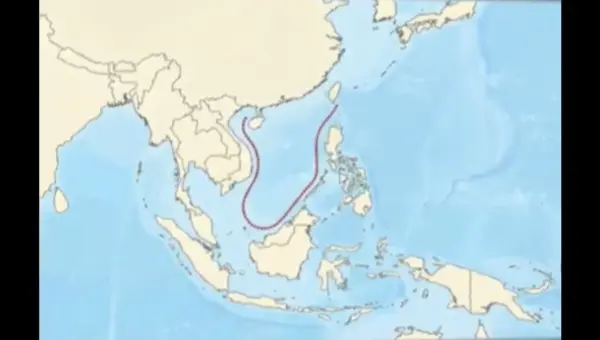
Philippines Fortifies South China Sea Claim with New Base
The Philippines has opened a new coast guard base in the disputed South China Sea, asserting its sovereignty amidst rising tensions. This move follows an accusation by the Philippines that Chinese forces fired flares at one of its patrol aircraft, highlighting ongoing friction in the vital waterway.
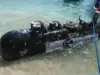
China’s Spy Drone Found Off Indonesia: A New Underwater Threat?
A Chinese underwater drone found near Indonesia highlights Beijing's growing underwater surveillance capabilities. The discovery in a strategic waterway raises concerns about regional security and potential military applications of seabed mapping.