AI Bubble Bursts: Prices Drop, Sanity Returns
The AI investment bubble appears to be deflating, with falling DDR5 memory prices and major companies re-evaluating spending. This could lead to more sensible valuations and better prices for consumers. While AI technology is here to stay, the era of irrational spending on AI infrastructure may be coming to an end.

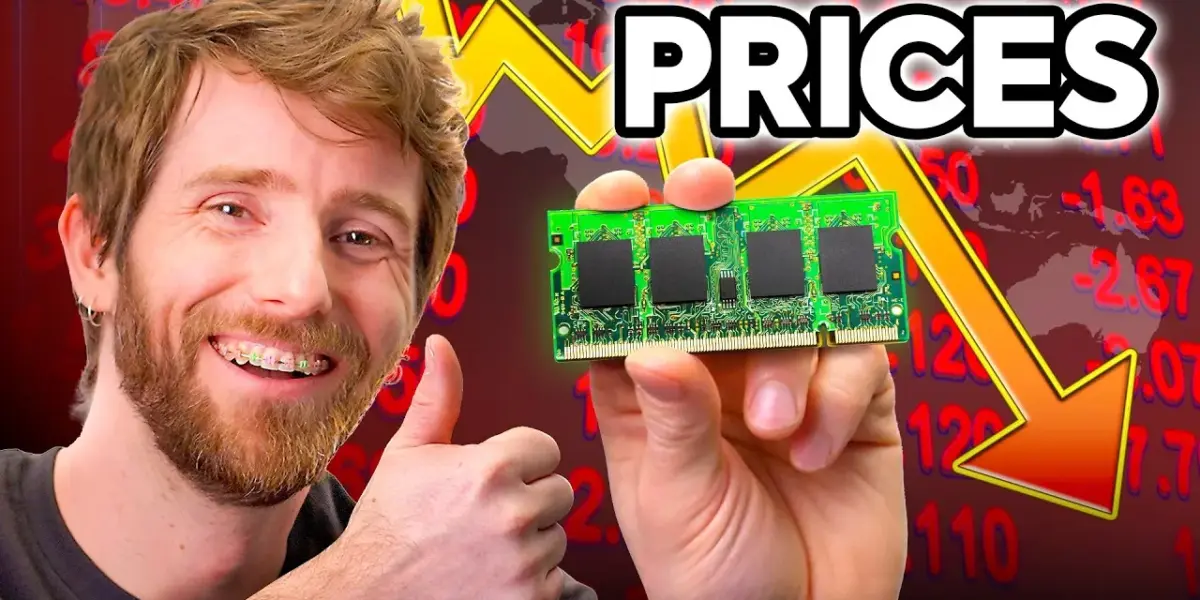
AI Bubble Popping: Prices Fall, Consumers Could Win Big
For months, tech insiders have suspected that the massive investment in Artificial Intelligence might be a house of cards. Now, the cracks are starting to show. Prices for essential computer parts like DDR5 memory are falling worldwide, signaling a potential shift away from the irrational spending that has defined the AI boom.
Even leaders in the AI world have hinted at this. Last August, OpenAI CEO Sam Altman himself told The Verge that when bubbles happen, smart people get overly excited. He admitted that some money flowing into AI wasn’t rational and that someone would get burned. This statement rings even louder after OpenAI’s very public back-and-forth with major DRAM producers. They initially signed a letter of intent to buy a huge chunk of their production, only to back out later. This is like promising to buy a house and then saying, ‘Just kidding!’
This situation suggests we’re at the beginning of the end for the reckless money being poured into AI infrastructure. This could finally bring some relief and better prices for consumers after months of inflated costs.
What is an Economic Bubble?
Think of an economic bubble like a party that gets out of control. Prices for something, like a collectible item, shoot up way higher than they’re actually worth. This happens because everyone rushes to buy it, hoping to sell it later for even more money. A famous example is ‘tulip mania’ in the 1600s. People went crazy for tulip bulbs, paying prices as high as houses for rare ones. When the excitement ended, the prices crashed, and many people lost a lot of money.
Tulips didn’t become worthless, of course. They just returned to a more normal price compared to other things. The key is that the price detached from its real value.
Is AI Experiencing a Bubble?
The massive valuations of some AI companies raise serious questions. Companies like Anthropic are valued at $380 billion, XAI at over $200 billion, and OpenAI is nearing an astonishing $852 billion. While big valuations aren’t always bad, they usually come with huge revenues. For example, Samsung, a major player in AI hardware like memory chips, has revenues over $220 billion a year.
OpenAI recently announced revenues exceeding $2 billion a month, which is impressive and faster than tech giants like Google and Meta reached that mark. However, revenue isn’t the same as profit. Samsung makes over $28 billion in profit annually. OpenAI, on the other hand, is reportedly burning through billions of dollars each year, even after more than a decade in operation, with no clear path to profitability yet.
Their plan seems to rely on more consumer AI subscriptions and massive infrastructure investment to make AI as common as electricity. The idea might be to then charge their huge user base, which is already around 900 million people. But it’s hard to see how reaching the remaining billions will turn billions in losses into billions in profits.
Challenges for AI Companies
Enterprise tools are another potential area, but businesses that pay for AI are likely to be critical if the technology doesn’t deliver. Many current AI models are still far from true artificial general intelligence. Plus, integrating AI into businesses has been a mixed bag, often feeling more like an annoyance than a help for daily tasks.
Even if AI adoption in businesses is inevitable, companies like OpenAI face competition. Would businesses really rely on OpenAI for internal tools or customer service bots when they could potentially run similar AI models locally using cheaper, open-source options? And giants like Google are not standing still.
OpenAI often acts as a bellwether for the entire AI industry, much like Bitcoin does for cryptocurrency. Right now, the signals from OpenAI are not entirely positive.
Signs of Cooling Down
Reports indicate that OpenAI has significantly lowered its spending targets for 2030, from $1.3 trillion down to $600 billion. This reduction could ease pressure on competitors trying to keep up with their massive infrastructure needs, especially concerning memory chips.
Energy costs are another major expense for AI companies, and these have soared recently, especially with global uncertainties. This might be why OpenAI abruptly canceled its Sora 2 video generation project, likely due to high operating costs.
Even companies like Oracle, despite announcing a partnership with OpenAI and boasting about AI infrastructure demand, recently laid off a significant portion of its global workforce. While Oracle’s stock saw a bump, the company is still trading well below its all-time high from last September.
Microsoft is also experiencing a similar correction, trading just slightly above its peak from late 2021. Not all AI companies are struggling, however. Nvidia continues to sell its high-demand AI chips at a rapid pace. Google and Meta have seen smaller dips, more in line with general market uncertainty.
The Future of AI Infrastructure
AI itself is not going away. Meta, for instance, is fully committed to integrating AI across all its products. With over 3 billion daily users, Meta’s AI integration means a vast amount of infrastructure will be needed. However, the question is who will own and build that infrastructure.
The speaker sees OpenAI potentially becoming a ‘Dropbox-like’ company. It might survive the bubble burst due to its brand recognition and widespread use. However, it could struggle to convert free users into paying customers and end up with a more specialized role in the industry it helped pioneer.
Meta and Google, on the other hand, have a different advantage. Their valuations are built on existing, successful products and revenue streams that exist outside of AI. This existing foundation has shielded them from the worst of the AI bubble’s deflation.
When a company like OpenAI stumbles, it lifts some competitive pressure. This allows companies like Meta and Google to scale back their infrastructure investments to a more manageable level as they continue to find practical uses for AI technology. The key difference is that Meta and Google aren’t just building infrastructure hoping it will be useful later; they are investing based on current product needs and revenue.
A Return to Reason
OpenAI’s withdrawal from its large DRAM commitment has likely made investors more cautious. They might be realizing that future revenue isn’t a guarantee, and massive investments need to be backed by solid business plans. This could lead to a return to more reasonable investment levels in AI.
The winners will be those who can demonstrate real revenue from AI services. While the AI bubble might not pop overnight, like tulip prices didn’t, there’s a sense that sanity is returning to the market. This could mean better prices and more practical applications for consumers in the near future.
Specs & Key Features
- DDR5 Memory Prices: Reported to be dropping globally.
- OpenAI Valuations: Approaching $852 billion.
- OpenAI Revenues: Exceeded $2 billion per month.
- OpenAI User Base: Approximately 900 million users.
- OpenAI DRAM Commitment: Initially agreed to 40% of total production capacity, later rescinded.
- OpenAI Sora 2: Abruptly canceled due to high operating costs.
- Samsung Revenues: Exceed $220 billion annually.
- Samsung Profits: Over $28 billion annually.
- Oracle Layoffs: Up to 18% of global workforce.
- Microsoft Stock Performance: Currently about 9% above its November 2021 peak.
Who Should Care?
Consumers: If you’ve been priced out of high-end computer components or noticed inflated prices for tech services, this trend could mean more affordable options soon. Lower AI infrastructure costs could translate to cheaper AI-powered products and services.
Tech Enthusiasts: For those who follow the latest in AI development, this signals a potential shift from hype-driven investment to more practical, sustainable growth. It might also mean more accessible AI tools and less focus on speculative valuations.
Businesses: Companies looking to integrate AI solutions should watch this space. A more rational market could lead to more realistic pricing and better-performing, cost-effective AI tools, rather than just chasing the latest trend.
Availability and Pricing
While specific product prices are not detailed, the article notes that DDR5 memory prices are falling globally. The valuations of AI companies are discussed, with OpenAI at an estimated $852 billion. No specific release dates for new consumer products are mentioned, but the overall trend suggests a cooling of investment that could impact future pricing.
Source: The Worst is Almost Over (YouTube)

Related Articles

OpenAI CEO Sam Altman’s Truthfulness Questioned in New Report
A new profile in The New Yorker raises serious questions about OpenAI CEO Sam Altman's truthfulness and leadership. The report, based on interviews with over a hundred sources, details allegations of deception and conflicting business practices. This scrutiny comes as OpenAI's influence grows in a largely unregulated AI industry, prompting calls for greater transparency and accountability.


Mind Control Tech Frees Man From ALS Paralysis
A groundbreaking brain implant from Neuralink has enabled Brad Smith, who lost his ability to speak due to ALS, to communicate and control computers using only his thoughts. The technology allows him to type, play games, and even have his AI-cloned voice speak for him, significantly improving his quality of life and independence.


AI Models Can Now Learn Like Humans Do
New AI models can now learn and adapt like humans, building on past knowledge without forgetting. This "continual learning" avoids the costly retraining needed for current AI and promises more versatile and efficient AI systems for various applications.