Pope Confronts Trump Regime’s War Threats
Pope Leo XIV has publicly condemned Donald Trump's administration for aggressive tactics and war threats. Reports reveal alleged threats from the Pentagon against the Vatican, drawing historical parallels to past attempts to control the papacy. The Pope's unwavering stance and focus on compassion offer a counter-narrative to political aggression.

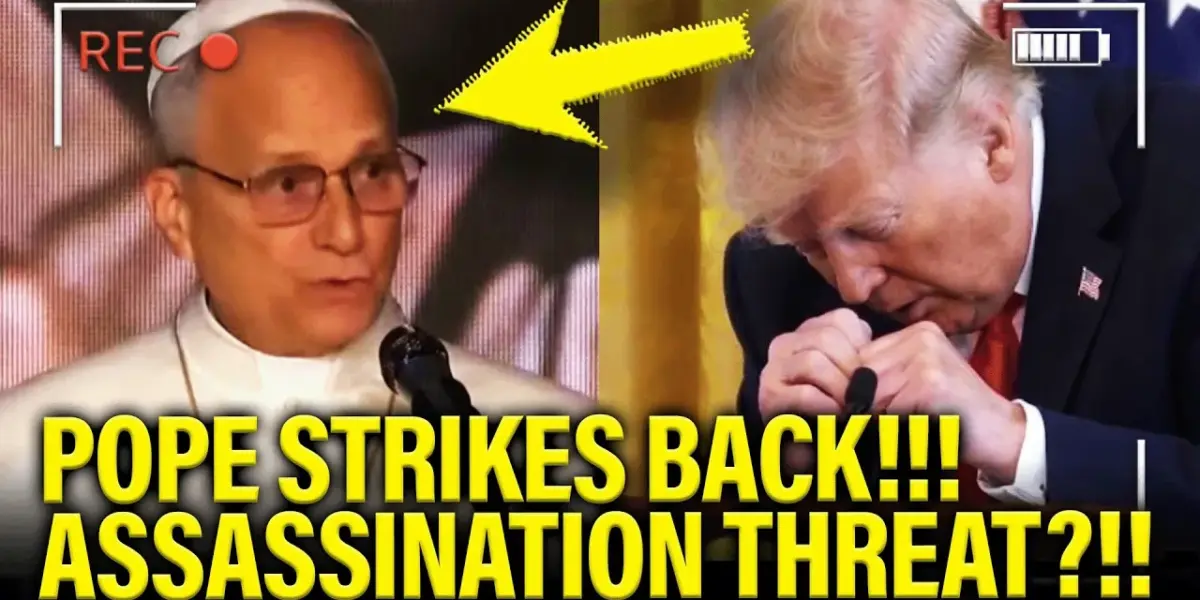
Pope Leo XIV Challenges Trump’s Aggression
Pope Leo XIV has publicly criticized Donald Trump and his administration, calling their aggressive tactics and threats of war “despicable.” This strong stance has led to Pope Leo canceling planned visits to the United States. Instead, on July 4th, the 250th anniversary of the U.S., he chose to visit Lampedusa, an Italian island. His visit there focused on showing support for the migrant community.
Accusations of Imperialism and Force
The Pope has directly called out the “imperialist tactics” of the Trump regime. He specifically mentioned statements suggesting the obliteration of civilizations and a general push towards war. These comments, while not always naming names, are widely seen as directed at figures like Donald Trump, Jaylen Vance, and Pete Hegseth, who are known for invoking religious language to justify military action.
Historical Parallels and Pentagon Threats
A disturbing new detail has emerged regarding the Trump administration’s approach to the Vatican. Reports suggest that in January, U.S. defense officials, including Under Secretary of War Elbridge Colby, summoned Pope Leo’s top American diplomat to the Pentagon. During this meeting, they reportedly invoked the Avignon Papacy. This historical period in the 14th century saw the French crown use military force to control the Pope. The U.S. officials allegedly made threats suggesting they had the military power to do as they pleased globally, implying the Church should align with their agenda.
This meeting followed a speech by Pope Leo XIV where he criticized the shift from diplomacy based on dialogue to one based on force. He warned that war was becoming popular again and that the post-World War II principle of respecting national borders was being undermined.
Pope’s Unwavering Stance
Despite these alleged threats against him and the Holy See, Pope Leo XIV has not backed down. He has continued to speak out against war and violence. In a message seemingly aimed at figures like Pete Hegseth, the Pope stated, “Jesus is the king of peace who rejects war, whom no one can use to justify war.” He further added that prayers from those who wage war are not heard and that their hands are full of blood, implying a condemnation of war crimes.
Critique of Power and Domination
Pope Leo XIV has also addressed the distortion of Christian values, warning against mistaking power for righteousness. He observed that people often feel powerful when they dominate and victorious when they destroy. However, he emphasized that God’s example is not about domination but about giving life. This message directly contrasts with the aggressive rhetoric attributed to some political figures.
The American Pope’s Influence
Pope Leo XIV, the first American-born Pope, has been a vocal critic of actions he sees as contrary to Christian teachings. His background, including study and work abroad, has given him a unique perspective. He has not shied away from confronting controversial issues, such as the treatment of migrants at the U.S. border. During past actions by ICE and Border Patrol, Pope Leo coordinated with bishops and cardinals in the U.S. to support those affected.
Challenging War Rhetoric
Figures like Pete Hegseth have been criticized for invoking God’s name while threatening other nations with destruction. Similarly, Senator J.D. Vance faced scrutiny for downplaying his knowledge of the alleged Pentagon threats to the Vatican. The Pope’s messages, often delivered in fluent English to reach a wider audience, provide a counter-narrative to the aggressive foreign policy stances. His recent pronouncements, such as “The cross is part of the mission. The imperialist occupation of the world is disrupted from within,” suggest a deep critique of global power dynamics.
Historical Context and Future Outlook
The alleged threats made by U.S. defense officials echo historical attempts by secular powers to control the Church. The mention of the Avignon Papacy serves as a stark reminder of past conflicts between papal authority and state power. This incident highlights a growing tension between the Vatican’s moral authority and certain political agendas. The Pope’s decision to visit Lampedusa on July 4th, a place significant for its history with migrants and Pope Francis’s past visit, sends a clear message of compassion and solidarity. It also serves as a subtle tribute to his predecessor, who famously questioned Donald Trump’s Christian faith.
Why This Matters
The Pope’s firm stance against war and aggression, coupled with the alleged threats from the U.S. defense department, raises significant questions about the intersection of faith, politics, and international relations. Pope Leo XIV’s willingness to speak truth to power, even when facing potential intimidation, offers a moral compass in turbulent times. His leadership has galvanized a response within the Catholic Church in the United States, uniting bishops and clergy in a way not seen before, particularly in areas traditionally considered “MAGA country.” This unity provides a bulwark against what some perceive as authoritarian tendencies.
Broader Resistance and Unifying Force
Christopher Heil, a commentator specializing in the Church and U.S. politics, notes that the Catholic Church is increasingly seen as a leader in resistance to Trump-aligned movements. Nuns have marched, bishops have drawn parallels between political actions and the Holocaust, and the Church hierarchy is standing against deportation policies. The election of Pope Leo XIV, an American progressive pope, has been instrumental in this shift. Unlike his predecessor, Pope Francis, whose critiques were sometimes dismissed as coming from an Argentinian perspective, Pope Leo’s American identity makes it harder for some within the U.S. hierarchy to dismiss his message. This has led to a greater unification within the U.S. Catholic Church, presenting a strong front against what is described as “MAGA authoritarianism.”
Conclusion
The events described suggest a significant clash between the Vatican and elements within the U.S. political establishment. Pope Leo XIV’s leadership represents a powerful force for peace and compassion, challenging those who would use religion to justify war and domination. His actions and messages are resonating not only within the Catholic community but also among those who value empathy and unity across different faiths and backgrounds.
Source: FURIOUS Pope TURNS TABLES on Trump after DEATH THREAT !!! (YouTube)

Related Articles
Trump Attacks Allies, Then Begs Them for Help
Donald Trump is reportedly publicly attacking NATO and European allies while privately begging them for help with the Iran situation. This conflicting approach raises questions about trust and the effectiveness of international diplomacy. Allies are reportedly considering their own solutions rather than caving to demands.

Trump’s Crypto Fortune Fuels Economic Debate
A debate emerges over Donald Trump's significant cryptocurrency earnings versus rising gas prices for Americans. The discussion questions economic indicators like inflation and unemployment, while critiquing potential tax cuts for the wealthy and increased military spending's impact on national debt.
Trump Envisions Grand Archway Near D.C.
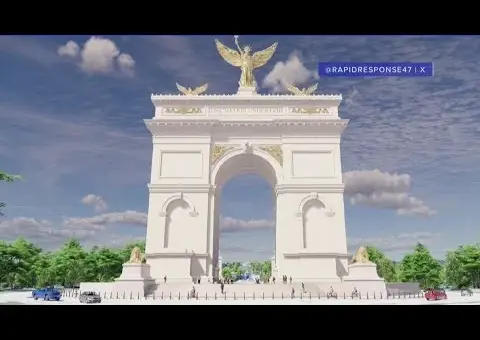
Former President Donald Trump is proposing a monumental 250-foot arch near Arlington National Cemetery. The design features a golden Lady Liberty and lions, aiming for a grand national symbol. This project follows his past efforts to alter historic White House sites.