Iran Ceasefire Holds Amidst Ongoing Missile Strikes
Despite reports of a ceasefire between Iran, the U.S., and Israel, missile alerts continued across Israel and the Gulf States, including the use of cluster munitions. The White House declared the ceasefire a success, attributing it to President Trump's efforts, while international mediators like China and Pakistan played a role. However, experts questioned the true nature of Iran's compliance and the impact on its nuclear program.


Iran Ceasefire Holds Amidst Ongoing Missile Strikes
A tense situation unfolded as a reported ceasefire between Iran, the United States, and Israel was announced, but missile alerts continued to sound across Israel and the Gulf States. This development comes after President Trump issued threats against Iran, aiming to curb its nuclear program and regional aggression. While the White House declared the ceasefire a success, on-the-ground reports from Tel Aviv painted a picture of ongoing attacks, including the use of cluster munitions.
Ceasefire Declared, But Attacks Continue
The clock ticked past a critical deadline set by President Trump for Iran to cease certain activities, with initial reports suggesting a ceasefire had been agreed upon. The White House, speaking through correspondent Kelly Meyer, called the ceasefire a “win,” attributing it to the efforts of President Trump and the Vice President. Senior White House officials stated that Iran no longer posed the same threat it did six weeks prior and that the Strait of Hormuz would reopen. Iran’s foreign minister had reportedly shared a statement agreeing to the ceasefire, with assistance from the Chinese government in brokering flexibility.
However, on the ground in Tel Aviv, Robert Sherman reported continuous missile alerts and explosions. He described seeing cluster warheads detonated in the sky, with munitions raining down. These attacks were not limited to Israel; the UAE, Bahrain, and Kuwait also reported responding to missiles and drones, with early alerts issued in Saudi Arabia. This indicates that the situation remained highly active across the region, despite the announced ceasefire.
International Mediation and Iranian Leverage
The brokering of this ceasefire involved complex international diplomacy. Reports suggest that Pakistan, described as an “on-and-off friend” with the United States and maintaining ongoing relationships with Iran, played a role in mediating the deal. China’s involvement is also highlighted, driven by its significant need for Iranian oil. This suggests Iran, despite facing pressure, still possesses leverage through its relationships with key global players.
Analysts debated the true nature of Iran’s compliance. KT McFarland, former deputy national security adviser, suggested that Iran might not be a unified entity, with potential divisions between the civilian leadership and the Islamic Revolutionary Guard Corps (IRGC). This internal dynamic could lead to uncertainty about who controls the deal and whether rogue elements might attempt to sabotage it. The possibility of Iran using its control over the Strait of Hormuz as a bargaining chip was also a significant concern.
The Nuclear Question and Military Capabilities
A central issue in the standoff has been Iran’s nuclear program. While the White House claimed significant progress in curbing Iran’s threat, experts expressed skepticism. General Mark Kimmit noted that the Iranian “10-point plan” presented as part of the deal was seen by some as a “surrender document” due to its demands, such as the withdrawal of all American forces from the region. The intelligence required to locate and neutralize Iran’s nuclear facilities, potentially buried deep underground, was described as a monumental challenge.
Lieutenant General Karen Gibson emphasized the need for robust inspection mechanisms, similar to those previously used by the International Atomic Energy Agency (IAEA), to verify any agreement. She pointed out that the Iranian proposal lacked specifics on ending enrichment, curbing ballistic missiles, or halting support for regional proxies. The use of cluster munitions, described as a war crime due to their indiscriminate nature and devastating impact on civilian areas, further complicated the picture and raised questions about Iran’s commitment to de-escalation.
Congressional Debate and Future Scenarios
The events sparked debate in the U.S. Congress regarding the President’s authority and the overall policy towards Iran. Congressman Adam Smith argued that the current approach was a “terrible policy” that had not set back Iran’s nuclear program and had potentially solidified the regime. He called for Congress to act to end the conflict through a War Powers Resolution.
Conversely, Congressman Mike Lawler countered that significant achievements had been made over the past five weeks, including diminishing Iran’s ballistic missile and naval capabilities. He criticized the idea that nothing had been accomplished and highlighted ongoing threats to Israel from Iran and its proxies. The exchange revealed deep partisan divides on how to assess the situation and what actions Congress should take.
Global Impact
The situation in the Persian Gulf has far-reaching implications. The Strait of Hormuz is a critical global oil chokepoint, and any disruption there can send shockwaves through the world economy. The ongoing conflict also tests the resolve of international alliances and the effectiveness of diplomatic pressure versus military action. The involvement of China and Pakistan in mediation efforts underscores the complex web of interests at play in the region.
Future scenarios remain uncertain. While a ceasefire offers a chance for de-escalation, the continued missile launches and the unresolved issues surrounding Iran’s nuclear program and regional proxies suggest that stability is far from guaranteed. The effectiveness of the current diplomatic approach, the potential for internal Iranian dynamics to derail agreements, and the willingness of international actors to enforce any deal will all shape the path forward. The use of cluster munitions by Iran, in particular, raises serious humanitarian concerns and complicates any narrative of a successful de-escalation.
Source: Trump’s Iran Threat Evaded, Lawmakers Fight Over War, Israel & Iran Trade Fire | CUOMO Full Show 4/7 (YouTube)

Related Articles


Trump’s Wild Rants Expose a Presidency Adrift
Donald Trump's recent 'batshit crazy' outbursts, attacking former allies and reacting erratically to the Iran crisis, signal a leader adrift. Professor Scott Lucas argues this isn't diplomacy but desperate shouting, as geopolitical tensions escalate and traditional allies seek new paths.
China Courts US Oil Amid Iran Deal, Rare Earth Race Heats Up
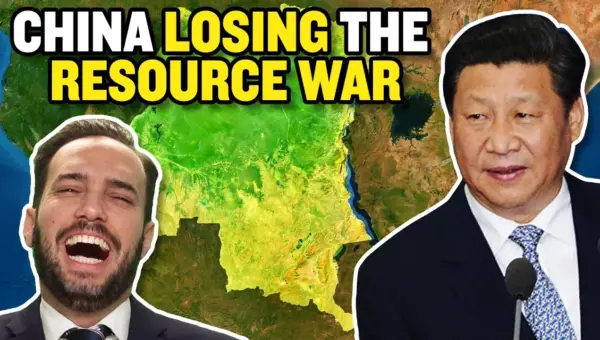
China is now importing US oil amid a complex geopolitical landscape, including brokering an Iran ceasefire and facing challenges in its rare earths dominance. Meanwhile, regional disputes over strategic islands and airspace add to global tensions.
Iran Threatens Strait of Hormuz Amid Lebanon Strikes
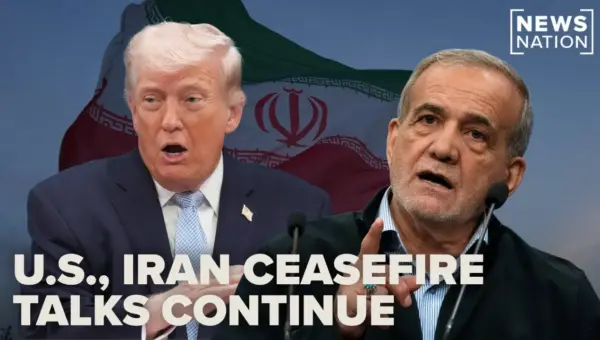
Iran threatens to close the vital Strait of Hormuz in response to ongoing strikes in Lebanon. The US is trying to de-escalate, but actions on the ground remain a concern, potentially impacting global oil markets and future negotiations.