Wind-Powered Car Defies Limits, Exceeds Wind Speed
A new cart design demonstrates how an object can travel faster than the wind pushing it, using a clever wheel and spool system. This principle, similar to the Blackbird land yacht, challenges our understanding of motion and energy transfer.

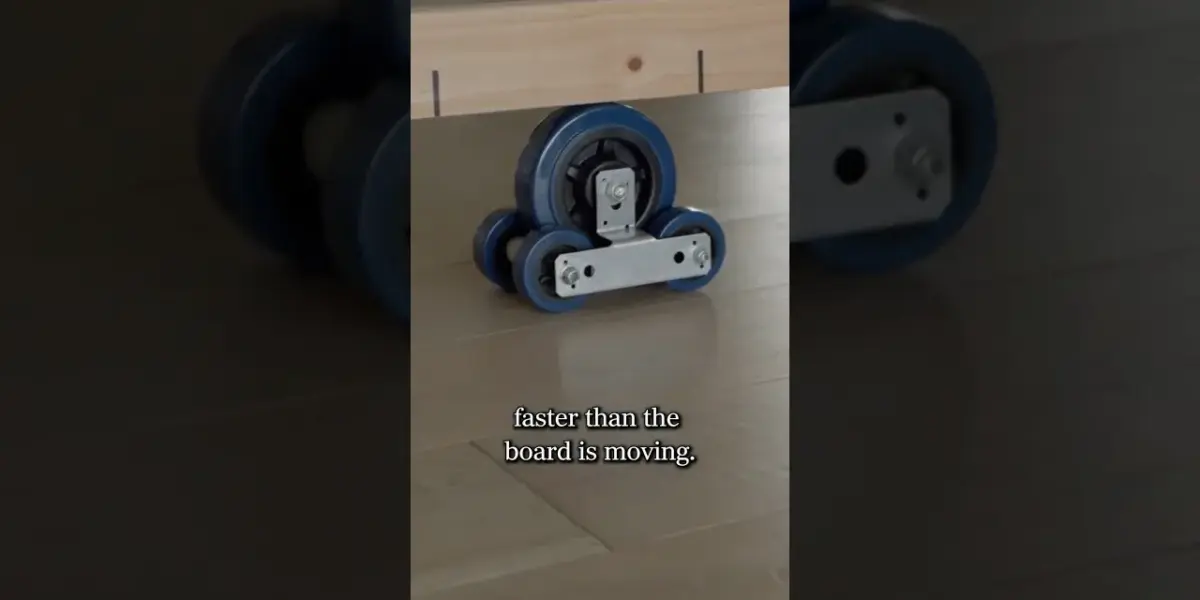
New Cart Design Achieves Unthinkable Speeds
Imagine a vehicle that can travel faster than the very wind that pushes it. This isn’t science fiction; it’s a new demonstration of physics that challenges our everyday understanding of motion. A simple yet ingenious cart design has shown it’s possible for an object to move faster than the medium it’s interacting with, even when that medium is its sole power source.
How the ‘Blackbird’ Cart Works
The key to this amazing feat lies in how the cart is built and how it interacts with the air. It doesn’t rely on sails or traditional aerodynamics. Instead, it uses a large wheel that rolls on two smaller spools. This setup allows the cart to harness the wind in a unique way.
When the cart is pushed forward by the wind, its large wheel doesn’t just spin in the direction of the wind. It actually rotates in the opposite direction. This might seem backward, but it’s crucial for its speed. Think of it like a propeller on an airplane. A propeller pushes air backward to move the plane forward.
The Physics Behind the Speed
This phenomenon is similar to how the famous ‘Blackbird’ land yacht operates. The Blackbird is designed to travel directly downwind faster than the wind itself. It achieves this by using its wheels to drive a propeller. The spinning wheels, powered by the wind pushing the vehicle, turn a propeller that then pushes air backward. This backward push of air creates a forward thrust, much like a jet engine.
In the case of the new cart, the interaction between the large wheel, the spools, and the wind creates a similar effect. The wind pushes the cart, causing the large wheel to turn. This turning motion is then transferred to the spools in a way that generates an extra push. It’s like the cart is using the wind’s energy not just to move, but to *accelerate* beyond the wind’s own speed. The cart effectively ‘grabs’ the air and uses its own motion to push against it, creating a net forward force greater than the wind’s direct push.
Historical Context and Previous Discoveries
The idea that something could move faster than the wind pushing it has been debated for years. Early experiments and theories often suggested this was impossible, bound by the laws of simple mechanics. However, the design of the Blackbird land yacht, which has officially achieved speeds over twice the wind speed, proved these doubts wrong.
This new cart design builds upon that understanding. It provides a simpler, more accessible way to demonstrate the same fundamental physics. By using a rolling wheel and spools, it bypasses the complexities of sail design and focuses purely on the mechanics of relative motion and energy transfer. It shows that by cleverly engineering the interaction between moving parts, we can overcome apparent limitations.
What’s Next for This Technology?
While this cart is a demonstration model, the principles it illustrates could have significant implications. Understanding how to harness energy and create motion beyond the direct force applied is a fundamental concept in engineering.
Scientists and engineers are always looking for more efficient ways to move things and generate power. This kind of design could inspire new approaches in renewable energy, vehicle design, or even robotics. Imagine drones that can fly faster than the wind they are navigating, or new types of turbines that capture more energy from air or water currents.
The ability to achieve relative motion beyond the source of power is a fascinating area of study. It pushes the boundaries of what we thought was possible and opens doors to innovative solutions for future challenges. This simple cart shows us that sometimes, the most profound discoveries come from rethinking the basics.
Build Your Own
For those inspired by this discovery, the good news is that you can build your own version of this cart at home. Building a model downwind cart allows you to experiment with these principles firsthand. It’s a great way to learn about physics and engineering through hands-on experience.
Source: Can something go faster than it’s pushed? (YouTube)

Related Articles


Cosmic Blueprint: Science Meets Faith in Universe’s Origins
Astrophysicist Michio Kaku draws parallels between the Big Bang theory and biblical creation accounts. He also discusses the potential for future technology to preserve human consciousness and shares his personal belief in a "God of creation."

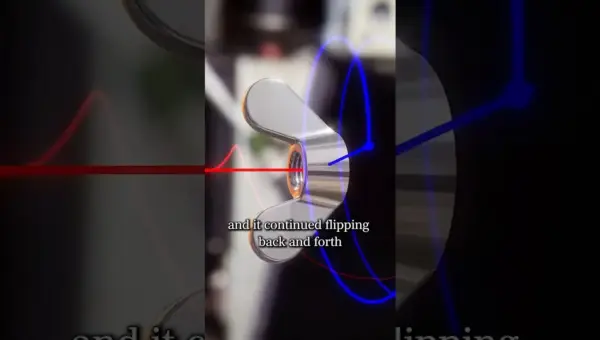
Astronaut Spots Cosmic Flip: The Tennis Racket Mystery
A Soviet cosmonaut's accidental discovery of a spinning wing nut revealed the bizarre Janabbeckov effect. This phenomenon, also known as the tennis racket theorem, explains why some spinning objects inexplicably flip, a quirk now understood through physics.

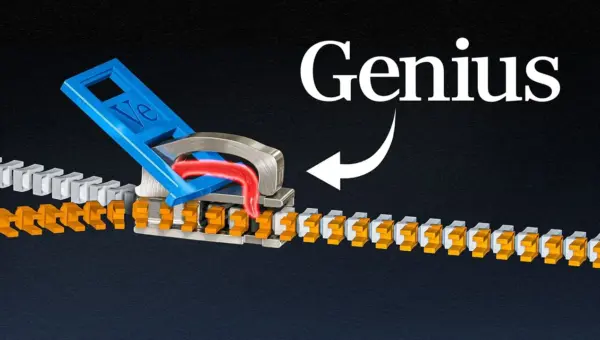
Zipper’s Secret: How a Simple Invention Changed Clothing Forever
Discover the surprising engineering behind the everyday zipper. From its flawed beginnings to Gideon Sundback's revolutionary design, this article explores how the zipper became an indispensable part of modern life, detailing its evolution and the innovations that keep it working.