GOP Faces Voter Shift as Democrats Gain Ground
Recent election results show a significant voter shift towards Democrats, causing alarm within the Republican Party. Key races and polling data reveal a concerning trend for the GOP, particularly among independent voters. Concerns also linger about the integrity of future elections and potential political reactions.

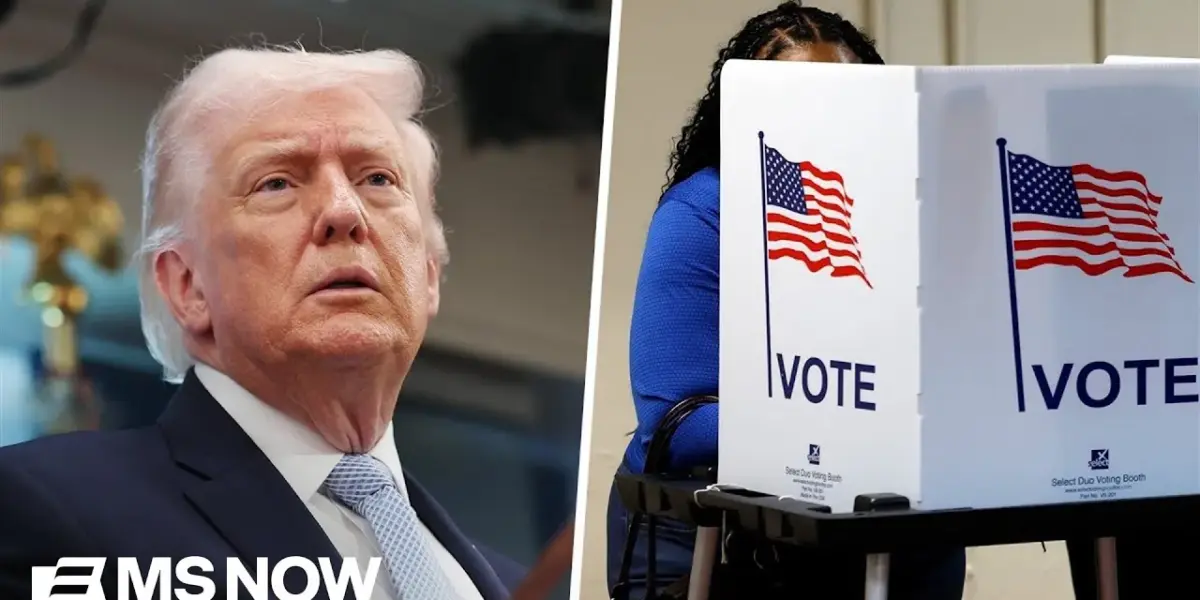
Alarm Grows in Republican Party as Voter Trends Favor Democrats
Recent election results and shifting voter demographics are causing significant concern within the Republican Party, as data suggests a growing number of voters are moving away from the GOP and toward the Democrats. This trend was highlighted by notable shifts in local and state elections, raising questions about the party’s prospects in upcoming national contests.
Key Election Results Signal a Changing Electorate
The shift was evident in recent elections, even in traditionally Republican strongholds. In Georgia, while Republicans held a congressional seat, the vote margin swung towards Democrats by nearly 20 points. Similarly, in Wisconsin, a battleground state that Donald Trump carried just two years prior, voters expanded the majority for liberals on the state’s Supreme Court by a significant 21 points.
“The margins that Donald Trump created in 2024 have not only evaporated, but they’ve gone almost in the opposite direction to Democrats,” noted one observer, highlighting the dramatic reversal of political fortunes.
These results are particularly concerning for Republicans because they indicate a weakening of their traditional support base. A district in Georgia, previously considered a deep red area, saw a substantial swing, suggesting that even secure Republican seats could become competitive.
Broader Implications for the Senate and House
The implications of these voter shifts extend beyond local races, potentially impacting control of Congress. Securely red states on the Senate map are now appearing more purple, meaning they could be competitive for Democrats. There is palpable fear within the party about potential outcomes in states like Texas. Arizona is also identified as a purple state, and current trends suggest Democrats might easily regain control of the House of Representatives.
While taking back the Senate was considered an uphill battle for Democrats, these shifts make it appear more reachable, even if still challenging. If Democrats manage to secure control of both houses of Congress, fueled by the voter enthusiasm seen in Georgia, New Jersey, Virginia, and Wisconsin, it could spell significant trouble for Republicans heading into future elections.
The Decline of the ‘Double-Hater’ Vote
A key factor contributing to the Republican Party’s concern is the significant shift in a voting bloc previously known as ‘double-haters.’ These are voters who dislike both major parties and do not identify with either. Historically, Donald Trump performed exceptionally well with this group, winning their support by large margins in both 2016 and 2024.
However, recent polling indicates that Democrats are now winning approximately 70% of these ‘double-haters.’ This group is often considered a bellwether for broader electoral trends, and their strong move toward Democrats signals a potentially decisive change in the electorate. This contrasts sharply with the hardcore MAGA base, who, despite potential frustrations, remain loyal to Donald Trump.
Focus Shifts to Independent Voters
While the loyalty of the MAGA base remains strong, experts suggest that their numbers alone may not be enough to secure national victories. The key to future elections, according to this analysis, lies with independent voters. These voters, including the ‘double-haters,’ are swinging significantly toward the Democratic Party.
Even if Republicans cannot win over these independents, their decision to stay home on election day could have a detrimental effect on GOP outcomes. The analysis suggests that the Republican Party’s reliance on a core base of around 30% of the vote, represented by hardcore MAGA supporters, may not be sufficient to dominate national or local elections if the broader independent vote continues to drift away.
Concerns Over Election Integrity and Presidential Reaction
Beyond the shifting voter preferences, a more fundamental concern has emerged: the integrity of future elections. With the political climate increasingly polarized, questions are being raised about whether upcoming elections will be free and fair.
Furthermore, there is uncertainty about how President Biden will react to these changing political dynamics. It remains unclear if he is receiving and acting upon this potentially negative data. The question is whether he will double down on his current strategies, lash out further, or potentially question election results, behavior that has been seen in the past. The direction he chooses could significantly influence the political landscape moving forward.
What to Watch Next
All eyes will be on upcoming polling data and any special elections that occur before the general election. The Republican Party faces the challenge of re-engaging independent voters and addressing the concerns that are driving them toward the Democratic Party. Meanwhile, the focus on election integrity and the potential reactions of key political figures will continue to shape the narrative as the next election cycle approaches.
Source: 'It doesn't bode well': Growing alarm in the GOP as voters shift toward Democrats (YouTube)

Related Articles


Iran’s Regime Unchanged: Analyst Sees No Path Forward
Political analyst Babak Shekarabi argues that Iran's ruling regime is fundamentally incapable of changing its core nature. He notes that the government remains in charge, and the fractured Iranian populace lacks a clear, unified leader to rally behind. This analysis suggests a difficult path forward for the country.

Mayor’s First 100 Days: Radical Promises Spark Tax Hikes
Mayor Zohran Mamdani's first 100 days are marked by radical promises, particularly a push for significant tax hikes on the wealthy and middle class. Critics question his leadership and alleged anti-American stance, citing controversies like the scaled-back Times Square anniversary event.

GOP’s Trump Problem Grows: Party Fears Election Disaster
Some Republicans are reportedly growing tired of Donald Trump's influence, seeing him as a major cause of potential election losses. A report suggests lawmakers are struggling with his shifting stances and lack a strong record of their own to present to voters.