China’s Global Spy Network: Business Fuels Secret Operations
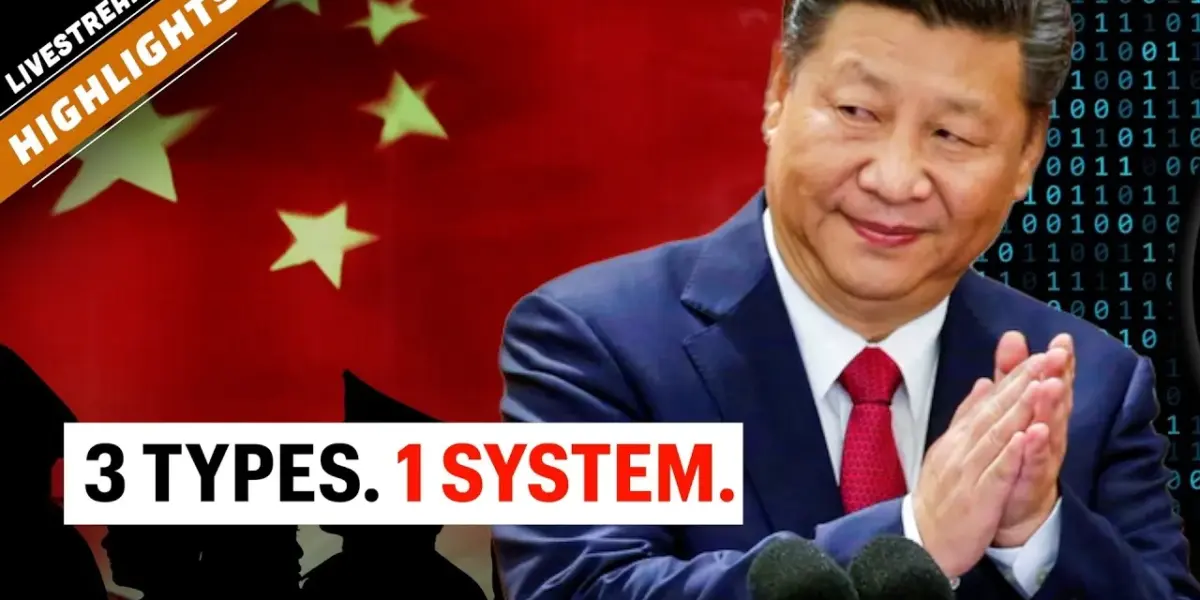
China's global intelligence operations extend far beyond traditional spies, utilizing a three-tiered structure of operatives and four core strategies. This system cleverly integrates business with espionage, making operations financially self-sustaining and using commercial entities as cover for influence and information gathering.

China’s Global Spy Network: Business Fuels Secret Operations
China operates a vast and complex spy network that reaches across the globe. This system isn’t just about traditional spies; it involves a wide range of people and organizations. Insiders describe this network as having three main layers of operatives and four key strategies, all working together to achieve Beijing’s goals.
The Three Layers of Chinese Intelligence
The first group are the Mikum, which means professional intelligence officers. These are highly trained, full-time operatives working within China’s military, state security, or public security agencies. They are the disciplined, career spies that most people imagine when they think of espionage. These officers may work undercover in other countries, taking on ordinary jobs to blend in.
The second group is called Shangan, or semi-official operatives. This group works in a more ambiguous area. Some are registered in intelligence systems and may receive compensation, acting like part-time or backup agents. However, a more significant part of this group is made up of individuals who use their business connections, often linked to military or intelligence bodies, to gain advantages. These connections can lead to special access, higher status, and political support, helping them succeed in business abroad. In return, they provide financial or other support back to the Chinese system. Many wealthy Chinese business people operating overseas are believed to be part of this group.
The third and broadest layer consists of Guaca, or affiliates. These individuals are not trained spies or formal agents. They are often ordinary people who connect with intelligence-linked networks to gain protection, access, or influence. This layer is the most widespread and the hardest to detect, making the entire system incredibly difficult to understand fully.
Four Core Strategies Guiding the Network
This elaborate system is guided by a strategic framework developed around the 1990s. A former vice chairman of China’s Central Military Commission, Zhang Zhen, outlined a 16-word strategy that can be summarized into four main principles:
1. Integrate Military and Civilian Resources
China doesn’t rely solely on professional spies. Instead, it mobilizes a much larger group, including business people, researchers, and overseas Chinese communities. This blurs the lines between everyday activities and intelligence work. Companies like Huawei and drone maker DJI are often cited as examples where civilian and state functions are not clearly separated. This means ordinary businesses can be used to support intelligence goals.
2. Coordinate Domestic and Overseas Operations
This strategy involves linking China’s internal control with its external influence. Networks are built within China while efforts are made to extend influence abroad. Examples include the establishment of overseas Chinese police service stations in countries like Canada, Europe, and the US. Another tactic is using family members in China to pressure diaspora communities living overseas. The global Chinese diaspora essentially becomes a bridge between domestic control and international operations.
3. Balance Short-Term and Long-Term Goals
Some operations aim for immediate results, like acquiring technology or tactical intelligence. Others are designed to unfold over years, even decades. This involves placing individuals, building relationships, and shaping influence slowly. The Chinese Communist Party (CCP) is known for its patience in cultivating long-term targets. Reports have surfaced about operations using personal relationships, including romantic ones, to gain access to professionals in fields like Silicon Valley. While some aims might be to steal trade secrets, many are focused on building long-term connections, even marriage, to integrate into key Western environments.
A notable example is Christine Fong, who met Congressman Eric Swalwell when he was a city council member. She helped with his campaign and his office. She focused on him early, not as a top official then, but as a rising figure with future potential. This strategy of cultivating individuals early in their careers, before they reach national power, is a key part of Beijing’s long-term approach. Swalwell later served on the House Intelligence Committee, showing the effectiveness of this long-term cultivation.
4. Use Business to Support Intelligence
This strategy is particularly clever and sets China’s model apart from traditional espionage. The goal is to make intelligence operations financially self-sustaining while using commercial entities as a cover. Individuals are often positioned as executives, investors, or business tycoons overseas. These are not fake businesses; they are real and serve multiple purposes. They can act as funding channels for intelligence operations, provide cover identities for agents, and, most importantly, offer a platform for these business figures to access power centers and influential circles. A successful business leader naturally gains respect and leverage in Western societies. Many Chinese individuals gain access in the US under the guise of business or investment, with the aim of building profitable enterprises and using the profits to fund intelligence activities. This creates a system where intelligence, business, investment, and state power are fully integrated. In some cases, individuals come to the US to raise capital, effectively using American funds to support operations within the United States itself.
Why This Matters
China’s intelligence model is fundamentally different from Western systems. It is highly decentralized and massive in scale, involving intelligence agencies, state-owned enterprises, private companies, universities, and individuals. Espionage, in this context, is not just a profession; it’s a comprehensive ecosystem. This approach allows China to leverage the openness of free markets to generate profit while simultaneously sustaining an intelligence network within those very societies. Understanding these layers and strategies is crucial for governments and businesses worldwide to recognize and counter the multifaceted influence operations and intelligence gathering activities conducted by Beijing.
Implications and Future Outlook
The integration of business and intelligence presents a significant challenge to national security and economic competition. As China continues to expand its global reach, this model allows it to exert influence and gather information in ways that are difficult to track and attribute. The long-term cultivation strategy means that potential threats may not be apparent for years, making proactive defense challenging. The reliance on a broad network of affiliates and business-linked operatives also means that the scope of potential intelligence activity is immense. Future outlook suggests that this integrated approach will likely continue to evolve, becoming more sophisticated as China seeks to achieve its strategic objectives on the global stage. Western nations and international bodies face the ongoing task of adapting their security measures and understanding to this unique and pervasive form of statecraft.
Historical Context
The roots of this strategy can be traced back to China’s reform period in the 1990s. Senior military leadership recognized the need for a more comprehensive approach to intelligence gathering and influence operations beyond traditional spycraft. The desire to modernize China’s capabilities and project its power globally led to the development of doctrines that emphasized the synergy between civilian and military efforts, domestic and international coordination, and the strategic use of economic power. This shift reflected a broader recognition within the CCP that economic strength and technological advancement were inextricably linked to national security and global influence.
Source: Inside the CCP’s Spy Structure: 3 Layers, 4 Strategies, One Global System (YouTube)

Related Articles


China’s Supercomputer Breached: A Digital Gold Rush?
A massive data breach allegedly targeting a Chinese supercomputer could be one of the largest ever linked to China. Sensitive military and scientific data may have been stolen over months, raising concerns about national security and the global tech race.


Mysterious Scientist Deaths Spark Global Security Concerns
A series of unexplained deaths and disappearances involving scientists working on sensitive projects, including NASA and advanced energy research, is raising global security alarms. While no official connections have been confirmed, former intelligence experts warn that such individuals are prime targets for foreign espionage, prompting calls for greater scrutiny.


Russian Hackers Exploit Old Wi-Fi Routers for UK Spying
Russian intelligence is reportedly using outdated home Wi-Fi routers across the UK for espionage, according to Britain's National Cyber Security Centre. Cybersecurity experts state that groups like Fancy Bear exploit these devices to gain UK-based IP addresses, masking their origin and making attacks on national infrastructure harder to trace.