Sanctuary Cities Face Airport Processing Cuts
The Department of Homeland Security is exploring a plan to stop processing international travelers at airports in sanctuary cities. Officials cite resource allocation and policy conflicts as reasons for this potential change. This move could impact travel and highlight federal-local tensions.


Sanctuary Cities Face Airport Processing Cuts
The Department of Homeland Security (DHS) is considering a significant change that could affect how international travelers are processed in certain cities. Officials are looking at stopping the processing of international travelers at airports located in so-called “sanctuary cities.” This move comes amid discussions about how to best use limited resources for Customs and Border Patrol (CBP) agents.
Prioritizing Resources and Policy Conflicts
The core of the issue lies in a perceived conflict between federal immigration enforcement and local policies in sanctuary cities. DHS officials argue that it doesn’t make practical sense to process international arrivals in cities that are not willing to enforce federal immigration laws. They believe that taxpayer money and valuable agent time should be directed towards areas that cooperate with federal immigration efforts.
“It doesn’t make a whole lot of sense to me that we would process Customs and Border Patrol at an airport and then release them to a city that they’re not willing to enforce immigration policy.”
This statement highlights a frustration among some federal officials. They feel their work is undermined when individuals processed by CBP are then released into communities with policies that differ from federal immigration mandates. The idea is that if federal agents are going to be stationed at airports, their efforts should align with the cooperation of the local jurisdiction.
The Concept of Sanctuary Cities
Sanctuary cities are local jurisdictions that have adopted policies to protect undocumented immigrants. These policies often limit cooperation with federal immigration enforcement agencies. For example, they might decline to honor detainer requests from Immigration and Customs Enforcement (ICE) or prohibit city employees from inquiring about immigration status. The goal is generally to foster trust between immigrant communities and local law enforcement, encouraging reporting of crimes without fear of deportation.
Historical Context and Federal Authority
The debate over immigration enforcement and the role of local governments is not new. Historically, there has always been a tension between federal immigration laws and state or local approaches. The U.S. Constitution grants the federal government broad authority over immigration. However, local governments have a significant impact on the daily lives of residents, including immigrants.
Past court cases have affirmed federal authority in immigration matters. However, the practical implementation of these laws often involves cooperation, or lack thereof, from state and local entities. The current consideration by DHS represents an attempt to exert federal control by reallocating resources based on perceived cooperation levels.
Potential Implications and Future Outlook
If implemented, stopping international traveler processing at airports in sanctuary cities could have several consequences. Travelers arriving at these airports might be rerouted to other locations for processing. This could lead to longer wait times and increased burdens on airports and cities that do cooperate with federal immigration policies.
For residents and travelers in sanctuary cities, the change might mean less direct federal immigration presence at their local airports. It could also signal a broader shift in how federal agencies interact with jurisdictions that do not fully align with their enforcement priorities. The DHS’s stated intention is to prioritize working with communities and states that are willing to collaborate on enforcing immigration laws.
Why This Matters
This potential policy change highlights a growing friction point in U.S. immigration policy. It pits the federal government’s enforcement goals against the social and political values of certain local communities. The decision to withhold services, like airport processing, based on a city’s immigration policies could set a precedent for how federal resources are allocated in other policy areas.
It raises questions about the balance of power between federal and local governments. It also brings into focus the practical challenges of enforcing immigration laws when there isn’t uniform support across all levels of government. The move could also impact the travel experience for international visitors and the economic activity associated with those travelers.
Looking Ahead
The DHS’s review of airport processing in sanctuary cities is still in the discussion phase. The final decision will likely depend on further consultation with the President and an assessment of available resources. However, the mere consideration of such a drastic measure signals a potential hardening of federal stances on immigration enforcement and intergovernmental cooperation. It suggests that federal agencies may become more assertive in directing resources based on local policy alignment.
Source: DHS Says Us Could Stop Processing International Travelers at Some Airports in ‘Sanctuary Cities’ (YouTube)

Related Articles

US Eyes Border Patrol Shift Amidst City Clash
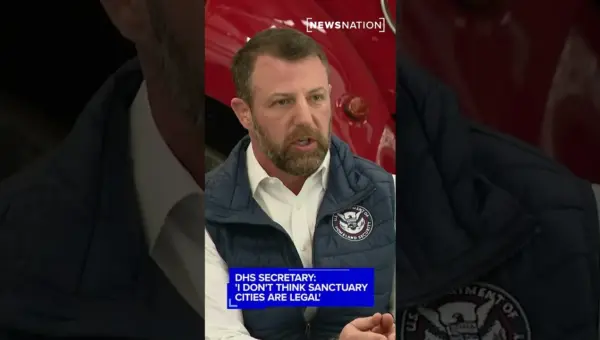
U.S. Homeland Security Secretary Alejandro Mayorkas is considering redirecting border patrol resources away from sanctuary cities that don't enforce immigration laws. He expressed doubt about the legality of these cities and cited funding concerns for border operations. This potential shift could significantly alter federal-local cooperation on immigration.

Pope May Skip US Visit Over Trump Policy Clashes
A Vatican official has indicated that Pope Leo XIV may not visit the United States under the Trump administration due to foreign policy disagreements and clashes over immigration. The Pope's potential absence from America's 250th birthday celebration in 2026 is seen as a response to the administration's policies and rhetoric.


New DHS Chief Tours Disaster Zone, Eyes Border Policy
Homeland Security Secretary Markwayne Mullin's first regional visit focused on hurricane recovery in North Carolina and potential changes to Customs and Border Protection staffing in sanctuary cities. The trip highlighted the dual challenges of disaster response and immigration enforcement, as well as administrative gaps within FEMA.