Navy Divers Ready for Historic Artemis II Crew Splashdown
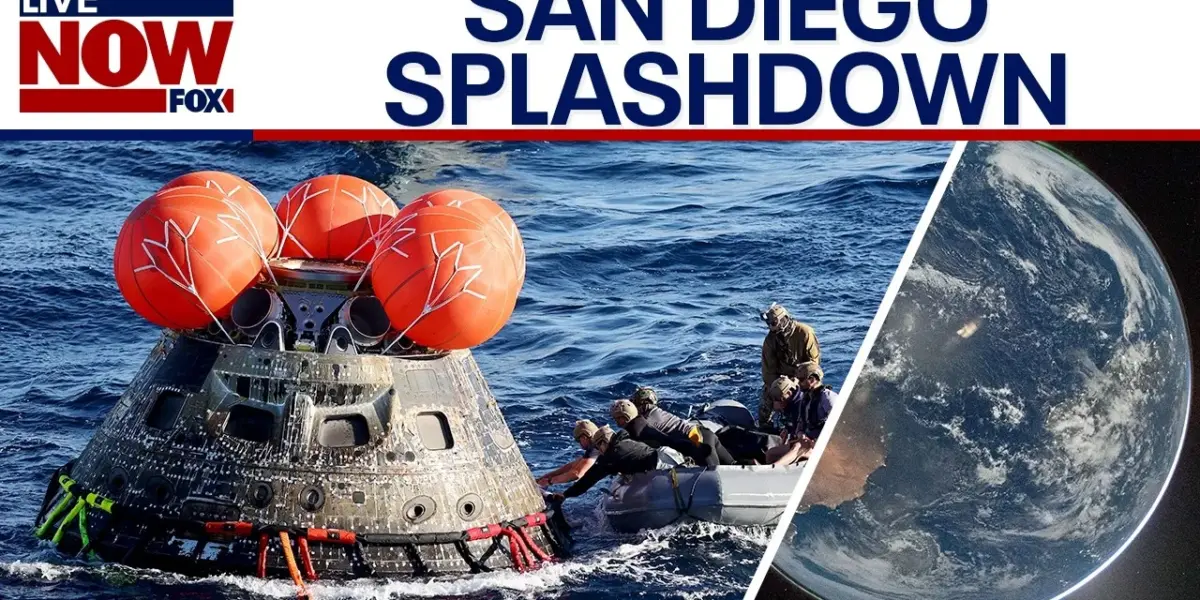
U.S. Navy divers have completed months of intensive training to ensure a safe recovery for the Artemis II crew. The Orion capsule is set to splash down off San Diego in about 48 hours, with the USS John P. Murtha serving as the recovery vessel. This historic mission highlights the Navy's critical role in supporting NASA's ambitious space program.

Navy Divers Prepare for Artemis II Return
Months of intense training culminate Friday for a specialized team of U.S. Navy divers. They are set to assist the historic Artemis II crew upon their return to Earth. The Orion capsule, named Integrity, is expected to splash down off the coast of San Diego approximately 48 hours from now. Navy personnel aboard the USS John P. Murtha will escort the astronauts to safety after their groundbreaking lunar flyby mission.
A Critical Mission for the Navy
The U.S. Navy’s role in supporting NASA’s Artemis program is crucial. The USS John P. Murtha will serve as the primary recovery ship. Its transport dock is prepared to receive the Orion spacecraft and its four-person crew. This mission marks a significant collaboration between the two organizations, highlighting the Navy’s extensive capabilities beyond traditional maritime operations.
Intensive Training for a Unique Operation
Retired U.S. Navy diver Thomas McConnell explained the rigorous preparation involved. “These divers have trained for months and months at the neutral buoyancy lab,” he stated. Their training covers various challenging scenarios, including approaching a capsule that might be upside down. Divers must also contend with potential hazards like loose lines and residual fuels or oxidizers. “All that stuff needs to be cleared once the capsule is taken into custody,” McConnell added.
Handling Astronauts with Extreme Care
Once the capsule is secured, the focus shifts to the astronauts. McConnell emphasized the need for extreme care when handling the crew. “The brave astronauts have to be handled with absolute care, taking consideration what they’ve been through, what they’ve done in outer space and not only that, the violent re-entry from the atmosphere down to the Earth,” he said. This careful approach ensures the astronauts’ well-being after their demanding journey.
A Highly Unique Endeavor
McConnell described this recovery mission as “incredibly unique” for Navy divers. Typically, their work involves repairing ships, salvaging sunken objects, or supporting special operations. “This Orion, this opportunity is absolutely huge,” he noted, expressing pride and a touch of envy from active-duty colleagues. “A lot of my brothers that are still active duty, they’re all excited about it. They’ve been training for months, and honestly, I wish I could be part of the effort.”
Viewing the Splashdown
For those hoping to witness the event, public viewing will be limited. The splashdown is anticipated to occur 50 to 100 nautical miles off the San Diego coast. While a distant glimpse might be possible, direct viewing from shore is unlikely due to safety concerns. Local institutions like the Fleet Science Center and the Aerospace Museum are hosting watch parties to bring the excitement to the community.
Navigating Challenging Conditions at Sea
The recovery operation takes place far offshore, where sea conditions can be unpredictable. “When you get that far out from the bay, it gets really choppy,” McConnell explained. Divers will deploy from the USS John P. Murtha in smaller vessels, potentially facing 8 to 10-foot seas. These conditions can make the capsule and the recovery boats rock significantly, increasing the inherent risks. However, McConnell expressed confidence in the divers’ abilities: “Navy divers and EOD techs, they’re highly trained in safety. They’re great seamen. They’re great at handling lines and being on boats and dealing with those kind of dangers really with a lot of ease.”
Urgency and Medical Protocols
Speed is paramount once the capsule is in the water. “If anything regarding somebody that has a life or you know, live body, it absolutely has to be handled in an extremely emergent sort of tone,” McConnell stated. The priority is to extract the astronauts as quickly as possible. Upon exiting the capsule, astronauts will be treated with a high level of medical vigilance, similar to divers emerging from deep water. This includes a period of observation for any neurological effects or changes resulting from the mission and re-entry. “You’re going to have NASA doctors on standby, you know, dive medical officers ready to go,” McConnell confirmed. “They picked the right team to handle this because these guys are going to kill it.”
Looking Ahead
The successful splashdown and recovery of the Artemis II crew will mark a significant milestone in humanity’s return to the Moon. The meticulous planning and extensive training by the U.S. Navy divers underscore the complexity and importance of this final phase of the mission. As the Orion capsule prepares for its descent, the world watches, anticipating the safe return of these brave astronauts and celebrating another step forward in space exploration.
Source: Artemis II crew prepares for return to Earth, splashdown in California (YouTube)

Related Articles


Artemis II Faces Fiery Re-entry: Expert Warns of ‘Danger Zone’
Space policy expert Art Harman warns that the re-entry of NASA's Artemis II mission into Earth's atmosphere presents a significant 'danger zone.' This critical phase tests the spacecraft's heat shield and the crew's safety, drawing lessons from past spaceflight tragedies.

Artemis II Astronauts Near Earth After Historic Moon Mission
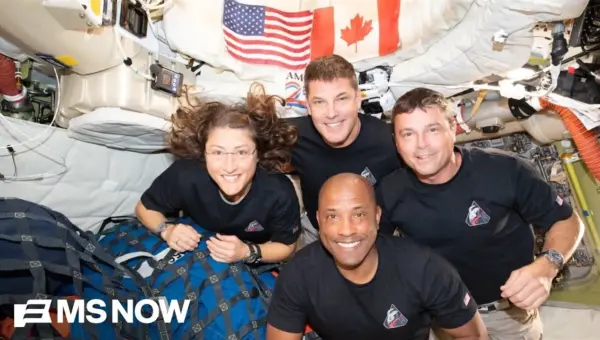
The Artemis II astronauts are nearing Earth after a historic 10-day mission, marking the farthest human space travel to date. The journey included groundbreaking firsts and moments of national unity, though some noted a muted response from the President. The crew now faces the critical re-entry phase, a testament to NASA's scientific expertise.

Moon Mission Sparks New Space Race
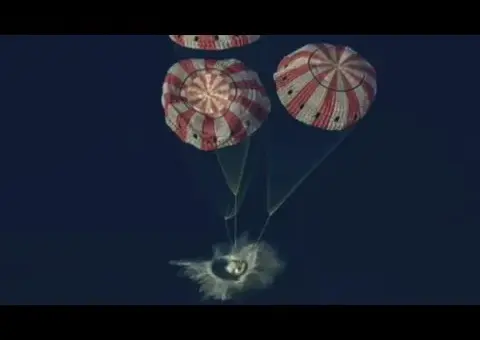
The Artemis II crew's safe return from a lunar orbit mission highlights a new era of space exploration. This successful splashdown underscores the growing international competition and cooperation in space, often referred to as a new space race.