Andrew Luck, AP, Megatron: NFL’s Top Draft Prospects
From Andrew Luck's promising start to Calvin Johnson's "Megatron" dominance, this article dives into the most generational NFL draft prospects since 2000. We examine their college hype, pro careers, and lasting impacts.

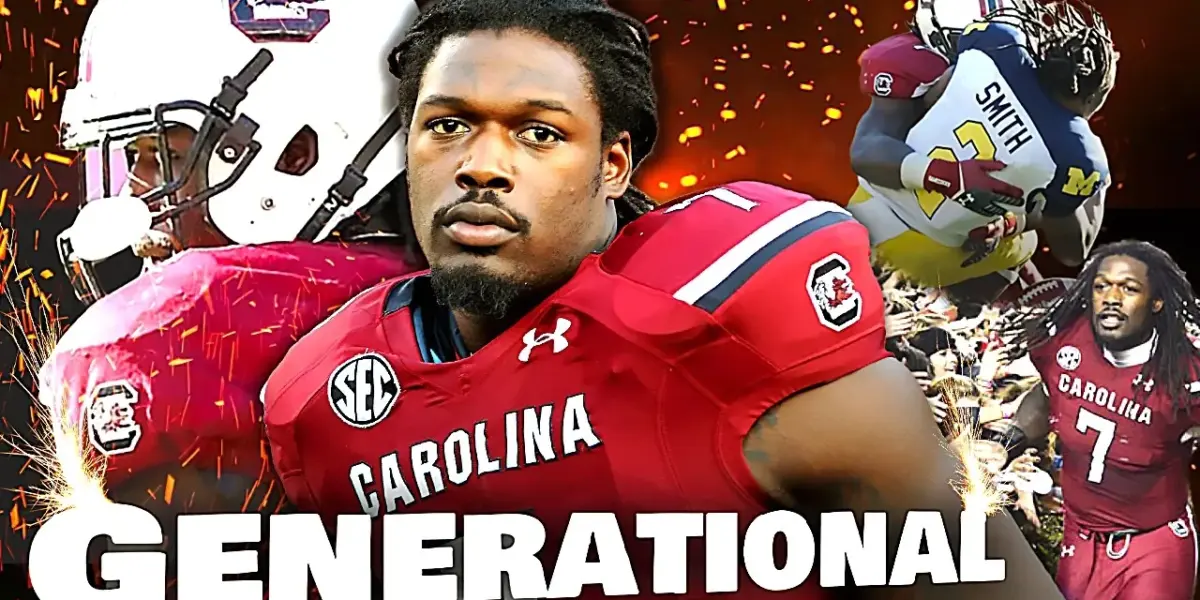
Andrew Luck, Adrian Peterson, Calvin Johnson Headline Elite Draft Class
The NFL has seen some truly special players since the year 2000, athletes so gifted they’re called “generational prospects.” These players, with their amazing size and athleticism, create buzz long before they even step onto a pro field. Fans and media get excited because stars like these don’t show up every year. We’re looking at the most hyped players at each position since 2000, examining what made them stand out and how their careers unfolded.
Quarterback: Andrew Luck
For quarterbacks, Andrew Luck stands out as the most generational prospect since 2000. Before the 2012 NFL Draft, many compared him to John Elway, another Stanford product who entered the league in 1983. Luck was physically gifted, standing 6’4″ and weighing around 240 pounds. He had a strong arm and the agility to escape the pocket. But what truly set him apart were his “intangibles.” His work ethic was legendary, and he was known for his intelligence both on and off the field. Luck understood the game at a deep level and had a natural feel for it. He led Stanford, a team not known for football success, to great wins. Scouts found it hard to see any flaws in his game, making him the obvious first overall pick for the Colts in 2012.
Luck immediately made an impact, leading the Colts to an 11-5 record and throwing for over 4,300 yards as a rookie. While he turned the ball over a lot, his talent was undeniable. By 2014, he was among the league’s top quarterbacks, leading the NFL in touchdown passes and taking the Colts to the AFC title game. It seemed like a Super Bowl was inevitable for the young star. However, injuries began to derail his career after 2014. He missed significant time due to a kidney injury, a torn abdominal muscle, and a torn shoulder labrum that required surgery and caused him to miss the entire 2017 season. After winning Comeback Player of the Year in 2018, Luck surprisingly retired at just 29, citing the physical and mental toll of the game. His aggressive style led to many hits, and even at 240 pounds, the NFL’s brutality caught up to him quickly.
Running Back: Adrian Peterson
When it comes to running backs, Adrian Peterson was the most generational prospect since 2000. He was the top recruit out of high school, so highly sought after that coaches reportedly tried extreme measures to get him to their schools. At Oklahoma, Peterson lived up to the hype, with some describing him as a “Greek god.” His speed was incredible, even rumored to be Olympic sprinter material. But his true strength was his unique running style: upright, explosive, powerful, and incredibly violent. Standing 6’1″, he ran upright, which was unusual, but he could instantly lower his pads. Peterson ran with such force that he often ran through defenders. Combined with his speed, he was a generational talent that no defender wanted to face. He was the gold standard for running backs of his era and was drafted seventh overall by the Vikings in 2007.
Peterson was an instant star as a rookie and led the league in rushing yards by the end of his second year, proving his college hype translated to the pros. He spent 10 productive years in Minnesota, including a remarkable 2,000-yard season in 2012, just less than a year after tearing his ACL. He was widely considered the best running back of his generation. After leaving Minnesota, Peterson became a journeyman, playing for several teams. His career effectively ended after the 2021 season when no team signed him. Despite the later struggles, his prime was incredible. He ranks fifth all-time in career rushing yards and is a lock for the Hall of Fame.
Wide Receiver: Calvin Johnson
The most generational wide receiver prospect since 2000 was undoubtedly Calvin Johnson. His performance at his pro day and the NFL combine left scouts stunned. At 6’5″ and 240 pounds, with an incredible 6’10” wingspan, Johnson ran a 4.35 40-yard dash, had a 42.5-inch vertical jump, and an 11’7″ broad jump. These numbers would have set combine records at the time. Beyond his incredible athleticism, Johnson was an outstanding football player, even while playing at Georgia Tech, an average ACC team with a run-heavy offense. Despite the team’s struggles in the passing game, Johnson led the conference in receiving yards in 2005 and 2006 and in catches and touchdowns in 2006. He was like a video game player, maxing out physical and catching abilities. With no character concerns, Johnson was selected second overall by the Lions in 2007.
Johnson immediately became the star of the Lions’ offense, earning the nickname “Megatron” from teammate Roy Williams due to his size. By 2008, he led the league in receiving touchdowns despite the team’s poor performance. His dominance grew with the addition of quarterback Matt Stafford. By 2011, Megatron was unguardable, leading the league in receiving yards. In 2012, he set the all-time NFL record with 1,964 receiving yards. He maintained this elite level until his surprising retirement after the 2015 season. Playing for a losing team for most of his career wore him down. His sudden retirement, while still playing at a high level, was a painful reminder for Lions fans of Barry Sanders’ departure years earlier.
Tight End: Kyle Pitts
Choosing the most generational tight end prospect is tough, but Kyle Pitts likely had the most pre-draft hype. He was nicknamed “unicorn” because players with his physical gifts are rare. Pitts stood 6’6″, weighed 245 pounds, ran a 4.40 40-yard dash, and won the award for the best tight end in college football. He had excellent ball skills and could play inline, in the slot, or out wide thanks to his athleticism. Scouts saw him as a blend of Darren Waller and Calvin Johnson, a matchup nightmare. His ability to contort his body and catch passes at his size was impressive. It wasn’t a surprise when Pitts became the highest-drafted tight end in NFL history, going fourth overall to the Falcons in 2021.
Pitts, still in his mid-20s, has had a mixed start to his career. He had a standout rookie season with over 1,000 receiving yards and a Pro Bowl selection, suggesting a bright future. However, the following years were underwhelming. His 2022 season was cut short by a knee injury, and the next two seasons were average, falling short of the expected “generational dominance.” 2025 showed improvement with career highs in receptions and touchdowns, earning him second-team All-Pro honors. While he hasn’t fully met expectations yet, Pitts still has time to develop into the star many believed he would be.
Offensive Tackle: Orlando Pace
For the most generational offensive tackle prospect, we look back to 1997 with Orlando Pace. He was projected as possibly the greatest prospect ever, not just as a tackle but as a football player. At Ohio State, Pace was legendary, known for his “pancake blocks” where he’d knock defenders down. He reportedly had 80 pancake blocks in his junior season, leading to the distribution of Orlando Pace pancake magnets by the university. At 6’6″ and 334 pounds, he was incredibly dominant, even finishing fourth in Heisman Trophy voting as an offensive lineman – an unheard-of achievement. Pace didn’t allow a sack in his final two college seasons and earned numerous awards, including a spot on the NCAA football All-Century team. He was also a high-character player and went first overall to the Rams in 1997.
Pace quickly became a cornerstone of the Rams’ “Greatest Show on Turf” offense, a key reason for their record-setting success in 1999. He earned first-team All-Pro honors that season and began a streak of seven consecutive Pro Bowl selections. Pace’s dominant play continued for nearly 12 seasons in St. Louis. He was deservedly inducted into the Hall of Fame in 2016.
Interior Defensive Lineman: Ndamukong Suh
The most generational interior defensive lineman prospect since 2000 is Ndamukong Suh. Known for being the biggest and strongest player on the field, Suh possessed a terrifying combination of strength, high motor, and power that made him almost unblockable, even against double teams. He was also a Heisman finalist, a remarkable feat for a defensive player. Suh dominated at Nebraska, showcasing his terrifying ability in a standout game against Texas in the Big 12 championship. He single-handedly disrupted the heavily favored Texas offense, recording 12 tackles, 4.5 sacks, and 7 tackles for loss. This performance is considered one of the greatest by a defensive lineman in college football history. Suh was selected second overall by the Lions in 2010.
Suh immediately terrorized offenses, becoming arguably the best interior defensive lineman in the league. As a rookie, he earned first-team All-Pro honors, and it seemed he would be a cornerstone for the Lions. It’s wild to think that in 2010, the Lions had Suh, Calvin Johnson entering his prime, and Matt Stafford, yet never achieved great team success beyond individual accolades. Suh continued to dominate in Detroit but also developed a reputation as a “dirty player.” He later played well for the Dolphins initially but became a solid starter by age 30. Suh’s Hall of Fame case is interesting; he had a dominant seven-year start to his career but was more average afterward. His Hall of Fame status remains uncertain.
Defensive End: Jadeveon Clowney
The most generational defensive end prospect since 2000 has to be Jadeveon Clowney. He was described as a meaner, nastier version of Julius Peppers, himself a generational talent. Clowney had a larger-than-life aura from high school, rated as the highest-rated high school player ever by 24/7 Sports. At South Carolina, his mere presence was intimidating. By his sophomore year, he was putting up monster numbers, possessing incredible speed and power for his size, clocking an unofficial 4.47 40-yard dash at 266 pounds. He was widely considered the future number one overall pick throughout his college career. In his final college game, he made one of the most famous defensive plays in recent memory: bursting through the line untouched, brutally hitting a running back, forcing a fumble, and recovering it with one hand. This cemented his status as a college football legend, and he was unsurprisingly selected first overall by the Houston Texans.
Clowney’s NFL start was slow due to injuries in his first two seasons. It wasn’t until his third year that his potential began to shine. He earned second-team All-Pro honors in 2016, kicking off a three-year stretch where he was an above-average to great edge rusher and excellent against the run. However, he became more of a mercenary player afterward. While he had great moments, like his first year in Cleveland, he has mostly been an average NFL starter with some good flashes. His frequent team changes also make it hard for fans to connect with him. Overall, he’s been a good NFL starter, but not generational.
Linebacker: LaVar Arrington
Combining inside and outside linebackers, LaVar Arrington carried the most hype as a generational prospect. He was arguably the biggest star in college football, freakishly athletic and productive. Many analysts compared him to Lawrence Taylor, the greatest defensive player ever. Arrington was a sideline-to-sideline tackling machine. He also made one of the most famous defensive plays of the 1990s, the “Lavar Leap,” where he timed the snap count perfectly on fourth down and leaped over the line to stop the ball carrier, a play his college coach said he’d remember at 85. Washington selected him second overall in 2000.
By his second year, Arrington was a force, showing the sideline-to-sideline ability seen in college. He made three straight Pro Bowls from 2001 to 2003, earning second-team All-Pro twice. However, injuries took a heavy toll after 2003, causing him to miss significant time. In his final year, he ruptured his Achilles, one of the worst injuries an NFL player can endure. To make matters worse, a serious motorcycle accident right before training camp in 2007 resulted in multiple broken bones and severe cuts. Months later, he announced his retirement, a brutal end to a promising career.
Cornerback: Patrick Peterson
The most generational cornerback prospect since 2000 is Patrick Peterson. In a loaded 2011 draft class, some analysts considered Peterson the top overall prospect. He had elite size, speed, strength, hip fluidity, and ball skills, making him a lockdown man-to-man corner. His size and athleticism at corner were exceptional; he ran a low 4.3 40-yard dash and was about 25 pounds heavier than the average cornerback. Besides being a top corner prospect, Peterson was also a game-breaking playmaker in the return game, winning SEC Special Teams Player of the Year in 2010. He was selected fifth overall by the Arizona Cardinals in 2011.
Peterson dominated immediately, making an impact as a starter and an elite return man, tying the all-time record for punt return touchdowns in a single season. The following year, he wreaked havoc with 7 interceptions and a league-high 5 fumble recoveries, on top of his elite cornerback play. For the next decade, Peterson was in the conversation for the best corner in the game, making eight straight Pro Bowls and earning three first-team All-Pro selections. Before retiring, he was among the active leaders in career interceptions and is highly likely to be a Hall of Fame candidate, having made the All-2010s team and been a top-five corner for most of his career.
Safety: Sean Taylor
For the most generational safety prospect since 2000, Sean Taylor stands out. He was an intimidating college safety at 6’3″ and 230 pounds, a menace against the run with brutal hits. In coverage, he was a nightmare for quarterbacks, recording 10 interceptions, three for touchdowns, as a junior at Miami. Taylor was big, fast, smart, instinctual, and played with incredible intensity. He was like having an extra elite corner and a run-stuffing linebacker rolled into one. There were no weaknesses in his game, making him arguably the most complete safety prospect seen in a lifetime. It’s remarkable that in 2001, Ed Reed was Miami’s starting free safety, with a freshman Sean Taylor as his backup. Taylor was selected sixth overall by Washington in 2004.
Tragically, Taylor’s pro career was cut short. By his third year, he was one of the best safeties in the game, and in his fourth year, he was having a career season before being shot during a home invasion and tragically passing away. The news devastated the league and fans. In their next game, Washington played with only 10 defensive players on the first snap to honor him. His final Pro Bowl appearance, where he delivered a massive hit, is often remembered as a highlight from a more physical era of football, contrasting with today’s Pro Bowl.
Source: Most Generational Prospect At Every Position Since 2000 (YouTube)

Related Articles


Middle East Tensions Rise Amid Peace Talks, Epstein Files Reemerge
This Morning's Top Headlines cover escalating Middle East tensions as peace talks approach, with Iran accused of violating a ceasefire and oil prices rising. Simultaneously, First Lady Melania Trump has addressed allegations linking her to Jeffrey Epstein, denying any personal relationship. The Justice Department is also investigating the NFL over fan subscription fees, examining potential violations of a 1961 broadcasting law.

DOJ Probes NFL’s High Cost for Fans
The U.S. Department of Justice is investigating the NFL, citing concerns that fans are overpaying and facing complicated access to games. With games spread across 10 networks and streamers, the cost to watch the entire season can exceed $1,000 annually. The league defends its current model, emphasizing free broadcast availability, while lawmakers also scrutinize the distribution practices.


NFL Faces Antitrust Probe Over Streaming Game Fees
The Justice Department is investigating the NFL over its game streaming fees, aiming to ensure consumer affordability. Meanwhile, a 60-year-old man has walked onto a college football team, aiming to become the oldest player. Tensions remain high in the Middle East as peace talks loom, and First Lady Melania Trump has addressed rumors linking her to Jeffrey Epstein.