New Telescope Spots Asteroids Days Before Impact
The Vera C. Rubin Observatory is now online, revolutionizing our ability to detect asteroids on collision courses with Earth. This powerful telescope can spot dangerous space rocks days or even weeks before impact, offering crucial time for scientific study and potential planetary defense.

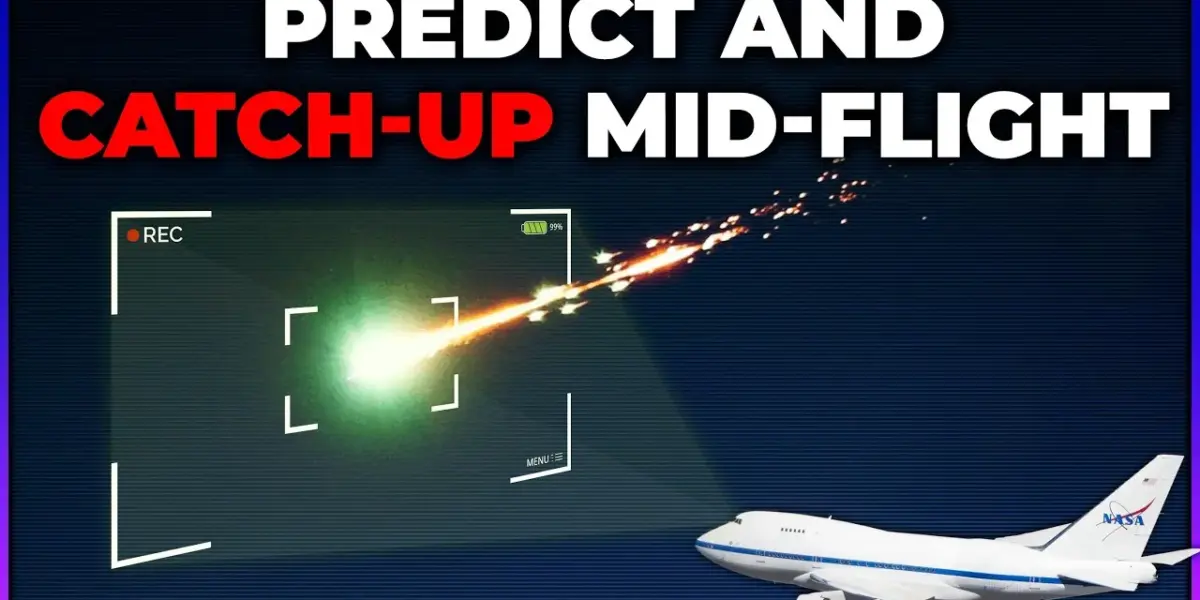
New Telescope Spots Asteroids Days Before Impact
Astronomers are getting an early warning system for space rocks. The Vera C. Rubin Observatory, the most powerful tool of its kind ever built, is now online and scanning the night sky. This incredible observatory can spot asteroids that are on a collision course with Earth days, or even weeks, before they hit.
A Cosmic Shooting Gallery
Our planet is constantly bombarded by space debris. Every year, about 50 objects the size of a small car enter Earth’s atmosphere. These burn up harmlessly, but larger objects pose a threat. Events like the Chelyabinsk meteor in 2013, which was about 20 meters across, and the Tunguska event in 1908, estimated at 50 meters wide, show the potential for damage. These events are not rare; they happen regularly.
For decades, scientists have worked to find and track these Near-Earth Objects (NEOs). They’ve become much better at detecting them, sometimes just days before they strike. This allows them to predict the object’s path and even where fragments might land.
Vera C. Rubin Observatory: A Game Changer
The Vera C. Rubin Observatory, also known as the Legacy Survey of Space and Time (LSST), is a major leap forward. It began releasing data to astronomers about a month ago. In just its first month, it generated 800,000 alerts. These alerts flag any changes in the night sky, from stars brightening and dimming to distant supernovae. For astronomers like Ian Chow, a PhD student at the University of Washington, the most exciting alerts are for asteroids.
Chow co-authored a paper on using Rubin to find asteroids just before they impact Earth. He explained that while astronomers have already identified 11 such “imminent impactors” in recent years, Rubin is expected to find one to two meter-sized objects every year. This is a significant increase, offering a unique chance to study these objects as they enter our atmosphere and to collect fresh meteorite samples.
Studying Asteroids in Three Stages
Studying asteroids on a collision course with Earth provides valuable scientific opportunities. Scientists can analyze the asteroid while it’s still in space, observing its trajectory and color. As it enters the atmosphere, its fiery descent as a meteor reveals its physical strength and structure. If fragments survive and land as meteorites, scientists can analyze them directly. This includes testing their crushing strength, examining their internal structure, and determining their age through isotope dating.
This multi-stage approach is rare in astronomy. Each phase offers unique data. Observing an asteroid in space is challenging due to its faintness. Capturing its atmospheric entry often relies on chance sightings from security cameras or doorbells. Recovering meteorites soon after they fall is crucial, as they can quickly become contaminated by Earth’s environment.
A New Era of Detection
Rubin’s advanced capabilities mean it can see fainter objects than previous surveys. It can reach a magnitude of 24, meaning it can detect objects that are incredibly dim. This allows for earlier detection. Chow’s paper found that previous imminent impactors were typically discovered less than a day before impact. Rubin, however, is expected to find them a median of 1.5 days in advance. Some could be spotted days or even weeks before impact.
This extended warning time is crucial. It allows for more precise trajectory calculations. For instance, the 2023 CX1 impactor’s fall location was predicted within a few hundred meters. With more warning, scientists could potentially pinpoint impact zones precisely enough to have observers ready to collect meteorites almost immediately after they land. This is similar to how the Tagish Lake meteorite was recovered; it fell in winter onto a frozen lake, preserving it until scientists could collect it.
How Many and How Soon?
Each year, an estimated 35 to 40 meter-sized or larger objects hit Earth. Most fall into the ocean or are not observed. Rubin is expected to significantly increase the number of detected imminent impactors, potentially doubling the current rate of one to two per year.
While Rubin focuses on smaller objects, it also contributes to finding larger, potentially hazardous asteroids. For objects 140 meters and larger, Rubin could detect about 80%. For Tunguska-sized (50m) and larger objects, it’s around 50%. For Chelyabinsk-sized (20m) objects, detection rates drop to about 25%. These larger impactors might offer warning times of weeks, allowing for evacuations and detailed scientific observation.
The Future of Impact Prediction
Chow’s research aims to improve Rubin’s detection methods. The current system requires an object to be observed on three separate nights within 15 days. For fast-moving imminent impactors, this might be too slow. Chow is developing a method to identify objects based on just two streaks appearing in consecutive images. This “one tracklet streak matching” technique could catch fast-moving objects that might otherwise be missed, reducing the risk of false positives while speeding up detection.
This advancement could lead to a surge in potential impactor alerts. While this might overwhelm astronomers with follow-up work, it also opens doors for amateur astronomers. Those with powerful telescopes could contribute by performing follow-up observations on objects identified by Rubin, helping to refine trajectories and confirm potential impacts.
The Vera C. Rubin Observatory represents a significant step in our ability to understand and potentially mitigate the threat of asteroid impacts. By spotting these cosmic visitors earlier, scientists gain precious time for study, preparation, and perhaps, one day, for protecting our planet.
Source: What Would It Take to Catch Up With a Meteorite? (YouTube)

Related Articles


Moon Blasted by Space Rocks: New Impact Data Revealed
Our Moon is frequently struck by space rocks, creating visible flashes of light. Scientists are tracking these impacts to understand solar system dynamics and plan future human missions. This ongoing cosmic bombardment reveals the Moon's evolving surface.


New ‘Sulfur Worlds’ Exoplanets Discovered
Astronomers have identified a new class of exoplanets, 'sulfur worlds,' characterized by sulfur-rich atmospheres and potential magma oceans. The Vera C. Rubin Observatory is now sharing its sky alerts publicly, and the James Webb Space Telescope's latest mission proposals have been revealed. Updates on the Artemis missions and new evidence for asteroid material transfer are also discussed.


Vera C. Rubin Observatory Begins Sky Survey
The Vera C. Rubin Observatory has officially begun its 10-year sky survey, promising to generate millions of astronomical alerts nightly. Meanwhile, new Webb images reveal Uranus in unprecedented detail, and the Artemis program faces timeline adjustments.