US Declares Victory in Iran Operation, Ceasefire Talks Begin
The White House announced a significant military success following Operation Epic Fury, which reportedly dismantled Iran's military capabilities in just 38 days. This achievement has led to a ceasefire and the commencement of diplomatic negotiations aimed at long-term peace in the Middle East. The administration also highlighted a landmark conviction under the 'Take It Down Act,' championed by First Lady Melania Trump.

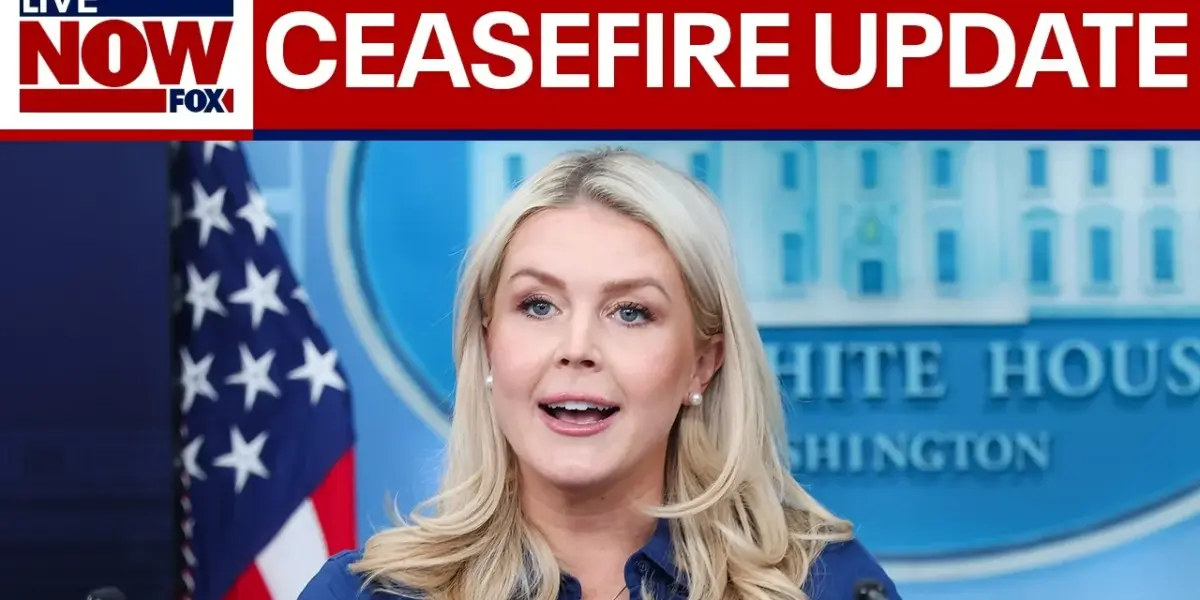
US Declares Major Victory After Iran Operation, Ceasefire Talks Underway
The White House announced a significant military achievement and a subsequent ceasefire with Iran, following a swift operation dubbed ‘Epic Fury.’ The operation, intended to dismantle Iran’s military threat, concluded in 38 days, far ahead of the projected four to six weeks. This success has paved the way for diplomatic negotiations aimed at long-term peace in the Middle East.
First Lady’s Initiative Leads to Landmark Conviction
Before addressing the Iran ceasefire, the White House highlighted a major win for First Lady Melania Trump. Yesterday marked the first conviction under the ‘Take It Down Act,’ legislation she championed. This law aims to protect victims from non-consensual AI-generated explicit images, cyberstalking, and threats of violence. Officials emphasized this as a critical achievement for protecting American youth.
Operation Epic Fury Decimates Iranian Military Capabilities
Operation Epic Fury successfully met and exceeded its military objectives, according to White House officials. The U.S. military reportedly destroyed Iran’s defense industrial base, severely crippling its ability to produce weapons used by the regime and its proxies. Iran’s capacity to build and stockpile ballistic missiles and long-range drones has been set back by years. Over 13,000 targets across Iran were struck, including the vast majority of Iran’s ballistic missiles and drone storage facilities.
Naval Annihilation and Air Dominance
The Iranian navy was described as completely annihilated, with over 150 naval vessels destroyed, including entire classes of warships. Iran’s submarine fleet is now non-existent, and 97% of its naval mines were also targeted and eliminated. Furthermore, the U.S. military achieved total air dominance over Iran. Before the operation, Iran’s air force conducted 30 to 100 flights daily; now, that number is zero.
Disruption of Proxy Support and Nuclear Ambitions
The operation significantly reduced Iran’s ability to fund and arm its terrorist proxies, preventing the distribution of weapons. Crucially, the White House stated that Iran will no longer be able to acquire nuclear weapons. Iran’s aggressive expansion of its short-range ballistic missile arsenal and its naval buildup, which posed an imminent threat to U.S. assets and allies, has been dismantled. The regime’s plans to use its military might as a shield for developing nuclear bombs have been thwarted.
Senior Leadership and Command Structures Targeted
The offensive also targeted Iran’s senior leadership, with reports of the former Supreme Leader Ayatollah Allah Kamani among those eliminated. Iran’s command and control structures suffered over 2,000 strikes, leading to widespread disruption. Many remaining leaders are reportedly paralyzed by fear, unable to move or meet freely.
Sacrifice and Path to Diplomacy
The White House acknowledged the sacrifice of 13 American service members who lost their lives during Operation Epic Fury. Their efforts created ‘maximum leverage’ for President Trump, enabling tough negotiations that have opened a path for a diplomatic solution and long-term peace. The success of the operation led Iran to agree to a ceasefire proposal and the reopening of the Strait of Hormuz.
Negotiations Underway for a Ceasefire Deal
Following the initial Iranian proposal, which was deemed unacceptable and discarded, a revised, more reasonable plan was presented. President Trump and his team have determined this modified plan to be a workable basis for negotiation, aligning it with a U.S. 15-point proposal. Key U.S. demands, including the end of Iranian enrichment, remain firm ‘red lines.’ The complex negotiations will take place behind closed doors over the next two weeks, provided the Strait of Hormuz remains open without limitations.
Addressing Media Misinformation
White House officials cautioned against inaccurate media reporting, emphasizing that public statements from Iran often differ from private communications. They stressed that President Trump will only accept a deal that serves the best interests of the United States.
Questions on Ceasefire, Rhetoric, and International Relations
During the press briefing, journalists raised several key questions. Regarding the achievements of Operation Epic Fury, officials reiterated the dismantling of Iran’s military threats and the prevention of nuclear weapon acquisition, setting the stage for diplomatic efforts.
Rhetoric and Moral High Ground
The administration defended President Trump’s strong rhetoric, arguing it led to the desired results and forced Iran to the negotiating table. They asserted that the U.S. maintains the moral high ground against a regime that has supported terrorism and threatened American interests for decades.
Strait of Hormuz and International Cooperation
Concerns were raised about Iran’s potential closure of the Strait of Hormuz, which the White House deemed unacceptable and demanded be reopened immediately. While acknowledging reports of Israeli strikes in Lebanon, officials stated Lebanon is not part of the current ceasefire agreement. The U.S. is dispatching a negotiating team, led by Vice President JD Vance, to Islamabad for talks. European allies have pledged to contribute to ensuring freedom of navigation in the Strait of Hormuz, a statement met with disappointment by the administration regarding NATO’s perceived lack of support during the operation.
Future of Negotiations and U.S. Role
The U.S. expects Iran to manage the Strait of Hormuz but will monitor it closely and offer assistance if needed. The issue of potential tolls for ships passing through the strait is under discussion. A primary goal remains ensuring Iran relinquishes its enriched uranium, ideally through diplomacy, though the possibility of military action was not ruled out.
Concerns and Next Steps
While acknowledging the fragile nature of ceasefires, officials expressed confidence in the dismantling of Iran’s command and control, which may complicate immediate communication. The U.S. also reiterated its policy that a nuclear war cannot be won and must never be fought. The administration is reviewing reports of renewed air defense activations and explosions in Iran. Regarding the ‘Dignity Act,’ the White House stated it would review the legislation. The administration also clarified that President Trump’s comments about Cuba referred to the regime’s downfall, not the country itself.
Source: White House press briefing amid Iran ceasefire (YouTube)

Related Articles

Iran Nuclear Talks Heat Up Amid Ceasefire Concerns
The White House is clarifying its stance on Iran's nuclear program, emphasizing that enrichment is off the table. Meanwhile, a high-level delegation is heading to Pakistan for critical talks amid reports of continued hostilities and the alleged closure of the Strait of Hormuz, testing a fragile ceasefire.


Melania’s Epstein Denial Sparks White House Panic
Melania Trump's surprise press conference denying friendship with Jeffrey Epstein and Ghislaine Maxwell has sparked widespread speculation. Held without administration support, the timing coincides with new polls showing her as the most disliked First Lady ever, raising questions about her motives and future public image.


Melania Trump Breaks Silence on Epstein, Stuns Washington
Melania Trump has issued a surprising statement clarifying her past connection to Jeffrey Epstein, stating she is not a victim and did not meet her husband through him. The statement has caught many, including the media and political circles, off guard. Meanwhile, Donald Trump faces criticism from his own base over his stance on Iran, with some viewing it as a departure from his "America First" policy.