US Suffers Major Defeat, Iran Rises as World Power
Professor Robert Pape argues the US has suffered its worst strategic defeat since Vietnam, propelling Iran into a major global power. Iran's gains include nuclear capability and control of the Strait of Hormuz, signaling a significant shift in world power dynamics.

US Suffers Major Defeat, Iran Rises as World Power
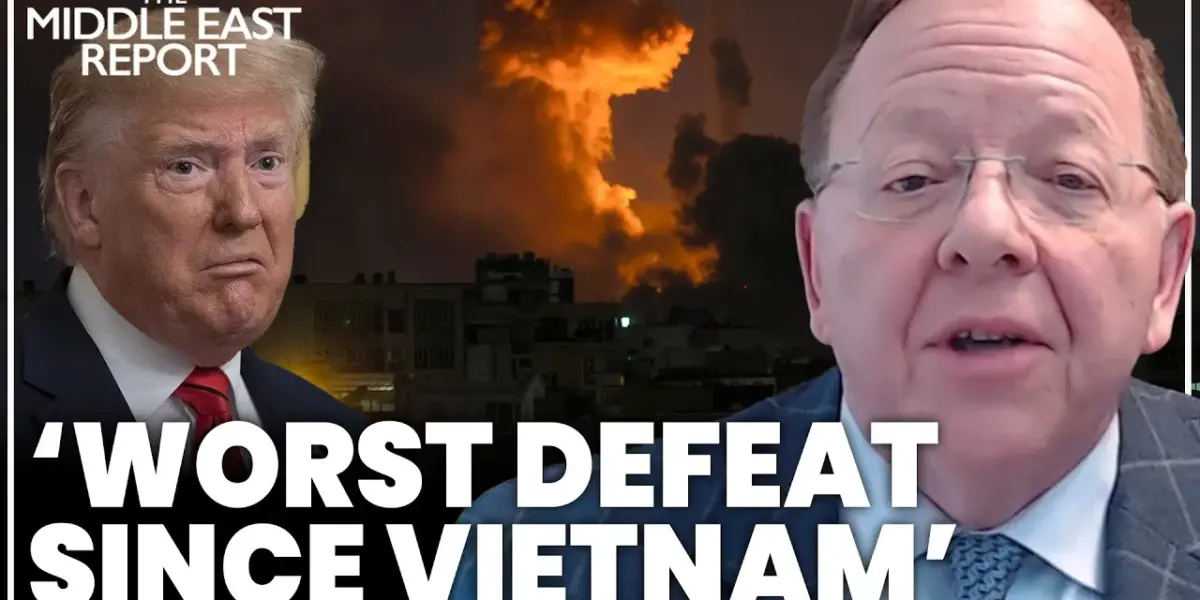
The United States has experienced its most significant strategic setback since the Vietnam War, a defeat that could even prove more damaging. In just 40 days, Iran has risen to become a major global power. This shift is evident as the U.S. and President Trump have accepted a 10-point peace plan heavily favoring Iran, with no clear strategic gains for the U.S.
A New Balance of Power
The conflict’s end, marked by a ceasefire, signals a profound change in global power dynamics. Professor Robert Pape of the University of Chicago argues this isn’t merely a truce but a fundamental power shift. Iran has secured its enriched uranium, enough for multiple nuclear weapons, and gained effective, permanent control over the Strait of Hormuz, a critical waterway for global oil. This control allows Iran to dictate terms and likely pursue nuclear weapons development in the near future, with little recourse for the U.S. or the world. The recent peace plan, notably, omits any mention of on-site inspections, a key element in preventing nuclear proliferation.
Iran’s Leverage Over Traditional Power Metrics
Professor Pape highlights that power in this conflict didn’t stem from conventional military might or economic size. Instead, Iran’s strength came from its ability to create leverage over U.S. vulnerabilities. Despite losing its conventional forces, Iran’s control over the Strait of Hormuz, a vital global artery, has allowed it to extract significant political gains. This demonstrates that traditional measures of power, like GDP or tank numbers, are merely proxies. The true equation involves geography and the ability to create risk and vulnerability, which Iran has expertly exploited.
Limits of U.S. Hegemony and Shifting Alliances
This event is seen by many as proof of the limits of American global dominance, with some publications calling it the end of the American empire. Professor Pape suggests this could lead to a scenario where the U.S. loses its allies, as President Trump has indicated a preference for acting alone. The perception that the U.S. will not protect its allies, coupled with Trump’s past threats against Iran, makes future alliances with the U.S. precarious. This situation could also lead to increased global animosity towards the U.S., potentially endangering American lives.
“The United States has just suffered its worst strategic defeat since the Vietnam War. And this may even become worse, a bigger defeat than the Vietnam War. Well, Iran has in just 40 days emerged as a rising fourth center of world power.”
Domestic Political Fallout
The strategic defeat and the circumstances surrounding it are expected to have significant domestic political consequences in the U.S. President Trump may become a political liability, especially for Republicans seeking re-election. Furthermore, revelations about Israel’s role in influencing the U.S. approach to the conflict could erode support for Israel within the U.S. Congress and among the public. This could lead to a distancing from both Trump and Israel by politicians concerned about their electoral prospects.
Impeachment and Future Leadership
If the Democrats win control of the House, President Trump is likely to face impeachment. However, removal from office would require a two-thirds Senate majority, which is uncertain. Some analysts suggest Democrats might prefer Trump remain in office as a weakened opponent they can more easily defeat in future elections. Conversely, Republicans may find it advantageous to distance themselves from Trump and nominate a different candidate.
Iran as a Nuclear-Capable Hegemon
The most significant long-term outcome is Iran’s emergence as a nuclear-capable oil hegemon. It now controls more oil resources than any other nation, surpassing the U.S., Russia, and Saudi Arabia. This position grants Iran considerable dominance in the Persian Gulf. In the coming years, Iran is expected to attempt to destabilize Saudi leadership, potentially forcing Saudi Arabia and other Gulf states to align with Iran for their own survival, a stark reversal of the current regional order.
Fractured Gulf Alliances
Iran’s growing power is already fracturing the coalition of Gulf states. Reactions are falling into three groups: states bandwagoning with Iran (like Iraq), those remaining neutral or in the middle (like Qatar and Oman, with Oman shifting towards Iran), and those attempting to balance (like Kuwait, UAE, and Saudi Arabia). While these balancers are reluctant to fully align due to resource control, the trend over time points towards a hierarchical structure in the Persian Gulf, with Iran at its center. This represents a major geopolitical shift away from a balanced regional order.
Why This Matters
This analysis suggests a fundamental reordering of global power is underway, with the U.S. experiencing a major strategic decline. Iran’s ascendance, particularly its potential to become a nuclear power and control vital oil resources, poses significant challenges to international stability. The shifting alliances and the erosion of U.S. influence raise questions about the future of global security and the Middle East’s political landscape. The implications for international relations, energy markets, and nuclear non-proliferation are profound and will likely shape geopolitical events for years to come.
Historical Context and Background
The current situation draws parallels to past strategic defeats like the Vietnam War, highlighting recurring patterns in U.S. foreign policy and the challenges of maintaining global influence. The rise of new power centers, like Iran in this scenario, is a historical constant. The concept of power shifting from overt military might to strategic leverage over vulnerabilities is also a recurring theme in geopolitical analysis. The shift in the Middle East echoes previous periods where regional powers rose to challenge established orders, often leading to significant global realignments.
Future Outlook
The future points towards a more multipolar world, with Iran playing a significantly larger role. The U.S. faces a period of introspection and potential redefinition of its global role. The Middle East is likely to experience increased volatility as regional powers adjust to the new balance. The international community will need to grapple with Iran’s enhanced capabilities and influence, particularly its nuclear ambitions and control over critical energy supplies. The long-term consequences of this strategic shift are still unfolding but suggest a world order significantly different from the one that has existed for decades.
Source: US has suffered its worst 'strategic defeat since the Vietnam war' | Profe. Robert Pape (YouTube)

Related Articles

Iran Ceasefire: US Pushes for Deal Amidst Tensions
A fragile ceasefire between the U.S. and Iran is under severe strain, with ongoing missile firings and continued Iranian control over the Strait of Hormuz. Despite tensions, the White House remains optimistic as Vice President JD Vance leads a high-level delegation to Pakistan for peace talks. Key issues include Iran's nuclear enrichment program and the reopening of vital shipping lanes.

US Furious With UK Over Iran War Stance, Allies Face Fallout
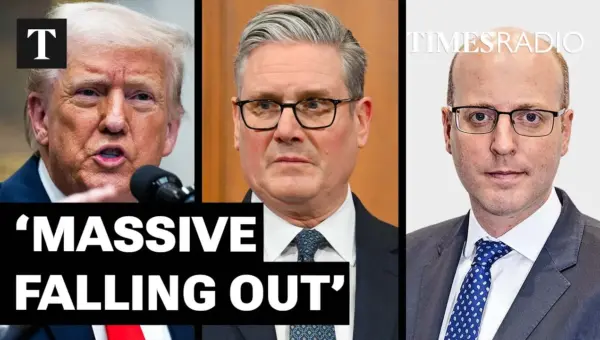
The United States is reportedly furious with the UK's stance on the Iran conflict, threatening to reassess allied support. Prime Minister Keir Starmer has voiced frustration with global leaders like Trump and Putin impacting energy bills, while the UK's own defense plans face delays amid international fallout.
Middle East Tensions Rise Amid Peace Talks, Epstein Files Reemerge
This Morning's Top Headlines cover escalating Middle East tensions as peace talks approach, with Iran accused of violating a ceasefire and oil prices rising. Simultaneously, First Lady Melania Trump has addressed allegations linking her to Jeffrey Epstein, denying any personal relationship. The Justice Department is also investigating the NFL over fan subscription fees, examining potential violations of a 1961 broadcasting law.