Hyundai Palisade’s Driver Assist Struggles on Tough Test
The 2026 Hyundai Palisade XRT Pro's Highway Driving Assist (HDA) system was put to the test and scored a low 30 points. While capable on straighter roads, it struggled with right-hand curves, requiring driver intervention. This highlights the system's limitations as an assist feature rather than a fully autonomous solution.

Hyundai Palisade’s Driver Assist Struggles on Tough Test
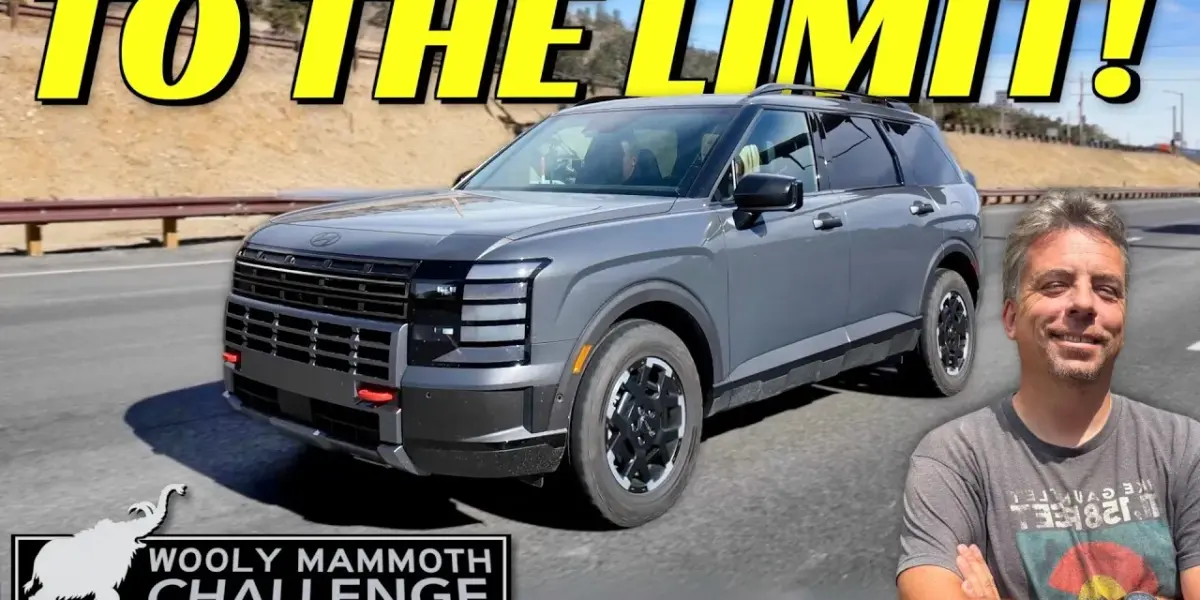
The 2026 Hyundai Palisade XRT Pro recently faced its toughest challenge yet: the Woolly Mammoth Autonomous Vehicle Challenge. This test pushes vehicle driver assistance systems to their limits on a difficult stretch of highway known for sharp turns, construction, and changing weather. While the Palisade’s Highway Driving Assist (HDA) system shows promise, it ultimately fell short, scoring a low 30 out of a possible 100 points.
Palisade XRT Pro: Ready for Adventure?
The XRT Pro trim comes equipped with rugged all-terrain tires on 18-inch wheels and recovery hooks, hinting at off-road capability. Under the hood, it boasts a 3.5-liter V6 engine producing 287 horsepower and 260 lb-ft of torque, paired with an 8-speed automatic transmission. This traditional powertrain offers a solid foundation, though hybrid options are available on other Palisade trims for those seeking better fuel efficiency and more power.
Hyundai Smart Sense: A Suite of Safety Features
The Palisade is packed with Hyundai’s Smart Sense safety suite, featuring five cameras and radar to monitor the surroundings. Key functions include Blind-Spot Collision-Warning (BCW), Rear Cross-Traffic Collision-Avoidance Assist (RCCA), Forward Collision-Avoidance Assist (FCA) with Pedestrian detection, Lane Following Assist (LFA), Safe Exit Assist (SEA), and the star of our test, Highway Driving Assist (HDA). However, it lacks the more advanced HDA2 system found on higher trims like the Calligraphy.
The Woolly Mammoth Challenge: A Harsh Judge
The Woolly Mammoth test is designed to be incredibly difficult. Cars start with 100 points. Points are deducted for things like lacking hands-free driving (-255 points) or point-to-point navigation (-255 points). Subscription fees also cost points. More importantly, driver interventions, system disengagements, or dangerous situations result in significant point losses. The test aims to see how well these systems handle real-world driving complexities.
On the Road: Performance and Problems
During the test on I-70, the Palisade’s HDA system demonstrated its ability to maintain lane position and adapt to traffic. The adaptive cruise control and lane keep assist worked reasonably well on straighter sections. However, the system struggled significantly with right-hand curves, often hugging the left side of the lane or requiring driver intervention to prevent drifting. This became a recurring issue, leading to multiple point deductions. While the system handled a tunnel transition smoothly and didn’t nag the driver excessively, its inability to consistently navigate right turns proved to be its biggest weakness.
Scoring the Palisade
The Palisade XRT Pro began the challenge with 50 points, as it doesn’t offer hands-free driving or point-to-point navigation. Several instances of the system drifting out of its lane resulted in a 10-point deduction. Further issues with lane keeping on curves led to another 10-point deduction. While the system’s driver assistance was deemed helpful on a long road trip, reducing driver fatigue, the performance on the Woolly Mammoth test showed its limitations. Ultimately, after accounting for necessary driver interventions, the HDA1 system earned a final score of 30 points. This indicates that while the system can assist, drivers should not rely on it to handle all driving tasks, especially on challenging roads.
Who is the Palisade For?
The 2026 Hyundai Palisade is aimed at families and individuals seeking a comfortable, spacious, and capable three-row SUV. The XRT Pro trim, with its rugged styling and all-terrain tires, appeals to those who want a vehicle that looks ready for adventure. While the driver assistance features are a nice addition, they are best viewed as aids rather than fully autonomous capabilities. Buyers looking for advanced, hands-free driving technology might need to consider higher trim levels or competing vehicles with more sophisticated systems.
Value Proposition
Pricing for the 2026 Hyundai Palisade starts around $37,000 for the base SE trim, with the XRT Pro likely sitting in the mid-$40,000 range. The inclusion of Hyundai’s Smart Sense suite as standard across most trims adds significant value. However, the limitations of the HDA1 system on this specific test raise questions about its effectiveness in demanding situations. For everyday commuting and highway driving, it likely provides a good level of assistance. But for those planning frequent trips on winding or complex roads, the driver must remain highly engaged.
Verdict
The 2026 Hyundai Palisade XRT Pro is a well-equipped and comfortable SUV with a capable V6 engine. Its driver assistance features offer valuable support for daily driving. However, the Highway Driving Assist (HDA) system, tested here, is not a hands-free solution and struggles with certain driving scenarios, particularly right-hand curves. Scoring a modest 30 points on the rigorous Woolly Mammoth test highlights that while it assists, it requires significant driver oversight. For families prioritizing space and comfort, the Palisade remains a strong contender, but potential buyers should be aware of the limitations of its current driver assistance technology.
Source: We PUSH the New 2026 Hyundai Palisade on the World's Toughest Self-Driving Test! (YouTube)

Related Articles
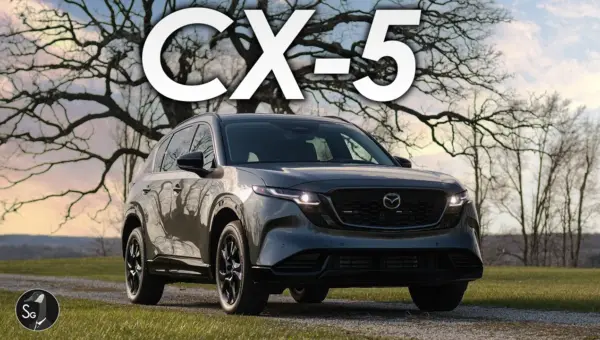
2026 Mazda CX-5: Solves Old Problems, Creates New Ones
The 2026 Mazda CX-5 gets a much-needed interior space upgrade and refined ride, but its move to a large touchscreen for climate controls and lack of powertrain options raise questions. It remains a great driver's SUV, but faces stiff competition.


Nvidia’s Self-Driving Tech Powers LA Test Drive
Nvidia's L2++ autonomous driving platform was tested in a real-world LA drive, showcasing its sensor fusion and decision-making capabilities. The company plans a nationwide rollout and Level 4 robo-taxi services, signaling strong progress in the autonomous vehicle market.

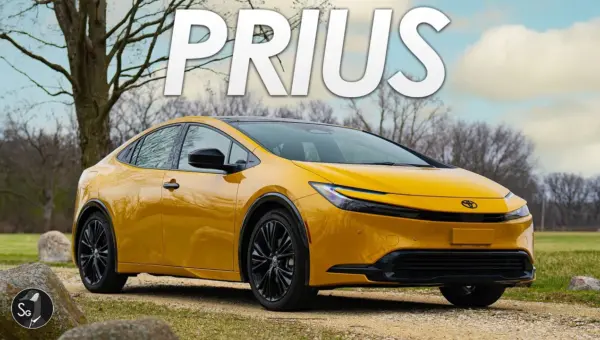
Toyota Prius: Haters Silenced, Hybrid King Lives On
The Toyota Prius, once a symbol of environmentalism and later a target of criticism, has evolved into a sophisticated hybrid. Toyota's long-term investment in hybrid technology has made the Prius and its brethren reliable and affordable, solidifying their place in the market.