Iran’s Strait of Hormuz Threat Sparks Global Uncertainty
Iranian state media reports the nation may close the Strait of Hormuz, a vital global oil route, amidst widespread confusion over a reported ceasefire. Experts and officials express deep uncertainty regarding the terms and reality of the situation, with conflicting statements from various parties.


Iran Threatens Strait of Hormuz Closure Amid Ceasefire Confusion
Iranian state media has reported the potential closure of the Strait of Hormuz, a critical global oil shipping route, amid widespread confusion over a supposed ceasefire. The announcement has sent ripples of uncertainty through international markets and diplomatic circles, as experts struggle to understand the terms and reality of the unfolding situation.
Conflicting Reports and Diplomatic Uncertainty
The situation became murky as former President Donald Trump took to Truth Social to denounce reports of a ceasefire, calling them “fake news.” CNN had cited Iranian officials detailing a 10-point plan, but the former president insisted there was no such agreement and that a federal investigation was underway into alleged leaks.
For hours, a key question revolved around Lebanon’s inclusion in any potential ceasefire. Israeli officials stated it was not on the table, and American officials echoed this sentiment. However, Iran appeared to believe otherwise, threatening to continue hostilities if Israel did not halt its actions against Hezbollah.
This conflicting information left many, including seasoned observers, confused about the true state of affairs. While Trump claimed a term sheet had been agreed upon for negotiations, the specific details remained elusive. Furthermore, the diplomatic team tasked with these sensitive negotiations saw last-minute changes, with J.D. Vance reportedly withdrawing due to security concerns, leaving Steve Whitcoff and Jared Kushner to proceed to Islamabad.
“The juju before the ceasefire was announced was that actually J.D. had volunteered himself to be the interlocutor because the Iranians see him as the isolationist who is anti-war and the guy that they can make a deal with.”
Experts Question Ceasefire Clarity and Legality
Adil Haak, a law professor at Rutgers Law School, highlighted the lack of clarity surrounding the ceasefire. He attributed this to the complex nature of the negotiations, the tight timeline, and the personal risks faced by negotiators, who were reportedly afraid to be seen publicly.
“This is not how diplomacy is supposed to work, and we see the result is an agreement whose contours are very uncertain, and which might collapse at any moment because of that uncertainty,” Haak stated. He also pointed to a potential move by Iran to charge a levy for tankers not on a pre-war list, estimating this could generate around $64 billion. Haak questioned how Iran would use these funds, suggesting they could finance missile capabilities or support proxy forces, potentially undoing U.S. military objectives.
Adding to the confusion, reports suggested a potential joint venture between the U.S. and Iran to collect money along the Strait of Hormuz. However, Haak dismissed this, stating, “There’s no legal basis for charging tolls to transit through the Strait of Hormuz. So the United States and Iran can agree to what they want, but there’s no legal basis for it.” He believes the international community would not accept such a move, seeing it as an attempt to monetize and negotiate around international law.
Lebanon Sees Intense Fighting Despite Ceasefire Claims
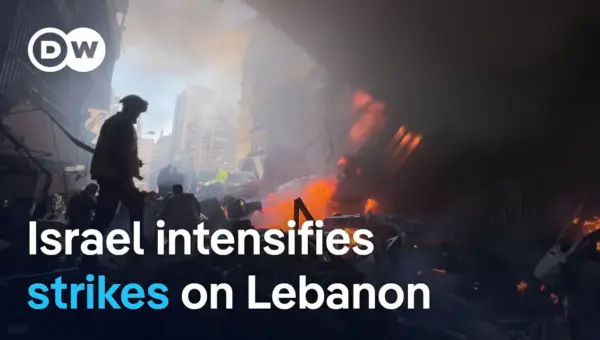
Meanwhile, on the ground in Lebanon, the situation appeared dire. Isabel Debray, reporting from Beirut, described the day as the most intense of the war between Israel and Iran-backed Hezbollah since it began. Despite claims of a ceasefire, the Israeli military launched a series of heavy strikes, particularly in Beirut.
Debray painted a grim picture of the aftermath: “piles of cars that had burned. There were just entire apartment blocks that had been raised to the ground by these strikes. There’s twisted metal everywhere.” Hospitals issued urgent calls for blood donations, and the Lebanese health ministry was still tallying casualties, with over 80 deaths and 700 wounded reported in Beirut alone. The strikes hit central Beirut, including densely populated residential and commercial areas, which had previously been spared the worst of the violence.
Broader Implications for Regional Security and U.S. Interests
Michael Weiss, editor of The Insider, noted that Gulf states also saw no signs of a ceasefire, with the UAE and Saudis experiencing attacks. He questioned whether these actions were due to a lack of command and control within the IRGC or a deliberate Iranian strategy, believing Iran might sense a U.S. desire to de-escalate and avoid retaliation.
Weiss observed that the optics from the U.S. side suggested the conflict was over, a perception Iran might exploit. “Whether or not it’s an actual victory for them and they have won this thing, they certainly believe that they have,” he added.
In closing remarks, Professor Haak questioned the U.S.’s enhanced security following the conflict. “No, I think that it’s pretty clear that there was a negotiated settlement to be had with Iran. It’s not clear whether the deals are going to be more favorable after this extremely bloody and destructive war,” he stated. Haak concluded that the U.S. had potentially achieved nothing substantial, created more enemies, increased instability, damaged economies, and worsened national security, all while the conflict’s end remained uncertain.
Source: BREAKING: Iranian state media reports Iran closing Strait of Hormuz (YouTube)

Related Articles


Trump’s Ceasefire Collapses, Exposing Mideast Chaos
Donald Trump's hastily arranged ceasefire with Iran has collapsed within hours, leading to the reclosure of the critical Strait of Hormuz. The deal, reportedly lacking a formal document and based on conditional statements, has exposed deep divisions and fueled renewed conflict in the Middle East.


US Strikes Cripple Iran’s War Machine; Ceasefire Holds
A two-week ceasefire has taken hold following intensive U.S. strikes that reportedly crippled Iran's industrial and missile production capabilities. Despite the pause, Iran launched drone swarms, prompting retaliation and highlighting the volatile regional situation.

Lebanon Fractures as Israel-Hezbollah War Intensifies
Lebanon is experiencing devastating destruction and rising sectarian tensions as the Israel-Hezbollah war intensifies. While a fragile ceasefire has been announced, its impact on Lebanon remains uncertain, with Israel reportedly continuing strikes.