US Claims Victory in Iran Conflict, Experts Skeptical
The U.S. has declared victory in its recent conflict with Iran following a two-week ceasefire, but experts question the true extent of this success. Key demands from Iran, including control over the Strait of Hormuz and the right to enrich uranium, remain major sticking points in potential negotiations. Despite the ceasefire, ongoing hostilities and Iran's continued influence raise doubts about lasting peace.


Ceasefire Declared Amidst Ongoing Tensions
The United States has declared a significant achievement in its recent conflict with Iran, with President Trump calling it a “complete victory.” This declaration comes after a two-week ceasefire was agreed upon, offering a pause in hostilities. However, experts and analysts are questioning the extent of this success, pointing to numerous unresolved issues and the ongoing instability in the region. The agreement is seen by many as a way for the U.S. to exit a difficult situation, but its long-term effectiveness remains uncertain.
Iran’s Demands and Negotiation Hurdles
The terms reportedly being considered by the U.S. stem from a 10-point proposal by Iran. This proposal includes significant demands such as Iranian control over the Strait of Hormuz, the lifting of international sanctions, compensation for damages, and the withdrawal of U.S. forces from the region. Some versions even suggest recognition of Iran’s right to enrich uranium. Richard Haass, President Emeritus of the Council on Foreign Relations, described these demands as a “wish list for the regime.” He stressed that while the Strait of Hormuz is a critical issue, any agreement must include limits on Iran’s role and ensure that other nations have a say in its governance. The nuclear program remains a major concern, with questions about whether a new agreement can effectively cap Iran’s capabilities while allowing for adequate inspections.
Fragile Peace and Continued Violence
Despite the declared ceasefire, the situation on the ground remains volatile. On the first day of the truce, Iran reportedly fired missiles into the UAE, raising doubts about Iran’s commitment to the agreement. While some suggest this may be due to a lack of communication with all military units, many in the U.S. and the Gulf region dismiss this explanation. Fighting has also continued in Lebanon, where Israel has conducted significant strikes against Hezbollah targets. Iran, through its state news agency, has warned that the Strait of Hormuz may remain closed as long as Israel continues its actions in Lebanon. This highlights the deep complexities and the fragility of the current ceasefire, even on its initial day.
Fact-Checking the Administration’s Claims
Secretary Hegseth stated that the new deal ensures Iran will never possess nuclear weapons and that all nuclear material will be removed. However, reporting suggests this claim is false. Iran’s 10-point proposal indicates they intend to retain the right to enrich uranium, a key point that has not been conceded. This contradicts one of the main objectives outlined by the U.S. at the start of the conflict: permanently denying Iran a nuclear weapon. Furthermore, while some missile stockpiles may have been destroyed, a significant portion remains. The U.S. also failed to prevent Iran from projecting power by taking control of the Strait of Hormuz, a failure attributed partly to an approach that neglected the need for allies. The goal of preventing Iran’s proxies from destabilizing the region has also not been achieved, with groups like the Houthis and militias in Iraq remaining strong.
Broader Economic and Strategic Implications
The conflict and the ongoing uncertainty surrounding the Strait of Hormuz have significant ripple effects beyond the immediate military situation. Even if the Strait reopens, the economic impact could be long-lasting. Disruptions affect not only oil prices but also the supply of other essential goods like fertilizer. This instability can discourage investment and lead to broader economic consequences. The U.S. strategy of relying solely on air power and eschewing strong alliances appears to have fallen short. The regime in Iran remains in power, and its regional influence, particularly concerning the Strait of Hormuz, may have actually increased. The conflict has left the U.S. in a strategically weaker position in the region and globally, rather than achieving a clear victory.
Looking Ahead: The Path to Lasting Peace
The coming weeks will be crucial in determining the true outcome of this conflict. The focus will be on whether Iran adheres to the ceasefire and whether genuine negotiations can lead to a stable agreement. Key issues to watch include the status of Iran’s nuclear program, the future governance of the Strait of Hormuz, and the broader regional security landscape. Without a resolution that addresses these complex challenges, the current pause may only be a temporary respite, with the risk of further escalation or a prolonged period of tense standoff. The world will be closely observing if the U.S. can translate its declared victory into a lasting peace or if the strategic losses will outweigh battlefield gains.
Source: Was this a 'totally and complete victory' for the U.S.? Richard Haass says 'no' (YouTube)

Related Articles

Trump’s Iran Deal Sparks Chaos, Questions Linger
President Trump's sudden ceasefire announcement with Iran has created significant confusion. Questions linger about control of the Strait of Hormuz and the actual U.S. gains. The move also faces backlash from within Trump's own base, highlighting broader political divisions.

Trump’s Foreign Policy Blunders: A Troubled Legacy
Political scientist Ian Bremmer analyzes Donald Trump's foreign policy, calling his handling of the Iran conflict a "disastrous" mistake. Bremmer argues Trump's unilateral actions weakened U.S. credibility and damaged alliances, despite his claims of victory.
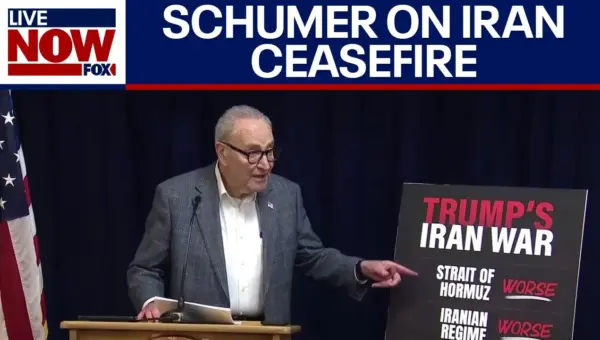
Senate to Vote on War Powers Amid Iran Conflict Fallout
Senate Minority Leader Chuck Schumer announced the Senate will vote next week on a war powers resolution, aiming to curb President Trump's unilateral authority to wage war. Schumer criticized the recent conflict with Iran, stating it has weakened U.S. standing, damaged the economy, and emboldened the Iranian regime.