Senate to Vote on War Powers Amid Iran Conflict Fallout
Senate Minority Leader Chuck Schumer announced the Senate will vote next week on a war powers resolution, aiming to curb President Trump's unilateral authority to wage war. Schumer criticized the recent conflict with Iran, stating it has weakened U.S. standing, damaged the economy, and emboldened the Iranian regime.

Schumer Announces Senate Vote on War Powers Resolution
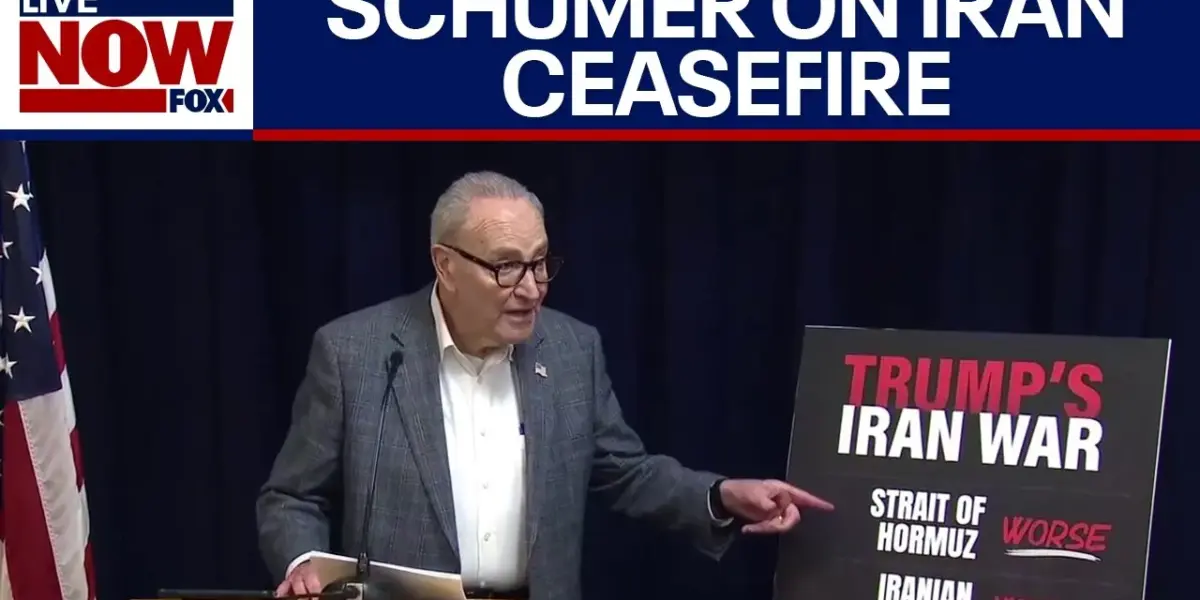
Senate Minority Leader Chuck Schumer announced Tuesday that the Senate will vote next week on a war powers resolution concerning the recent conflict with Iran. The move signals a significant effort by Congress to reassert its authority over decisions to wage war, particularly in light of concerns about President Trump’s handling of the situation.
“Congress must reassert its authority, especially at this dangerous moment,” Schumer stated during a press conference in New York. He emphasized that no president, regardless of party, should have the sole power to take the country into conflict. The resolution aims to end hostilities and require the administration to seek further congressional approval, known as an Authorization for Use of Military Force (AUMF), before engaging in future wars.
Assessing the War’s Impact: A Critical Review
Schumer offered a stark assessment of the war’s outcomes after 39 days, arguing that the United States is in a worse position than before the conflict began. He broke down the negative impacts across several key areas:
The Strait of Hormuz
The war has weakened control over the Strait of Hormuz, a vital waterway for global oil transport. Schumer explained that Iran has used the situation to demonstrate its leverage over the international community. Even a temporary ceasefire, he noted, leaves the strait only partially open and dependent on conditions, meaning Iran’s leverage remains.
The Iranian Regime
Contrary to achieving a weakening of Iran, Schumer asserted that the war has emboldened the Iranian regime. He expressed concern that the government is now likely to become more radical and dangerous, strengthening its position rather than diminishing it.
Domestic Economic Impact: Gas Prices
American families have directly felt the war’s economic consequences through soaring gas prices. Schumer predicted that prices would not improve until August and that global oil markets would remain unsettled for years, leading to persistently higher costs for consumers.
Iran’s Nuclear Ambitions
The war has done little to curb Iran’s nuclear program. Schumer stated that Iran’s nuclear stockpile and ambitions remain unchecked, and may have even accelerated due to the conflict.
American Credibility Abroad
Internationally, the war has damaged the United States’ standing. Schumer reported that allies in Europe, Asia, and the Middle East are expressing anger and confusion over the actions taken. This has significantly harmed American diplomatic influence and credibility on the world stage.
“This war has made us worse in terms of control of the strait of Hormuz. The war made us worse in terms of the strength of the Iranian regime. The war made us worse in terms of high gas prices. The war made us worse because Iran’s nuclear ambitions have been unchecked. And the war made us worse because American credibility is down the drain.”
Concerns Over Unchecked Presidential Power
A central theme of Schumer’s announcement was the danger of a president acting with unchecked power. He described President Trump as “unhinged” and criticized his approach to foreign policy, suggesting that erratic decision-making based on market fluctuations, rather than strategic planning, has put the nation at risk.
“A commander-in-chief who is truly in control would never have gotten into this colossal mess to begin with,” Schumer remarked. He believes that Trump’s actions have created a dangerous situation where the world “holds its breath, wondering what’s next.”
Calls for Bipartisan Action and Diplomatic Solutions
Schumer urged Republicans to join Democrats in supporting the war powers resolution, calling it an opportunity to end what he termed a “reckless war of choice.” He stressed that the public should demand bipartisan cooperation on this issue.
The Minority Leader also argued that a lasting diplomatic solution is the only viable path forward. He dismissed the current ceasefire as fragile and not a strategy, calling instead for President Trump to focus on “the hard work of building a lasting peace” rather than social media posts.
Interaction with the White House
When asked about communication with the administration, Schumer indicated that he and other Democrats had communicated their concerns both publicly and privately to the White House. However, he confirmed that they did not speak directly with President Trump, relaying their messages through administration officials. He noted that the President was unavailable for direct conversation.
Looking Ahead
The upcoming Senate vote on the war powers resolution is expected to be a significant moment for congressional oversight of foreign policy. As the Senate prepares to deliberate, the focus will be on whether lawmakers can come together to challenge presidential war-making authority and push for a diplomatic resolution to the ongoing tensions with Iran. The outcome could set a precedent for future military engagements and the balance of power between the executive and legislative branches.
Source: Schumer announces war powers vote to be held in Senate (YouTube)

Related Articles

Dem Congressman Slams Iran War “Joke” Deal
Democratic Congressman Seth Moulton sharply criticized the Trump administration's handling of the Iran conflict, calling claims of victory a "joke." He expressed doubt about a recent ceasefire deal, arguing it weakens the U.S. and empowers hardliners in Iran. Moulton believes the administration's actions have eroded international trust and left the nation in a worse strategic position.

US-Iran Tensions Ease: Focus Shifts Beyond Trump’s Role
A recent discussion explored the de-escalation of Iran tensions, questioning whether to view it through the lens of President Trump's success or failure. Analysts debated the impact on regional stability and the UK's role, while also examining the declining public support for doctor strikes and Reform UK's electoral strategy.
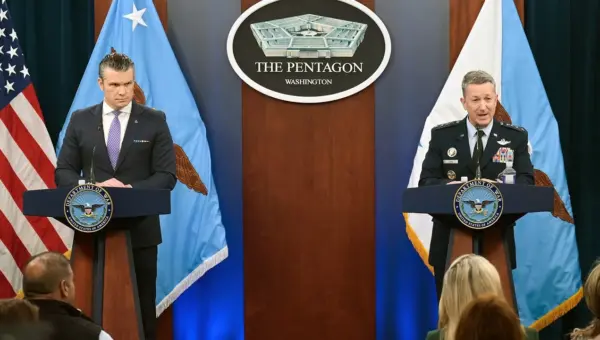
Pentagon Declares Major Victory Over Iran Amid Ceasefire
Pentagon officials announced a decisive military victory over Iran following 'Operation Epic Fury,' detailing the destruction of Iran's military capabilities. A tentative ceasefire is in place, with U.S. forces remaining vigilant to ensure compliance and facilitate negotiations for lasting peace.