Spacecraft Hull Breach: How Long Can Astronauts Survive?
A sudden hull breach on a spacecraft poses a serious threat to astronaut survival. The rate of air loss and its impact on human physiology depend critically on the size of the hole and the spacecraft's internal volume. Historical incidents and current spaceflight knowledge highlight the critical importance of understanding these dynamics for mission safety.

Spacecraft Hull Breach: How Long Can Astronauts Survive?
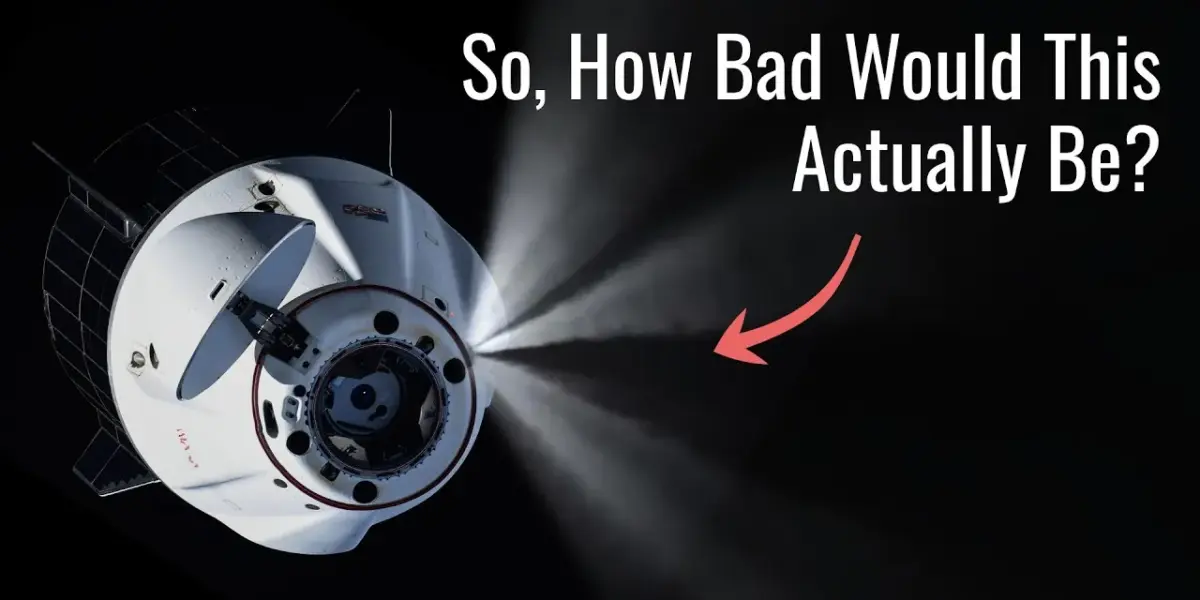
Imagine the unthinkable: a sudden jolt, a piercing sound, and then the chilling realization that your spacecraft has a hole. Air begins to hiss out into the unforgiving vacuum of space. How much time do you actually have to fix the problem before disaster strikes? This isn’t just a plot device for science fiction movies; it’s a critical concern for real space missions, including the upcoming Artemis 2 trip around the Moon.
The Real Danger of a Leaky Spaceship
Human bodies are designed for Earth’s cozy atmosphere, a specific mix of gases at a certain pressure. Our International Space Station (ISS) mimics this, maintaining a pressure of about 100 kilopascals, roughly 14.7 pounds per square inch. If that pressure drops, our bodies start to struggle. Too little oxygen, a condition called hypoxia, first impairs our thinking. We make mistakes, get confused, and eventually pass out. Without swift action, death follows.
It’s All About Pressure Difference
When a hole appears, it’s not the ‘infinite sucking’ power of space that’s the main enemy. Instead, it’s the difference in air pressure between the inside of the spacecraft and the vacuum outside. This pressure pushes air out through the opening. Even a small hole, about the size of your fingertip, can have enough pressure pushing on it to make you realize something is wrong, but it won’t violently suck you out like in some movies.
Calculating the Leak Rate
Engineers have ways to calculate how fast air flows through a hole. This is important not just for emergencies but also for designing systems that measure flow rates using carefully sized openings called ‘orifices.’ The speed of the leak depends on how big the hole is and how big the pressure difference is. Rough edges on a hole can slow the air down a bit due to turbulence, but for a clean hole with a big pressure difference, the air can reach the speed of sound. This is similar to how air flows in a rocket engine.
As a rough estimate, we can take the size of the hole and multiply it by the speed of sound to figure out how much air escapes each second. For a 1-square-centimeter hole in a nitrogen-oxygen atmosphere, this might be around 33 liters of air per second. That’s about 1 cubic meter every 30 seconds. While this seems fast, spaceships like the ISS are huge, with an internal volume of about 1,000 cubic meters. This initial calculation suggests it might take around 500 minutes to lose a significant amount of air.
The Exponential Decay of Air
However, this simple calculation is just a starting point. There are two key factors that change the picture. First, as air leaks out, the pressure inside drops. This means the pressure difference also decreases, slowing down the leak rate over time. This process follows an exponential decay curve, much like radioactive material losing its radioactivity or a balloon slowly deflating. The ‘half-life’ of the air in the spacecraft – the time it takes for the pressure to drop by half – is what truly matters.
For a 1,000-cubic-meter ISS with a 1-square-centimeter hole, the calculated half-life of the air pressure is about 5.83 hours. This is still a generous amount of time to fix a leak. Another factor is temperature; as air escapes rapidly, it can cool down, which also slows the leak.
When Does Hypoxia Kick In?
The real danger isn’t just losing air; it’s losing it fast enough to become dangerous. We can look at aviation rules for clues. Pilots can fly without supplemental oxygen up to about 12,500 feet, which is roughly 63% of sea-level pressure. For passengers, the limit is usually 15,000 feet, or 57% pressure. These numbers account for the fact that pilots need to stay alert and perform tasks.
A more critical concept is the ‘time of useful consciousness’ – how long someone can think and act to save themselves after a sudden loss of cabin pressure. This accounts for oxygen still in the blood and the gradual effects of hypoxia on the brain, which can make you feel impaired before you even pass out, much like the effects of alcohol. At 20,000 feet (about 50% pressure), you might have 30 minutes of useful consciousness. At 25,000 feet (around 45% pressure), it drops to 5 minutes. At 30,000 feet (about 35% pressure), you only have about 60 seconds.
For astronauts, a good rule of thumb is that they might start making mistakes around 66% of sea-level pressure. They can likely keep working with supplemental oxygen down to about 25% pressure. So, the critical window for action is when the pressure drops below these levels.
Hole Size Matters Dramatically
The size of the breach is the most significant factor. On the ISS, a small hole, like one made by a low-caliber bullet, would have a leak rate measured in hours, giving the crew plenty of time to react. However, a 10-square-centimeter hole (roughly 3×3 cm) could reduce pressure by half in less than 30 minutes. A tiny 1-millimeter-square hole might take days to cause a significant pressure drop.
Smaller spacecraft face much more immediate threats. A Dragon capsule, with its smaller interior volume of about 9.3 cubic meters, would have a half-life of less than 200 seconds for a 1-square-centimeter hole. This is a critical situation requiring immediate action.
Historical Incidents: Mir and Soyuz
Real-life events offer stark examples. In 1997, the Russian Mir space station suffered a collision with a Progress cargo ship, puncturing a module. The crew had about 14 minutes to seal off the damaged section, during which pressure dropped by about 10%. This incident suggested a half-life of around 110 minutes, meaning they had hours before abandoning the station would be necessary, especially with emergency oxygen masks available.
A more tragic event was the Soyuz 11 disaster in 1971. During preparation for re-entry, a pressure equalization valve opened prematurely in orbit. The capsule, with a volume of about 4 cubic meters, went to vacuum. The valve’s opening was estimated to be about 35 mm wide, causing an air loss so rapid that the half-life of the pressure was only about 7 seconds. The crew, experiencing rapid depressurization, had only the oxygen remaining in their blood to keep them conscious for precious seconds before they perished.
Even seemingly minor issues can trigger alarms. A famous incident involved a space shuttle toilet malfunction where both waste disposal doors opened, creating a leak. This immediately set off oxygen alarms, and the shuttle’s systems had to actively pump in air to compensate for the loss.
More recently, a small, 1-millimeter hole was discovered on a Soyuz spacecraft docked with the ISS. This leak, though measurable, was small enough to be repaired on orbit using epoxy, highlighting that even minor breaches can be fixed with the right materials and time.
What Comes Next?
Understanding these dynamics is crucial for future missions. The Artemis program, aiming to return humans to the Moon and eventually Mars, will involve longer transit times and operations far from Earth. Knowing how quickly air can be lost and how long crews have to react is vital for mission planning, spacecraft design, and emergency procedures. While scenarios like the Soyuz 11 disaster are extreme, the lessons learned from Mir and even smaller leaks inform the safety protocols that keep astronauts alive in the hostile environment of space.
Source: Holes In Spaceships – How Long Can You Survive? (YouTube)

Related Articles
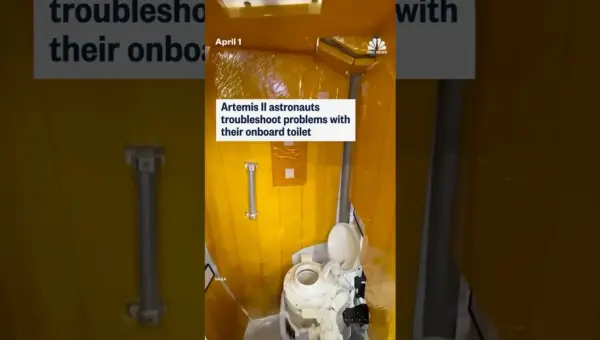
Artemis II Toilet Trouble: Astronauts Fix Spacecraft “Plumbing”
Astronauts aboard the International Space Station are troubleshooting a problem with the onboard waste management system. Mission control is guiding Christina Koch through specific steps to repair the space toilet. This fix is crucial for upcoming Artemis II lunar missions.


Hubble Tension Solved? New Cosmic Clocks Measure Universe’s Expansion
New 'cosmic clocks' like time-delay cosmography are helping astronomers tackle the Hubble tension, a discrepancy in measuring the universe's expansion rate. Meanwhile, the return to the Moon aims to teach humanity how to live in space, while the threat of weaponized satellites looms.

Astronaut Recounts Space Medical Scare, Informs Future Missions
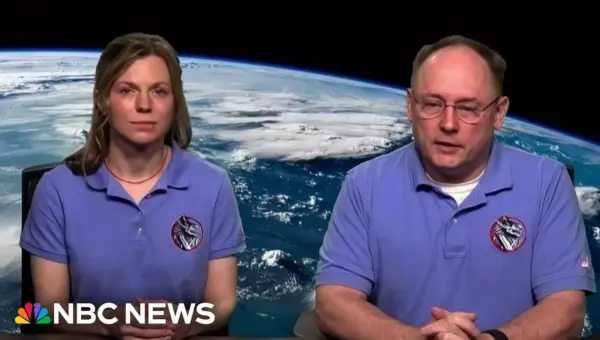
Astronaut Mike Fincke detailed a recent medical emergency aboard the ISS that led to his return to Earth. While doctors ruled out serious conditions like stroke, the exact cause is still being studied, with theories pointing to a space-related anomaly. The experience is providing crucial data for future long-duration missions, including NASA's Artemis program.