Moon Mission Ignites New Space Race Era
Former NASA astronaut Winston Scott expressed strong optimism for the future of space exploration following a successful lunar mission. The mission's stunning images and technological feats, like the audio link to the ISS, highlight advancements. Plans for a permanent lunar base by 2028 and reusable launch vehicles signal a new era, potentially reigniting a global space race.


Moon Mission Ignites New Space Race Era
The recent successful lunar mission, watched with bated breath by millions, signals a bold new chapter in humanity’s reach for the stars. Former NASA astronaut Winston Scott, who flew on the Space Shuttle Endeavor and Columbia, shared his deep optimism and insights into this advancing era of space exploration. His perspective highlights not just the technical marvels but the strategic implications of returning humans to the Moon and beyond.
A Stunning Return to the Moon
Scott described the mission’s success as “incredible,” noting how well the complex endeavor has performed from start to finish. He was particularly struck by the clear and detailed photos transmitted from the far side of the Moon, a region previously unseen by human eyes. While these images are stunning, Scott emphasized that they can’t compare to seeing the lunar surface directly. Still, these photographs provide valuable data for geologists, offering clues about the Moon’s history and the evolution of our solar system.
The mission’s success is a testament to scientific advancement. It shows how far space programs have come since Scott’s own missions. “The program is investing,” Scott stated, looking forward to future steps. These include practicing docking in low Earth orbit, with a major goal set for 2028: landing humans on the Moon to establish a permanent presence.
Technological Leaps and Future Ambitions
Another significant achievement Scott pointed out was the real-time audio link between the Orion capsule orbiting the Moon and the International Space Station (ISS). This connection marks another first, demonstrating the forward movement in space communication and operations. It shows a growing ability to connect different space outposts, a key step for long-term human activity beyond Earth.
Looking ahead, Scott mentioned the ambitious plans discussed by NASA Administrator Jared Isaacman. The core strategy is not just to return to the Moon but to “stay and to build the base.” A critical element of this plan involves the rapid reuse of heavy-lift launch vehicles. This approach aims to lower costs and increase the frequency of missions, providing more options for sustained lunar operations under the Artemis program. “We certainly have a good plan,” Isaacman noted, underlining the strategic focus on building infrastructure.
The Ordeal of Re-entry
Scott also explained the intense experience of returning to Earth. After traveling vast distances, the Orion capsule will re-enter the atmosphere at tremendous speeds, around 25,000 miles per hour. As the capsule hits Earth’s atmosphere at about 400,000 feet, astronauts will begin to feel the effects of gravity. They will experience increasing G-forces, feeling several times their normal body weight.
During this phase, the capsule’s exterior will glow with superheated plasma, a result of the extreme friction. This fiery display is a stark reminder of the vital role the heat shield plays, protecting the crew from the immense heat generated by re-entry. Once slowed by the atmosphere, parachutes will deploy, allowing for a gentler splashdown in the ocean. It is described as an “incredible ride” back from space, a fitting end to a complex journey.
Global Impact: A Renewed Space Race
The current lunar missions, like Artemis, are more than just scientific expeditions; they represent a renewed competition and collaboration in space. Nations are increasingly investing in space capabilities, driven by strategic, economic, and scientific interests. The ability to operate on the Moon could offer access to resources, establish strategic footholds, and advance technological innovation that benefits life on Earth.
Historically, the initial space race between the United States and the Soviet Union was fueled by Cold War rivalry. Today, the landscape is more complex, with multiple nations and private companies involved. China has its own ambitious lunar program, including plans for a research station. The European Space Agency, along with other international partners, are also key players in the Artemis Accords, which aim to establish norms for space exploration. This multifaceted approach suggests a future where cooperation and competition coexist, shaping the global order.
Future Scenarios
Several outcomes are possible from this renewed push into space. One scenario sees nations and private entities successfully establishing sustainable bases on the Moon, leading to resource utilization and further exploration of the solar system. Another possibility is that the high costs and technical challenges could slow progress, leading to periods of intense activity followed by lulls. There is also the potential for increased international tensions if space becomes a new domain for geopolitical rivalry, though collaborative efforts through initiatives like the Artemis Accords aim to prevent this.
The optimistic outlook shared by experts like Winston Scott suggests that humanity is poised for significant advancements. The focus on reusability and building infrastructure points towards a more accessible and sustainable future in space. Whether this leads to unified human exploration or a fragmented competition will depend on the diplomatic and strategic choices made in the coming years.
Source: Former NASA astronaut 'optimistic' for future of space exploration | NewsNation Live (YouTube)

Related Articles


US Threatens Iran with ‘Obliteration’ Over Strait of Hormuz
The United States has issued a severe ultimatum to Iran, threatening 'obliteration' if the Strait of Hormuz is not opened. This comes amid a high-risk military rescue mission and President Trump's controversial social media use. Meanwhile, the Artemis 2 crew makes history by traveling further from Earth than any humans before.


US Threatens Iran as Space Race Heats Up
The U.S. has issued a stern ultimatum to Iran, threatening strikes on infrastructure if a ceasefire and the reopening of the Strait of Hormuz are not agreed to by tomorrow. This comes as Iran presents its own demands and warns of retaliation. Meanwhile, the Artemis II astronauts made history with a record-breaking lunar mission, and AI leader Sam Altman cautioned about the technology's potential dangers, calling for a new social contract.
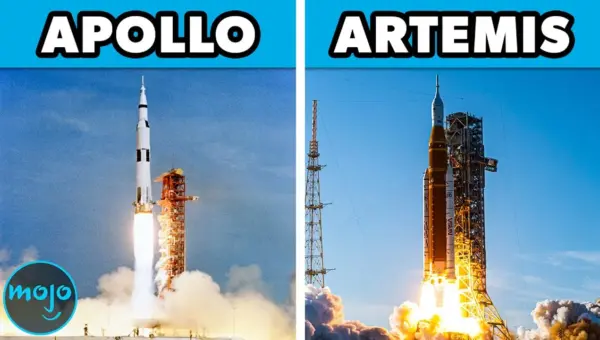
Artemis vs. Apollo: NASA’s Moon Missions Compared!
NASA's Apollo and Artemis programs share a common goal: reaching the Moon. However, they differ significantly in their approach, partnerships, and long-term vision. Discover the key distinctions and surprising similarities between these historic lunar missions.