Trump’s Iran Deal Bluster Exposes Weakness, Global Mistrust
Journalist David Cay Johnston analyzes Donald Trump's handling of the Iran situation, arguing it exposed his weakness as a negotiator and damaged US global standing. Concerns about his mental fitness and the long-term impact on the dollar are also discussed.

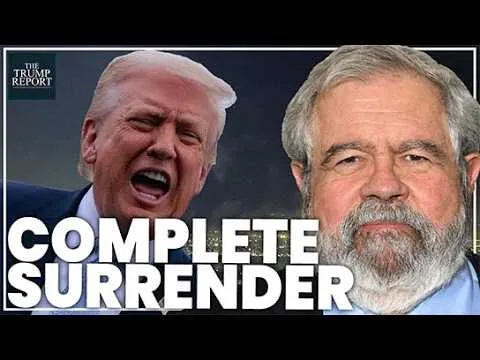
Trump’s Iran Deal Bluster Exposes Weakness, Global Mistrust
The recent events surrounding potential conflict with Iran have highlighted deep concerns about Donald Trump’s approach to foreign policy and his fitness for office. Pulitzer Prize-winning journalist David Cay Johnston joined the Trump Report to discuss the situation, offering a critical view of Trump’s actions and their consequences.
A ‘Surrender’ Masquerading as Victory
The situation began with Donald Trump pulling back from planned strikes against Iran just hours before they were set to occur. This move was followed by claims from both sides of a victory, creating wildly opposing narratives. While Trump declared a “total victory,” Iran presented the outcome as a “crushing defeat” for the United States. Johnston, however, characterized Trump’s actions as a “surrender.” He pointed out that Trump had previously demanded “complete and unconditional surrender” from Iran, but instead, he appears to have yielded to Iran’s key demands.
The conflict’s resolution, brokered by Pakistan, included an agreement for the Strait of Hormuz to reopen, with the US pausing strikes for two weeks. However, Johnston argued that this outcome benefits Iran significantly. The Strait of Hormuz is now expected to become a “tollgate” shared by Oman and Iran, providing much-needed foreign earnings for the Iranian regime. Meanwhile, the United States has spent an estimated $40 billion without achieving its stated goals.
Undermining the Dollar’s Global Role
A more concerning long-term consequence, according to Johnston, is Iran’s success in challenging the US dollar’s status as the world’s reserve currency and the primary currency for oil trading. Iran has begun demanding payment in euros and yuan for oil transit, a move that could significantly impact the US economy. The dollar’s reserve status provides an enormous subsidy to the United States, and weakening it poses a serious problem for the nation’s financial standing.
The Myth of Trump the Negotiator
Johnston expressed skepticism about Trump’s ability as a negotiator. He described Trump’s approach as “all bluster,” relying on tactics akin to extortion or blackmail rather than genuine negotiation. Johnston explained that Trump excels only when he has a clear leverage, such as a looming deadline or a threat. In contrast, he believes Trump lacks the skills to handle the subtleties of international diplomacy.
The core issues at stake, such as Iran’s nuclear program and its regional activities, remain largely unresolved. Iran has consistently stated it has no intention of building nuclear weapons but will continue enriching uranium for power generation. They also maintain they have no intention of attacking the US, a claim supported by their historical actions.
A Chasm of Demands
The gap between the demands of the US and Iran is stark. The US seeks a temporary ceasefire and a complete dismantling of Iran’s nuclear program, with intrusive inspections. Iran, on the other hand, wants a permanent end to hostilities, binding guarantees against future strikes, and no surrender of its nuclear capabilities. The US also wants the Strait of Hormuz fully open, while Iran insists on control and transit fees, essentially a toll system.
Johnston criticized the appointment of amateurs like Jared Kushner and Steve Bannon to negotiate, suggesting they may have misunderstood a crucial offer from Iran. He revealed that Iran had offered a deal better than the 2015 agreement with Barack Obama, but due to miscommunication or misunderstanding by Trump’s team, the US responded with military action. This, he argued, made the US appear as “unreliable savages” to Iran.
Alliances Strained, Global Standing Diminished
The situation has also exposed a deep rift between the US and its traditional allies. Johnston noted that Trump has alienated countries like Canada, Britain, and EU nations, making them unwilling to assist him. These allies are now pursuing their own deals with Iran to secure necessary energy resources. This divergence signals a global shift, with other nations increasingly prioritizing their own interests over those of the US.
Johnston believes Trump has “horribly damaged” the United States’ standing in the world. He likened the situation to South Africa during its apartheid era, suggesting the US is becoming a pariah state. He pointed to China building stronger relationships with the EU and UK as evidence that the rest of the world is learning to “get along without the US.” This loss of global leadership, he argued, stems from Trump’s “appalling ignorance” and his tendency to denounce allies unpredictably.
Mental Fitness and the 25th Amendment
A significant point of discussion was Trump’s public statements, particularly one threatening the “death of an entire civilization.” This rhetoric, made just before the potential escalation, sparked widespread concern about his mental fitness for office. Critics, including some within the Republican party, condemned the statement, with some calling for Trump to undergo an urgent medical evaluation. The possibility of invoking the 25th Amendment to remove a president deemed unfit to serve was also raised.
Johnston suggested that Trump exhibits signs of “frontal lobe dementia,” a condition that he believes does not improve. He cautioned that this could lead to more imprudent decisions and “crazy talk.” He expressed hope that American military officers would refuse any illegal orders, especially concerning nuclear weapons, and noted that Trump’s administration has been firing high-ranking military officials, a sign he associates with dictatorships consolidating power.
Why This Matters
The analysis presented by David Cay Johnston raises critical questions about leadership, international relations, and the stability of global order. Trump’s handling of the Iran situation, characterized by bluster, miscalculation, and a disregard for diplomatic norms, has not only failed to achieve stated objectives but has also weakened the United States’ global standing and strained vital alliances. The concerns about his mental fitness, amplified by his inflammatory rhetoric, add another layer of urgency to these issues. The long-term implications for the US dollar, international trade, and the potential for future conflicts are significant, demanding careful consideration from policymakers and the public alike.
Future Outlook
The immediate future likely holds continued tension with Iran, with the current ceasefire being a fragile pause rather than a lasting peace. The effectiveness of the Strait of Hormuz reopening and the progress, or lack thereof, in addressing Iran’s nuclear program will be key indicators. On the domestic front, the persistent questions about Trump’s mental fitness and his impact on the Republican party will likely continue to shape political discourse. The erosion of trust among allies and the potential for a multipolar world order where the US plays a diminished role are trends that could define the coming years. The challenge for the US will be to rebuild its international credibility and to ensure that foreign policy decisions are based on sound judgment and strategic foresight, rather than impulsive rhetoric.
Source: Trump’s ‘crazy talk’ sparks fears over mental fitness for office | David Cay Johnston (YouTube)

Related Articles

Democrats’ ‘Trump Derangement’ Fuels Negative Market Outlook
Commentary suggests Democratic opposition to Trump is driven by "Trump derangement," leading to overly negative reactions and overlooking potential positives. This intense political focus can increase uncertainty, potentially impacting investor sentiment and market stability.

Iran War Shifts Calculus on China’s Taiwan Ambitions
The war in Iran, while seemingly creating an opportunity for China to invade Taiwan, actually shifts the calculus. Modern warfare favors defenders, and China's logistical and energy vulnerabilities are now more exposed, making an invasion less likely.
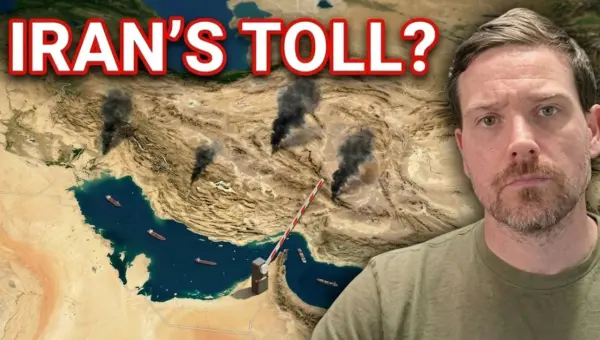
Iran’s Shocking Peace Deal Victory: US Concedes Major Demands
A supposed ceasefire between the US and Iran has plunged the Middle East into confusion, with both sides claiming victory but presenting contradictory terms. Israel feels blindsided, and Gulf nations are still facing Iranian attacks. The deal appears to concede major Iranian demands, including control over the Strait of Hormuz and uranium enrichment, raising serious questions about the US's objectives and the true outcome of the conflict.