Ukraine Strikes Russian Oil Hubs, Navy Under Fire
Ukraine has inflicted significant damage on Russia's oil export infrastructure with drone strikes, crippling nearly half of its maritime capacity. Attacks on Baltic ports and the Black Sea, including a strike on a Russian frigate, highlight Ukraine's evolving capabilities and Russia's defensive vulnerabilities.


Ukraine Hits Russian Oil Exports, Navy Targeted
Ukraine has launched a series of effective drone attacks targeting Russia’s critical oil export infrastructure, significantly impacting its revenue streams. These strikes have crippled nearly half of Russia’s maritime oil export capacity, leading to a ban on gasoline exports for domestic use and a potential loss of billions of dollars.
Baltic Ports Under Pressure
Ports like Ust-Luga and Primorsk in the Baltic Sea have been repeatedly targeted since late March. According to the Financial Times, these attacks have cost Russia approximately $970 million in lost revenue in just one week. Primorsk alone suffered an estimated $200 million in damages, with multiple oil terminals and loading docks rendered inoperable. The repeated nature of these strikes, with Ust-Luga hit at least five times in two weeks, suggests a sustained Ukrainian campaign aimed at crippling Russia’s energy sector.
Black Sea Operations Affected
In addition to the Baltic Sea, Ukraine has also struck targets in the Black Sea. The port of Novorossiysk, which handles another 35% of Russia’s maritime oil exports, has also been attacked. Reports indicate that one oil terminal there was severely damaged, with six out of seven loading docks affected. Crucially, a Russian guided missile frigate, the Admiral Grigorovich class, was also reported struck by Ukrainian naval drones in this operation. This marks a significant escalation, as Ukraine has now directly targeted Russian naval assets alongside infrastructure.
Russia’s Defensive Weaknesses
The effectiveness of these Ukrainian strikes raises questions about Russia’s air defense capabilities. Military analysts suggest a combination of factors may be at play, including an inadequate supply of air defense resources, outdated equipment, and potential issues with the command and control structure for organizing air defenses. This suggests a long-term advantage for Ukraine in this specific area, with both military and economic implications for Russia.
Strategic Implications for Russia
The sustained attacks on its oil export capacity have serious economic consequences for Russia. The potential loss of $50 billion annually from these strikes represents a significant dent in an already stagnating economy. This revenue is crucial for funding the ongoing invasion, as well as for domestic social services and infrastructure. Furthermore, the inability to protect its key maritime export hubs and naval assets signifies a strategic retreat in naval operations, forcing Russia to move its Black Sea Fleet from Crimea to Novorossiysk, which is now also under threat.
Broader Geopolitical Context
These developments occur against a backdrop of broader geopolitical shifts. The report notes the silence from the Kremlin regarding these losses, contrasting with its usual assertive rhetoric. This silence, coupled with territorial losses on the ground for the first time since 2022, suggests growing concerns within Russia about the sustainability of its invasion. The article also touches upon the complex dynamics of international negotiations, suggesting that Russia may seek to leverage perceived weaknesses in Western support for Ukraine to achieve its maximum demands.
Historical Parallels
The repeated targeting of critical infrastructure and naval assets by Ukraine echoes historical strategies employed in warfare to disrupt an adversary’s economic and military capabilities. By focusing on oil exports, Ukraine is aiming to cut off a vital source of funding for Russia’s war machine, similar to how nations have historically targeted enemy supply lines and economic lifelines. The successful strikes on Russian warships also recall instances where smaller navies have effectively challenged larger ones through innovative tactics and asymmetric warfare.
Ukraine’s Evolving Capabilities
The apparent advancement in Ukraine’s drone and missile capabilities is a key factor. The ability to strike targets repeatedly across a wide geographic area, from the Baltics to the Black Sea, and to effectively target both infrastructure and naval assets, demonstrates a significant evolution in Ukraine’s military reach and precision. While intelligence sharing from allies is considered, the article suggests Ukraine may also be leveraging information from other sources, enabling these widespread and focused strikes.
Future Outlook
The ongoing effectiveness of Ukrainian strikes raises the crucial question of whether Russia can recover and rebuild its damaged infrastructure and adequately defend its ports. If Ukraine can maintain this tempo of attacks, it could force Russia into a prolonged period of suspended operations, inflicting continuous economic damage. This sustained pressure could significantly constrain Russia’s ability to continue its invasion and influence future diplomatic and negotiation outcomes.
Source: 💥Putin’s frigate BLOWN UP! Russia’s oil export UNDER FIRE! Navy FALLS BACK @WorldatStake24 (YouTube)

Related Articles

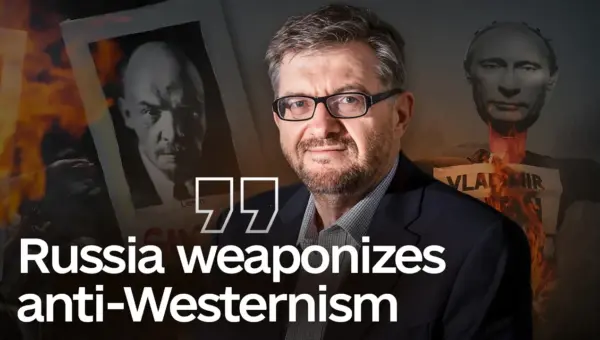
Russia’s Imperial Past Fuels Modern Conflict
Russia's historical identity as an empire, often misunderstood in the West, continues to shape its modern actions. Despite imperial policies, Russia positions itself as anti-Western, complicating global perceptions. Ukraine's long struggle for independence, rooted in distinct historical narratives, challenges these Russian myths and is increasingly recognized in Western academia.


Democrats’ ‘Seditious Six’ Video Sparks Outrage
Democrats' 'Seditious Six' video, encouraging troops to disobey orders, sparks outrage and accusations of being 'un-American.' The controversy unfolds amid discussions on Iran policy and federal scrutiny of sanctuary cities. Meanwhile, the DOJ announces major strides in combating taxpayer fraud, recovering over half a billion dollars.


Ukraine Secures Long-Term Defense Deals Abroad
Ukraine is strengthening its defense capabilities through new long-term security cooperation agreements with Middle Eastern and European partners. The nation is also securing vital fuel supplies amidst global economic instability. President Zelenskyy emphasized the need for robust internal solutions and international collaboration to ensure Ukraine's security and economic resilience.