Iran Controls Persian Gulf After US Ceasefire, Analyst Claims
Iran has asserted control over the Persian Gulf following a US-declared military victory and ceasefire, according to analyst Tim Marshall. Despite US claims of success, Marshall argues Iran's actions demonstrate its regional dominance, particularly concerning its nuclear program and control of the Strait of Hormuz.


Iran Asserts Control Over Persian Gulf Following US Ceasefire
In the wake of a recent military operation and subsequent ceasefire, Iran has effectively demonstrated its control over the vital Persian Gulf region. This assertion comes despite the United States’ declaration of a decisive victory, according to analysis by former foreign affairs editor Tim Marshall.
US Declares Victory, Analyst Skeptical
US Defense Secretary Pete Hexth announced a significant military success, dubbed “Operation Epic Fury.” He stated that the operation had decisively struck Iran’s military-industrial base, using only a fraction of American combat power. Hexth also claimed Iran had “begged” for the ceasefire and would no longer be able to pursue nuclear weapons. He added that President Trump had shown mercy by not targeting civilian infrastructure like power plants and bridges.
However, Tim Marshall, author of “Prisoners of Geography,” expressed skepticism about the US narrative. “To call it a complete victory, I just think is an attempt to pull the wool over the eyes of everybody,” Marshall stated. He acknowledged that much of Iran’s military-industrial base may be destroyed and that only a portion of US combat power was used. Yet, he noted that the US also expended vast amounts of expensive and hard-to-replace munitions.
Iran’s Perspective: A Humiliating Retreat?
From Iran’s viewpoint, the situation is framed as a humiliating retreat by the United States. Marshall suggests that the outcome is far from settled, with the ceasefire potentially being temporary. The core issue remains the nuclear material Iran possesses.
“Hexath just said the nuclear um enrichment uranium that the Iranians have his his words will be removed. That is open to debate.”
Marshall explained that Iran has accumulated approximately 450 kilograms of uranium enriched to 60% purity. While it is relatively easy to enrich uranium to 3.5% for civilian power or medical uses, reaching 60% is extremely difficult. Crucially, the step from 60% to weapons-grade uranium is described as surprisingly easy. Marshall pointed out that Iran still retains the infrastructure and knowledge to reconstitute its nuclear program within a year or two.
The Strait of Hormuz Remains Under Iran’s Control
A key point of contention and leverage for Iran is its control over the Strait of Hormuz, a critical chokepoint for global oil transport. Despite the ceasefire, Iran continues to exert influence over shipping in the region.
“They’re insisting that the few vessels that have started to move take the route out which is just near L Island which is very close to their shoreline and they’re saying you have to come this route and you have to give us $2 million for each ship that comes through,” Marshall reported. This practice, he noted, generates significant revenue for Iran, suggesting it is far from a defeated party.
Unresolved Demands and Future Uncertainty
The ceasefire is built upon a list of ten demands from Iran, which Marshall characterized as amounting to a “surrender document” for the US. While some demands might have room for negotiation, the issue of Iran’s nuclear material is non-negotiable for the US. The agreement for Iran to allow the removal of its enriched uranium is a significant point, but the practicalities and guarantees remain uncertain.
Furthermore, Iran’s demands include stipulations such as Israel ceasing attacks on Hezbollah in Lebanon, an unlikely prospect. This highlights the fragility of the current agreement and the potential for renewed conflict.
Iran’s Strategic Win
Ultimately, Marshall concludes that Iran has achieved a significant strategic objective by proving its dominance in the Persian Gulf. This demonstration of power, particularly to its neighbors, sets a new precedent unless the United States can actively disprove it.
The recent drop in oil prices below $100 per barrel is seen as temporary, with any further incident potentially sending prices soaring again. The broader implication is that Iran’s actions have reshaped the regional power dynamic, solidifying its position as a key controller of the vital waterway.
What to Watch Next
The coming weeks will be critical in determining the longevity of the ceasefire and the true impact of Operation Epic Fury. All eyes will be on whether Iran complies with the nuclear material removal terms and if further negotiations can address the remaining demands. The ongoing control Iran exercises over the Strait of Hormuz and its implications for global energy markets will also be closely monitored.
Source: US-Iran Ceasefire: Iran Is Proving Who Controls The Persian Gulf | Tim Marshall (YouTube)

Related Articles
Trump Halts Iran Strikes, Hopes for Mideast Peace
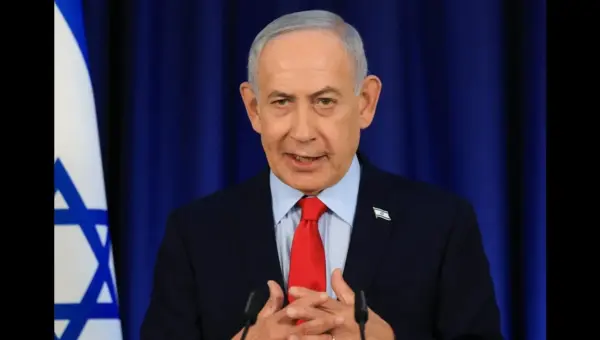
President Trump has agreed to a two-week pause on planned attacks against Iran, contingent on Iran opening the Strait of Hormuz. This move, supported by Israeli Prime Minister Netanyahu, aims to foster peace talks. The President also vowed to investigate reports of 'fake news' regarding the deal.


Russia’s Imperial Past Fuels Modern Conflict
Russia's historical identity as an empire, often misunderstood in the West, continues to shape its modern actions. Despite imperial policies, Russia positions itself as anti-Western, complicating global perceptions. Ukraine's long struggle for independence, rooted in distinct historical narratives, challenges these Russian myths and is increasingly recognized in Western academia.


Trump’s Iran Deal: Victory Lap or Humiliation?
An analysis of the recent U.S. actions regarding Iran reveals a stark contrast between official claims of victory and the on-the-ground realities. Critics argue that Iran's newfound control over the Strait of Hormuz represents a significant humiliation, not a win. The situation raises concerns about international law and the U.S.'s global standing.