US Declares Victory Over Iran, Eyes Regime Change
The U.S. Pentagon declared a major victory over Iran following "Operation Epic Fury," crippling Iran's military capabilities and securing a ceasefire. Discussions are now focused on sanctions relief and preventing Iran's nuclear program.


US Declares Victory Over Iran, Eyes Regime Change
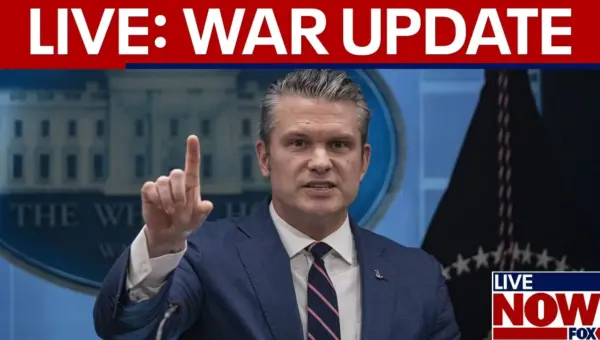
The Pentagon has declared “Operation Epic Fury” in Iran a success, calling it a “victory with a capital V.” Secretary of War Pete Hegseth praised President Trump for forging this moment, stating that Iran begged for a two-week ceasefire deal. The U.S. believes Iran has undergone a productive regime change, agreeing to halt uranium enrichment and allow the U.S. to inspect and remove deeply buried nuclear test sites. These sites have been under close satellite watch, with nothing disturbed since the initial attack. Discussions are now underway regarding tariffs and sanctions relief for Iran, with many of the 15 points already agreed upon.
Pentagon Details Military Success
Inside the Pentagon’s briefing, Secretary Hegseth announced that the military goals of Operation Epic Fury have been met. He stated that Iran, a leading state sponsor of terrorism, proved incapable of defending itself. President Trump, he explained, had the power to cripple Iran’s economy but chose mercy. The Iranians are described as humiliated and demoralized, with the U.S. now controlling their fate. This, Hegseth believes, is why Iran came to the negotiating table.
General Kane provided specific details on the military achievements. He reported that 80% of Iran’s missile manufacturing capability, including factories, has been destroyed. He estimates it would take years for Iran to rebuild its missile defense system. Furthermore, over 90% of Iran’s naval assets have been destroyed, and more than 80% of its overall weapons capability is gone.
Ceasefire Questions Remain
Despite the announced ceasefire, Iran reportedly fired dozens of missiles and drones overnight towards U.S. allies Qatar, Bahrain, and the UAE. These attacks were intercepted, raising serious questions about Iran’s adherence to the agreement. When asked about this, the Secretary essentially stated that Iran needs to change its behavior.
The Strait of Hormuz is expected to reopen, a key point in the agreement. However, the Iranian Foreign Minister’s statement indicated that passage would be subject to Iranian armed forces’ ships, suggesting potential complications. The critical question moving forward is whether Iran will uphold the ceasefire or continue targeting Israel and American assets in the Gulf. Such actions could easily disrupt the current, fragile peace.
Global Impact
This development signals a significant shift in the Middle East. The U.S. military action has severely degraded Iran’s offensive capabilities, potentially altering the regional balance of power. The focus on regime change and the subsequent negotiations suggest a new U.S. strategy in dealing with Iran, prioritizing its nuclear program and its role as a state sponsor of terrorism. The agreement aims to prevent Iran from developing nuclear weapons and limit its ability to project power through missile attacks.
Historical Context
The U.S. has long sought to curb Iran’s nuclear ambitions and its support for militant groups. Past administrations have employed sanctions and diplomatic pressure, with varying degrees of success. Operation Epic Fury and the subsequent ceasefire appear to represent a more forceful, direct approach, aimed at achieving concrete military objectives before diplomatic solutions are solidified. The U.S. goal of preventing uranium enrichment echoes long-standing international concerns dating back to the early 2000s.
Economic Considerations
The agreement includes discussions on tariffs and sanctions relief, indicating that economic tools are central to the U.S. strategy. By crippling Iran’s military infrastructure, the U.S. aims to create leverage for economic concessions. The reopening of the Strait of Hormuz is also economically significant, as it is a vital chokepoint for global oil shipments. Ensuring its free passage is crucial for global energy markets.
Future Scenarios
One possible scenario is that Iran fully complies with the ceasefire and the terms of the agreement, leading to a period of de-escalation and potential normalization of relations, albeit under strict U.S. oversight. Another scenario involves Iran continuing to violate the ceasefire, leading to renewed military action by the U.S. and its allies. There is also the possibility of internal instability within Iran following the perceived military defeat and the focus on regime change.
Source: Pentagon declares military ‘capital-V victory’ over Iran | NewsNation Live (YouTube)

Related Articles

Pentagon Declares ‘Epic Victory’ Over Iran in Military Operation
The Pentagon has declared a decisive military victory over Iran following Operation Epic Fury, a less-than-40-day campaign that reportedly crippled Iran's military capabilities. Officials stated that Iran's navy, air force, and missile programs were decimated, leading to a ceasefire. The operation aimed to neutralize Iran's threat and prevent its nuclear ambitions.
Markets Surge on Iran Ceasefire; AI Stocks Shine
Markets surged as the U.S. and Iran agreed to a ceasefire, easing fears of conflict in the Strait of Hormuz. The deal sent stock markets soaring and oil prices tumbling. Amidst the geopolitical news, AI and tech stocks are showing strong potential for investors.


Trump Declares Ceasefire Amidst Complex Iran Conflict
President Donald Trump has announced a ceasefire in the conflict, with both the U.S. and Iran claiming victory. However, the truce is described as fragile, and Israel continues its operations in southern Lebanon. Pakistan is mediating talks, while Iran's 10-point peace plan, including uranium enrichment and sanctions relief, presents significant challenges for U.S. acceptance.