China’s $75 Billion Iran Support Fuels Global Tensions
China's significant financial backing of Iran, estimated at $75 billion annually, is raising global concerns. This support, channeled through smaller banks to avoid U.S. sanctions, coincides with a temporary cease-fire in the vital Strait of Hormuz. The situation implicates U.S. investors indirectly funding Iran through their portfolios.

China’s $75 Billion Iran Support Fuels Global Tensions
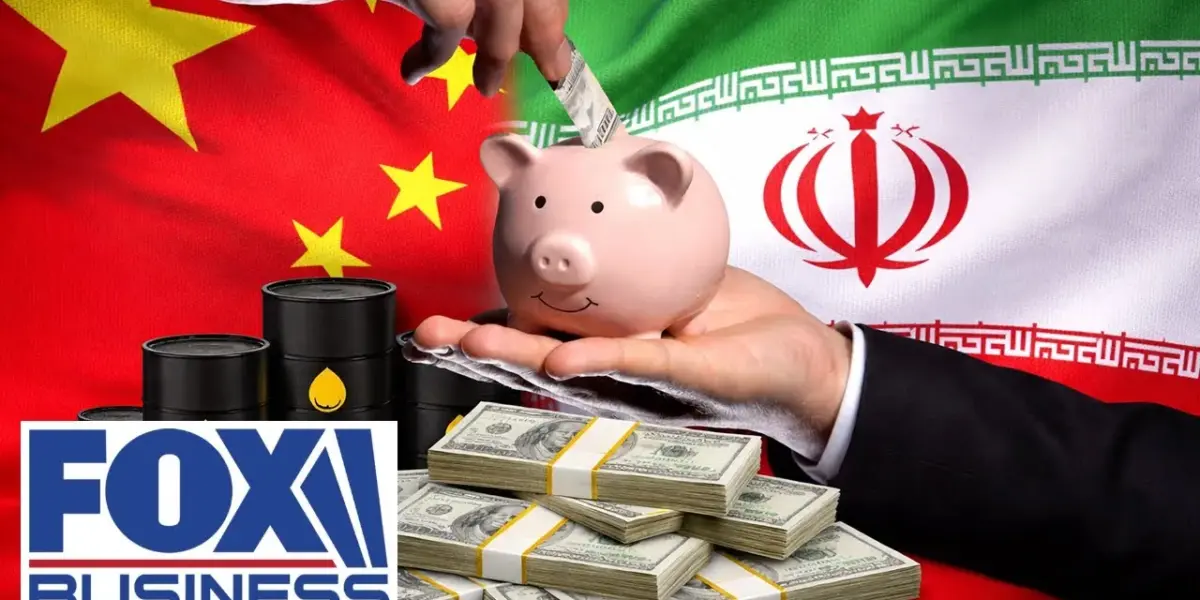
New reports reveal that China has been a major financial backer of Iran, with an estimated $75 billion flowing from China to Iran annually. This significant financial support comes through oil purchases and other trade, and is largely routed through smaller Chinese banks to avoid U.S. sanctions. This revelation coincides with a temporary cease-fire in the Strait of Hormuz, a critical global oil transit route.
The Strait of Hormuz is vital for global energy markets. Roughly 20% of the world’s oil supply passes through this narrow waterway daily. China is Iran’s top oil customer, importing over 90% of Iran’s oil. Beyond oil, China engages in about $35 billion in non-oil trade with Iran each year, bringing the total annual financial flow to an extraordinary $75 billion.
Cease-fire in Hormuz and China’s Role
A recent development saw President Trump agree to a two-week cease-fire with Iran. This agreement hinged on Iran reopening the Strait of Hormuz. For weeks, the strait had been largely shut down, disrupting the flow of oil and other goods. The reopening is a significant event, as the strait is a crucial strategic choke point.
Beyond oil, the Strait of Hormuz is essential for global trade in liquefied natural gas (LNG), fertilizers, aluminum, and helium. The disruption of these flows has been a cause for concern. The current situation highlights the risks associated with relying on contested waterways for essential global trade.
Chinese Companies Under Scrutiny
The financial ties between China and Iran are not just between governments. Many Chinese companies are involved in this trade, with some even listed on U.S. stock exchanges. As of March, there were 286 Chinese companies listed on U.S. exchanges, with a market value exceeding $1.125 trillion. This number has actually grown since the start of 2024.
An analysis of 40 major Chinese companies, including giants like China National Petroleum, revealed that all of them are involved in keeping Iran’s economy afloat. Ironically, these same companies are found in the investment portfolios of major asset managers. Millions of American retail investors unknowingly hold stakes in these companies through their investments. This means American citizens are indirectly helping to fund Iran through their investments.
Iran’s Military Capabilities and China’s Support
Experts argue that Iran, with China’s backing, has become a significant military concern. Iran possesses advanced weapon systems, including supersonic anti-ship missiles and air defense systems. They also utilize missiles and drones, with China’s GPS-equivalent technology potentially guiding these weapons. This suggests that China is not just an innocent bystander but an active participant in bolstering Iran’s military strength.
Some analysts go further, describing China’s relationship with Iran as Iran being a subsidiary of China. They believe China is actively trying to increase the effectiveness of Iranian weapons that could target U.S. forces. This view frames China as an adversary, not just a trading partner.
Market Impact and Investor Considerations
The situation raises serious questions for investors. The fact that U.S. investors are indirectly funding entities that support Iran, a nation often at odds with U.S. interests, is a significant concern. This indirect underwriting of a perceived enemy through investments is seen by some as problematic.
The reliance on smaller Chinese banks, which have less global operation and less to lose if sanctioned, makes it difficult to stop this financial flow. This complex web of financial dealings and corporate listings creates challenges for regulators and investors alike. The potential for sanctions or geopolitical shifts could impact the value of these investments.
Long-Term Implications
The long-term implications of this financial entanglement are substantial. It highlights a potential vulnerability in global financial markets where investments can inadvertently support geopolitical adversaries. The situation underscores the need for greater transparency in global trade and investment flows.
Investors may need to consider the geopolitical risks associated with companies operating in or heavily trading with nations subject to international scrutiny. Understanding the full scope of a company’s supply chain and financial partners is becoming increasingly important in today’s complex global environment. The actions of China and Iran, and the U.S. response, will likely shape future trade policies and investment strategies.
Source: CHINA EXPOSED: $75 BILLION flow secretly FUELED Iran's war machine (YouTube)

Related Articles

US Threatens Iran with Devastation Amidst Strategic Uncertainty
The United States has issued dire threats to Iran regarding the Strait of Hormuz, sparking debate over the strategy's effectiveness and its human cost. Experts question the logic of potentially devastating Iranian infrastructure, which could harm civilians more than the regime. The escalating tensions carry significant economic and geopolitical risks for global stability.


Iran Faces US Deadline Amid Military Threats
Iran faces a critical deadline from the US, with threats of military action against civilian infrastructure if demands are not met. Meanwhile, a daring rescue of a downed airman highlights military capabilities amidst escalating regional tensions and global economic concerns.

Iran Ceasefire Offers Pause, Not Peace
A fragile two-week ceasefire between the U.S. and Iran offers a temporary pause in escalating tensions but falls short of a lasting peace deal. Key global economic routes like the Strait of Hormuz remain vulnerable, and regional conflicts persist, posing ongoing risks to markets and supply chains.