Iran Faces US Deadline Amid Military Threats
Iran faces a critical deadline from the US, with threats of military action against civilian infrastructure if demands are not met. Meanwhile, a daring rescue of a downed airman highlights military capabilities amidst escalating regional tensions and global economic concerns.


Iran Faces US Deadline Amid Military Threats
The United States has issued a firm deadline to Iran, with President Trump vowing severe military action if the nation does not agree to new terms. This ultimatum puts a major focus on the Strait of Hormuz, a vital waterway for global oil transport, and raises concerns about a wider conflict.
Iran’s Proposal and US Response
Iran has put forward a 10-point plan aimed at ending the current tensions. This proposal reportedly asks the United States to remove all sanctions against Iran and provide funds for the country’s reconstruction. Additionally, Iran suggests a system where every ship passing through the Strait of Hormuz would pay a $2 million fee for safe passage. While President Trump described this as a ‘good start’ and a ‘significant step,’ he has also made it clear that it is not yet good enough.
The deadline set by President Trump is 8:00 p.m. Eastern time, giving Iran a narrow window to respond. If Iran fails to meet the president’s demands, he has threatened to target civilian infrastructure. These threats include the destruction of bridges and power plants across Iran within a four-hour period, a move that some experts warn could violate international law.
A Daring Rescue Operation
In parallel with the diplomatic and military standoff, a remarkable rescue mission recently concluded successfully. An F-15 airman, identified by the call sign Dude 44B, was safely recovered after ejecting behind enemy lines. The operation involved over 150 aircraft and hundreds of troops, with the CIA reportedly using a deception campaign to aid the recovery.
The airman, an Air Force colonel, was injured and alone after his jet was shot down. He managed to survive for nearly two days by climbing a 7,000-foot mountain and hiding in a crevice, treating his own wounds. He used a sophisticated emergency beacon to transmit his location, leading to his extraction on Easter Sunday. His first words upon re-establishing contact were reportedly, ‘God is good.’ This mission highlighted the extensive resources the U.S. military is willing to commit to rescuing its personnel.
Expert Analysis on the Escalation
Military analysts and former officials are weighing in on the current situation. Frank Kendall, former Secretary of the Air Force, noted the incredible training and courage of the rescued airman, as well as the massive national effort to ensure no one is left behind. Brian Stern, founder of Grey Bull Rescue, emphasized the critical role of intelligence and deception in such operations, stating that confusing the enemy is key to success.
However, concerns are being raised about the potential consequences of striking civilian infrastructure. Bob McN, an oil market analyst, warned that such actions could hinder global recovery efforts and cause significant economic disruption. He pointed out that oil price spikes have historically preceded recessions, and the current situation in the Strait of Hormuz could lead to inflation and economic downturns.
There is also debate about the preparedness for Iran’s actions. McN expressed surprise that military plans did not prioritize securing the Strait of Hormuz from the outset, given that Iran has previously used it as a point of leverage. Experts suggest that Iran’s actions and values differ from typical transactional diplomacy, leading to a situation where traditional negotiation tactics may not yield expected results.
Broader Geopolitical Context
The current crisis with Iran occurs against a backdrop of President Trump’s ongoing skepticism towards international alliances. He has previously called NATO a ‘paper tiger’ and has threatened to withdraw the U.S. from the alliance. The NATO Secretary General is scheduled to meet with President Trump soon, adding another layer to the complex diplomatic landscape.
The economic impact of the conflict is a significant concern. Major financial figures have warned that the war could negatively affect the global economy, potentially leading to higher inflation and interest rates, and even tipping the U.S. into a recession. The dependence of global GDP growth on energy consumption means that disruptions to oil supply can have severe economic consequences.
The Artemis II Mission
Separately, the Artemis II mission achieved a historic milestone. The crew successfully completed their journey around the far side of the moon, entering a 40-minute communication blackout as expected. During this period, they set a new record for the farthest distance any human has traveled from Earth, surpassing the Apollo 13 crew’s record set half a century ago.
The astronauts used this moment to challenge future generations to continue pushing the boundaries of space exploration. They also named a crater on the moon ‘Integrity,’ after their capsule, and another feature ‘Carroll’ in honor of the late wife of mission commander Reed Weisman. The crew is now on their way back to Earth, with the challenging re-entry phase awaiting them.
Global Impact
The escalating tensions with Iran and the potential for military strikes on civilian infrastructure represent a critical juncture in international relations. The closure of the Strait of Hormuz, even temporarily, has immediate global economic consequences, particularly for energy markets. Any military escalation could lead to widespread instability, impacting trade routes, global supply chains, and potentially triggering a broader conflict with far-reaching consequences for peace and economic prosperity worldwide.
Source: Deadline for Iran dwindles, Artemis II crew break new record | Vargas Reports Full Show 4/6 (YouTube)

Related Articles

Iran Ceasefire Offers Pause, Not Peace
A fragile two-week ceasefire between the U.S. and Iran offers a temporary pause in escalating tensions but falls short of a lasting peace deal. Key global economic routes like the Strait of Hormuz remain vulnerable, and regional conflicts persist, posing ongoing risks to markets and supply chains.


Trump Shifts Mideast Policy, Eyes NATO Reform
The U.S. has paused military action against Iran, seeking a diplomatic solution while pressuring NATO for greater involvement. This shift highlights economic leverage and potential regional stability changes. Talks in Pakistan could be key to de-escalation.
Middle East Ceasefire Shattered by Iranian Missile Barrage
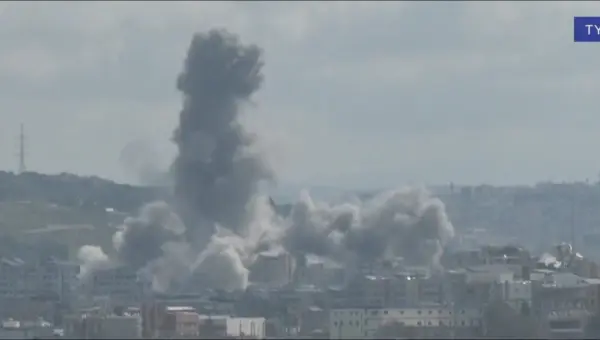
A fragile Middle East ceasefire has been shattered by a barrage of Iranian missiles and drones just hours after its announcement. The UAE and Kuwait reported intercepting threats, while Israel confirmed suspending strikes but faces continued aggression. The Strait of Hormuz and actions in Lebanon remain critical flashpoints, complicating diplomatic efforts.