German Left Party Splits Over Anti-Zionism Debate
Germany's Left Party is grappling with deep internal divisions following a resolution rejecting "actual existing Zionism." The move has reignited debates about historical responsibility, anti-Semitism, and the party's identity. New, younger members are pushing foreign policy in new directions, clashing with older traditions.

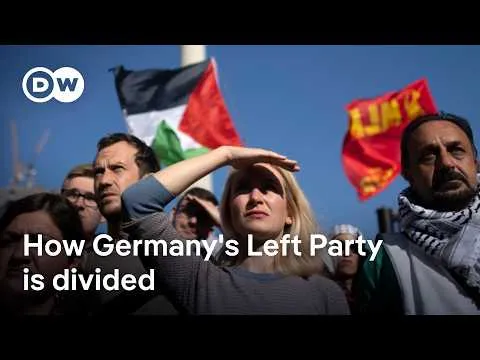
Germany’s Left Party in Turmoil Over Israel Stance
Germany’s socialist Left Party (Die Linke) is once again facing deep divisions, this time over its stance on Israel and Zionism. A recent resolution by the party’s regional branch in Lower Saxony, which rejected “actual existing Zionism,” has ignited a fierce national debate. This internal conflict highlights a growing tension between opposition to Israel’s actions in Gaza and a perceived historical responsibility within Germany.
Resolution Sparks Nationwide Controversy
The controversial wording, “actual existing Zionism,” was explained by proponents as an effort to condemn not just the current Israeli government but a long-standing ideology justifying actions dating back to the Nakba. “We use the term or wording actual existing Zionism because it is not only Benjamin Netanyahu’s government committing these crimes, but because these crimes have been occurring for a very, very long time, at least since the Nagba,” stated a proponent. They argued it was crucial to name the ideology invoked to justify these actions.
However, party leaders quickly distanced themselves from the resolution’s language. They aimed to contain the escalating conflict and prevent deeper internal rifts. This incident signals a significant shift in the Left Party’s approach to Israel’s policies, setting it apart from Germany’s centrist parties.
New Members, Old Conflicts Resurface
In last year’s federal elections, the Left Party saw an increase in votes and new members, partly due to its open criticism of the Israeli government. Many international rights organizations and the UN Commission have described Israel’s conduct in Gaza as genocide. Numerous Left Party members, including its co-leader, have echoed this sentiment, a rare position for politicians in Germany.
Germany has long linked its historical responsibility for the Holocaust to its political, diplomatic, and military ties with Israel. However, public discourse in Germany is evolving, and this societal shift is now deeply influencing the Left Party’s internal discussions. The party’s history shows a division between an anti-imperialist, pro-Palestinian tradition and an “anti-German” faction that strongly supports Israel.
Accusations of Structural Anti-Semitism
Some critics argue that the party’s criticism of Israel is crossing into anti-Semitism. This debate has intensified following a recent party split that settled long-standing ideological divides and attracted younger members. “With that, it opened itself up to new members, many young leftists who have increasingly started to get involved in the party,” noted one observer.
The influx of new, younger, and more diverse members has made the party more pluralistic, leading to changes in its foreign policy positions. Some older members have even left the party due to these shifts. Andreas Bner, a commissioner for anti-Semitism in the German state of Brandenburg, stated, “The left party has a structural problem with anti-semitism.” He believes that many new members, influenced by post-colonial theories, view Israel as a “white European settler colonial project” and have introduced their anti-Israel sentiments into the party.
A prominent activist’s expulsion over alleged anti-Semitism further deepened the divide, highlighting the contentious nature of these internal battles.
Understanding the Term ‘Zionism’
The controversy surrounding the term Zionism is key to understanding the explosive nature of this debate. The Zionist movement emerged in the late 19th century as a response to European anti-Semitism, advocating for Jewish self-determination in the land of Israel. While Jewish support for Zionism grew, many Jewish communities also opposed it for political or religious reasons.
Experts on anti-Semitism note that the term Zionism is broad, often leading to confusion. Stephanie Schulum, an anti-Semitism researcher, explained the danger of the Left Party’s resolution: “If you label it Zionism and not we reject the politics of the Israeli government, you open up the box of Pandora’s box.” She questioned what specific meaning of Zionism was intended – the historical movement, the state’s founding, the occupation, or the current government. This ambiguity, she argued, “really opens up the debate on anti-semitism.”
Schulum also emphasized Germany’s unique historical context. “The German specificity is related to our past as the country that committed genocide,” she said, stressing the special responsibility regarding language and wording. “The duty here every one of us has is to be precise with words and pre precise with historical analysis.” She added that the discourse of hatred, while unpleasant, is not inherently anti-Semitic.
Future Outlook and Internal Reconciliation
For now, the Left Party’s leadership has managed to de-escalate the immediate crisis by shifting the discussion inward. “I’m very confident that the debate will now proceed much more substantially. We need to reach out to each other and listen more,” said one leader.
Tobin Peter suggested the intensity of the debate stemmed from a lack of prior discussion. “I think the intensity of the debate is result of us not having had this discussion enough,” he stated. The party continues its search for a unified position on Israel, with younger members pushing for new perspectives.
While another major split seems unlikely, internal conflicts could intensify. The upcoming party convention in June will be crucial. A resolution is planned to reaffirm support for the self-determination rights of both Jewish Israelis and Palestinians. Germany’s Left Party sought to move past internal chaos, but the Gaza war and the controversial resolution have reopened decades-old fights about identity, history, and solidarity, shaping the future of the party and the broader left in Germany.
Source: How the German Left Party is split over anti-Zionism | DW News (YouTube)

Related Articles


German Car Washes: Efficiency vs. Environment
Germany's strict environmental laws mean driveway car washes are illegal, leading to advanced, stationary car wash systems. These German car washes prioritize a thorough, 8-minute clean over the rapid, conveyor-belt methods common in the U.S., highlighting a different approach to car care and environmental responsibility.

Iran Halts Attacks as US, Israel Seek Iran Deal
Iran has halted aerial attacks following a U.S. decision to suspend its own strikes for two weeks, brokered by Pakistan. While Israel supports the move, the ceasefire excludes Lebanon. The U.S. aims for a long-term peace deal and to keep the Strait of Hormuz open.


US Strikes Iran as Tensions Escalate to Breaking Point
US forces are conducting strikes in Iran just hours before a critical deadline set by President Trump. Iran has urged citizens to form human chains around infrastructure, raising concerns about civilian safety. Israel has also targeted Iranian weapon transport routes.