Trump Halts Iran Threats, Agrees to Cease-Fire Talks
President Donald Trump has agreed to a two-week cease-fire deal with Iran, halting threats of military strikes just moments before a deadline. The move follows escalating tensions and includes a proposal for negotiations, though experts remain cautious about the long-term implications and Iran's continued control over the Strait of Hormuz.

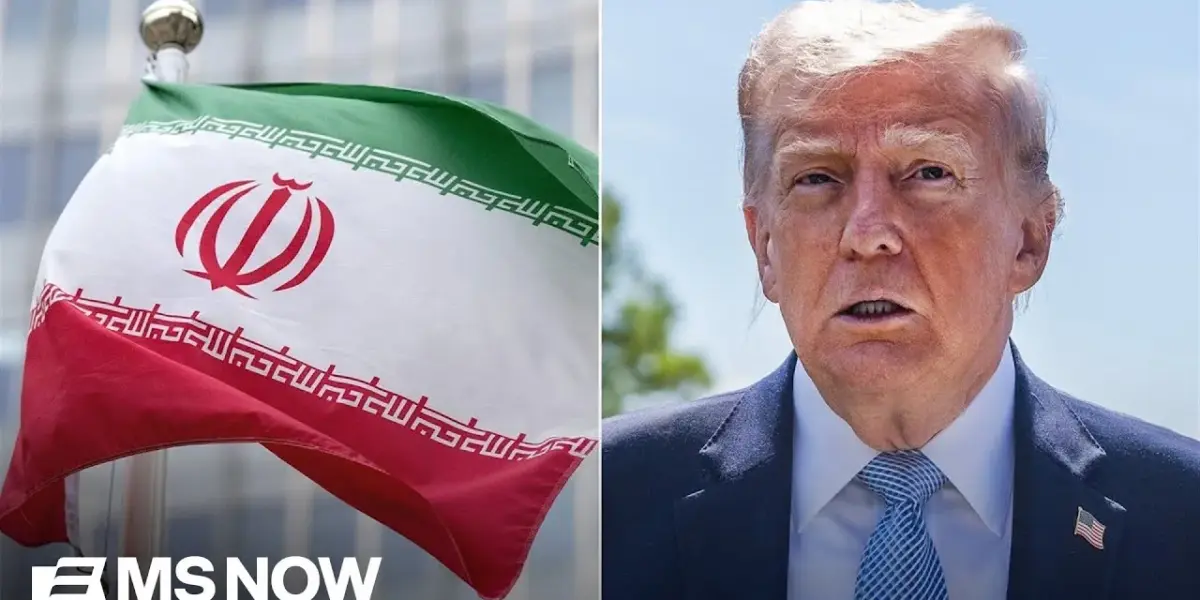
Trump Halts Iran Threats, Agrees to Cease-Fire Talks
President Donald Trump has stepped back from his aggressive threats to attack Iran, announcing a two-week cease-fire deal just 90 minutes before a self-imposed deadline for military strikes. The surprising shift came after 39 days of escalating tensions between the U.S. and Iran, which had threatened to spiral into a full-scale war. Trump stated that bombing would be suspended if Iran agreed to fully open the Strait of Hormuz. This marks the fifth time the president has delayed strikes on Iran’s power plants.
A Shift in Demands
The president also revealed that the U.S. received a 10-point peace proposal from Iran, which he believes offers a workable basis for negotiations. This is a significant change from just a month prior, when Trump had demanded Iran’s unconditional surrender. The situation has been tense, with Iran stating its retaliation would cease if attacks against its territory were also halted. Iran also indicated that safe passage through the Strait of Hormuz would be possible for two weeks, provided there was coordination with its armed forces and consideration of technical limits.
Experts Weigh In on the Cease-Fire
National security reporter Alex Ward of The Wall Street Journal noted that the deal implies Iran will continue to control passage through the Strait of Hormuz, potentially charging tolls. “It’s a big change because now Iran’s going to be charging tolls in order to let tankers go through,” Ward explained. “So where before they were not making money from the waterway, it was international waterway now for the moment they’ll still be charging tolls.” He cautioned that the current situation is essentially a “fighting pause” and that the future of the talks remains uncertain. “We do know that Trump when he feels that the Iranians don’t deal in the way that he wants tends to bomb so we’re not out of the woods in terms of a potential bombing here escalation of the war,” Ward added.
Military Perspective on the Developments
Retired U.S. Army General Barry McCaffrey expressed relief over the cease-fire, seeing it as an opportunity for face-to-face negotiations. However, he pointed out that the outcome suggests Iran has maintained control over the Gulf and that key objectives like regime change or access to Iran’s nuclear program were not achieved. General McCaffrey also voiced serious concerns about President Trump’s public statements, calling them “unhinged and incoherent and dangerous.” He specifically referenced Trump’s threat that “a whole civilization will die tonight,” interpreting it as coded language for the potential use of nuclear weapons.
“The notion of ending a civilization, which couldn’t be done, it was sort of a kind of drama queen kind of pronouncement, but it was coded language for the employment of nuclear weapons.”
General Barry McCaffrey
Concerns Over Safety and Future Passage
The specifics of Iran’s agreement to allow passage through the Strait of Hormuz raise questions about the safety of commercial tankers. Iran’s statement mentioned passage being possible with coordination and consideration of technical limitations. General McCaffrey questioned whether private industry tankers with civilian crews would risk transiting under these conditions. He suggested that if Iran controls the strait like Panama controls the Panama Canal, the global economy could be negatively impacted. “So I don’t know if this is going to hold or not but my guess is to everybody, both sides are sick of fighting,” McCaffrey stated, noting Trump’s political predicament and Iran’s significant losses from targeted attacks.
Washington Reacts to the Diplomatic Shift
In Washington, the focus has been on President Trump’s communication strategy regarding the conflict. Scott McFarlane, Chief Washington correspondent for Midas Touch, reported that the president has struggled to gain broad public support for the war. Democrats, who would be needed to fund any further escalation, have expressed strong criticism. Representative Maxwell Frost called Trump a “warmonger,” while Adam Smith, a top Democrat on the House Armed Services Committee, described the president as “morally demented or a monster.” McFarlane noted that this communication strategy has not resonated with Democrats or the public.
China’s Role in the De-escalation
The New York Times reported that China played a role in convincing Iran to agree to the cease-fire, a development that surprised many. Alex Ward confirmed China’s close relationship with Iran and suggested it was logical for China or Russia to advocate for de-escalation. Ward also highlighted the broader strategic implications of the conflict, suggesting that both sides may have lost in significant ways. “On the Iranian side, yes, the regime got decimated. Its military got beaten up. It’s lost a lot of support within the region because it attacked a lot of countries in the Middle East,” Ward explained. He also pointed out U.S. strategic vulnerabilities, including strained alliances with European nations, discontent among Middle Eastern countries, and the depletion of munitions that could affect readiness for a potential conflict with China over Taiwan.
Unresolved Nuclear Ambitions
The discussion also touched upon Iran’s nuclear program, an issue that was initially a major demand from the U.S. General McCaffrey dismissed the idea that Iran would hand over its enriched uranium or that the U.S. military could easily seize it. He described such notions as “nonsensical” and suggested that military options for dealing with Iran’s nuclear ambitions were limited. The general also raised concerns about the depletion of U.S. munitions, particularly scarce missile defense systems, which could impact deterrence against China. McCaffrey concluded by expressing deep concern over the erosion of America’s global credibility, stating, “The world community is saying these Americans are no longer a values-based organization. We can’t trust them.”
Looking Ahead
With a two-week cease-fire in place, all eyes are now on the Strait of Hormuz and the upcoming negotiations. The effectiveness of the cease-fire, the willingness of international tankers to resume passage, and the outcome of the peace talks will be critical. The underlying concerns about President Trump’s leadership, Iran’s long-term intentions, and the broader geopolitical stability in the region will continue to be closely watched in the coming weeks.
Source: 'Drama queen' Trump backs down from unprecedented Iran threats (YouTube)

Related Articles


Iran Outmaneuvers Trump, Secures Deal Better Than Pre-War
President Trump threatened a devastating attack on Iran but later announced a two-week ceasefire brokered by Pakistan. Iran claims the deal includes concessions on the Strait of Hormuz and sanctions, a significant shift from the pre-war situation. Critics, including Senator Mark Kelly, question Trump's strategy and the long-term implications of the deal.


Trump’s Iran Threat Sparks Outrage, Calls for Impeachment
Former President Donald Trump's unprecedented threat to destroy "a whole civilization" in Iran has sparked widespread condemnation and calls for impeachment. The incident, which involved alleged war crime threats and a potential military conflict, has been labeled a "permanent stain" on American history, with critics questioning the very fabric of the presidency. While Democrats demand accountability, Republican silence dominates the political response.

US Weighs Iran Strike; Ukraine Strains Russian Air Defenses
The United States is weighing a critical decision on potential strikes against Iran's infrastructure, as diplomatic efforts continue. Meanwhile, Ukrainian drone attacks are straining Russia's air defenses, forcing resource diversion from front lines.