Gas Crisis Forces Thousands of Indian Migrant Workers Home
Thousands of Indian migrant workers are returning to their villages due to a severe cooking gas shortage, driven by global energy disruptions. This crisis forces vulnerable families to choose between hunger and leaving their urban livelihoods. The government denies a national shortage, but experts highlight structural issues leaving workers behind.

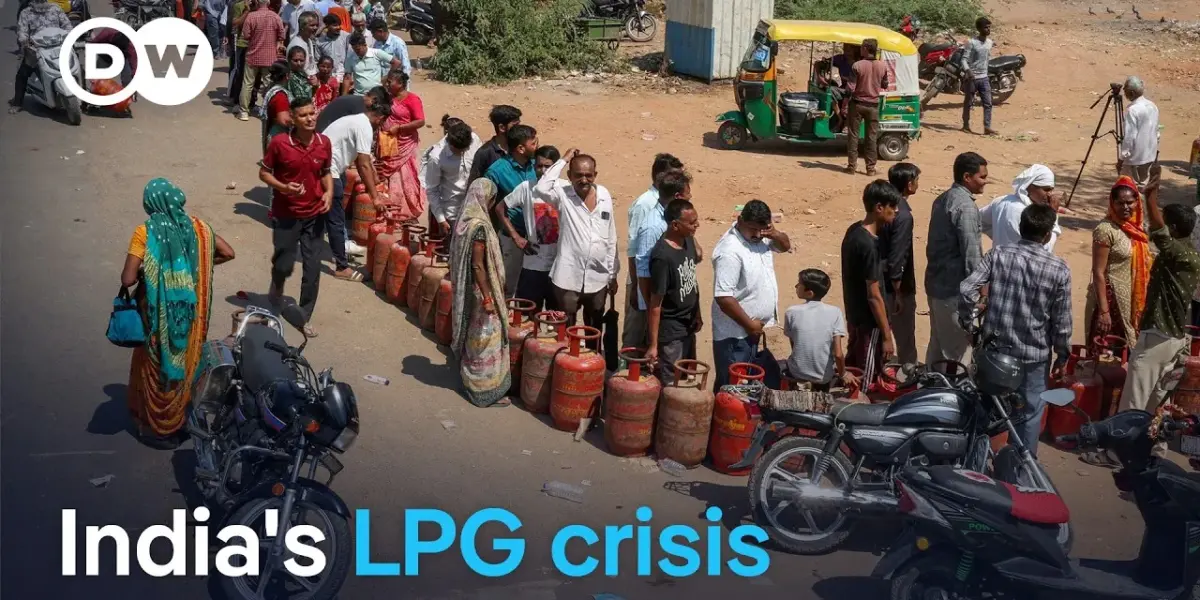
Thousands Flee Indian Cities Amid Severe Cooking Gas Shortage
Thousands of migrant workers are leaving India’s major cities and returning to their home villages. The reason is a severe shortage of cooking gas, a crisis fueled by global energy disruptions. This situation is hitting the country’s most vulnerable populations the hardest, forcing them to make impossible choices about survival.
Life Upended by Empty Cylinders
In Delhi’s migrant neighborhoods, anger and frustration are mounting. For days, many workers have been unable to refill their cooking gas cylinders. Sajad, a factory worker, has missed six days of work simply trying to find gas. “Our gas cylinders have been empty for 6 days,” he said. “We are barely eating our meals and that too with great difficulty.”
Without gas, cooking at home is impossible. Many workers have turned to small roadside eateries, but prices there have doubled, making even that unaffordable. Some are skipping meals altogether. One worker expressed the grim reality: “Nobody wants to give their life or to die from hunger. And if this situation continues for the workers then a time will come when we have to eat grass to survive.” Across the colony, people report going hungry or surviving on basic uncooked food like flattened rice with curd and sugar.
The Middle East Conflict’s Ripple Effect
India is the world’s second-largest importer of liquefied petroleum gas (LPG). Nearly 90% of its supply comes from the Gulf region, much of it shipped through the Strait of Hormuz. Recent tensions in the Middle East have caused global gas prices to skyrocket. A cylinder that once cost less than €10 is now selling for as much as €50 on the informal market.
For workers living paycheck to paycheck, this price surge isn’t just an inconvenience; it’s a breaking point. The inability to afford basic cooking fuel means they cannot sustain themselves in the city. Many are being forced out, with thousands already leaving and many more preparing to depart.
A Desperate Exodus
Railway stations in Delhi are crowded with migrant workers heading home. Bunty Takur, a factory worker who has lived in Delhi for years, is among them. His family has gone without a proper meal for three weeks. “I don’t want to die of hunger,” he stated. “If I have to work here, I need to eat. And if I can’t eat, I can’t work. So me and my family have to leave this city out of desperation because there is no cooking gas available for us.”
Bunty earns about €8 a day supporting his family of five. His only option now is to return to his village in Bihar. “When I reach home, at least I will get to eat,” he said. “In Bihar, I can live peacefully. I can work on the farm. In the village, we can at least feed ourselves. Unlike here where it’s become impossible.” He noted that in Delhi, using firewood for cooking is not allowed, and without gas, paying rent becomes a struggle, often leading to eviction.
Government Response and Deeper Issues
Inside parliament, the government has denied a national shortage, accusing opposition parties of spreading panic. A government spokesperson stated, “The government’s foremost priority is that the kitchen of India’s 33 crore families, especially the poor and the underprivileged, do not face any shortage.” They insisted that domestic supply is protected and the delivery time for LPG cylinders remains normal.
However, economists like Ainash Kumar from Jawaharlal Nehru University see a deeper problem. “The migrant workers, most of them coming from the marginalized backgrounds… all these vulnerabilities add more when they come in the city spaces and they do not have any takers,” Kumar explained. “Now if the prices will rise, wages has not risen. So where will they get those things from?” He pointed out that scarcity leads to black markets, with resources often going to the middle and upper classes, leaving vulnerable workers with nothing.
Wider Impact and Future Uncertainty
The crisis is not confined to Delhi. States across India are reporting similar shortages. In Surat, a major textile hub, factories are reducing operations or closing down. The scenes at railway stations are drawing comparisons to the mass exodus during the COVID-19 lockdown in 2020.
For many in rural areas, subsidized LPG cylinders are available, something migrant workers often lack in cities due to documentation issues. In villages, alternatives like firewood or cow dung are more common, options not practical or permitted in crowded urban settings. As darkness falls in the migrant colonies, the question remains: how will they find their next meal? While some have train tickets, many are left in limbo, with dwindling options and no clear end in sight to their struggle.
Source: Gas crisis hits thousands of Indian migrant workers | DW News (YouTube)

Related Articles


VP Vance Praises Hungary’s Orban, Boosts US-Hungary Ties
U.S. Vice President Vance met with Hungarian Prime Minister Viktor Orban, highlighting strong economic ties and shared values. The leaders discussed Europe's energy crisis, peace efforts in Ukraine, and concerns over foreign election interference. The visit underscores a deepening strategic partnership between the two nations.


Iran Strikes Spark Regional Fears; Diplomacy Urged
Explosions have been reported in Iran, with concerns rising over potential strikes on vital infrastructure. Qatar has warned of a regional "spiral out of control." Experts urge a diplomatic solution, fearing the blowback of military escalation on allies and global markets.


China’s Fuel Grip Tightens Global Supply Chains
China's dominance in refining oil and processing rare earth minerals is creating global supply chain vulnerabilities. Nations increasingly depend on Chinese-exported fuels, making them susceptible to price hikes and geopolitical leverage, highlighting a critical shift in international economic power.