Single-Family vs. Multifamily: First Rental Property Choice
Choosing between a single-family home and a multifamily property for your first rental investment is a pivotal decision. This article explores the financial advantages, financing, management, and strategic considerations for both property types, offering a framework for new investors to make an informed choice.


Navigating the First Rental Property Decision: Single-Family vs. Multifamily
For aspiring real estate investors, the choice between a single-family home and a multifamily property as a first rental investment is a critical one. This decision can significantly impact an investor’s ability to scale a portfolio and progress toward financial freedom. While the allure of quick progress is strong, choosing the wrong property type could lead to overwhelm and slow down long-term goals. Fortunately, a structured approach can demystify this choice, catering to individual experience levels, financial situations, and investment strategies.
The Multifamily Advantage for Investors
When all other factors are equal, many seasoned investors lean towards small multifamily properties (two to four units) as the superior asset class for rental income. The primary argument centers on financial benefits, cash flow, and wealth-building potential. While a single-family home might offer a more personalized sense of accomplishment, particularly after renovations, multifamily properties often deliver superior financial returns. The key lies in the inherent efficiencies and risk mitigation offered by multiple rental units within a single structure.
A significant advantage of multifamily properties is the mitigation of vacancy risk. If a single-family home experiences a vacancy for two months, it can result in a loss of roughly 16% of the annual revenue. In contrast, a two-month vacancy in one unit of a four-unit property might only represent a loss of about 4% of the total annual income. This diversification of income streams provides a crucial buffer against financial setbacks, making multifamily properties a more resilient investment, especially for new investors.
Financing and Management Considerations
Concerns that multifamily properties are harder to finance or manage are often overstated. Properties with four units or fewer are typically classified under residential mortgages, offering favorable financing options, including low down payment requirements (often 5-10%). This financing accessibility is comparable to that of single-family homes.
From a management perspective, while there are multiple tenants to contend with, the core responsibilities remain similar to managing a single-family home. There is still one roof to maintain, one tax bill to pay, and the fundamental tasks of tenant placement and repair management are largely the same. The perceived complexity often diminishes as investors gain experience.
Navigating Price Points and Property Quality
A crucial consideration for new investors is the realistic price range for these properties. While a budget of $80,000 to $125,000 might be targeted for out-of-state investments, finding a quality multifamily property in a market with steady job growth within this range can be challenging. In many desirable markets, this price point may only yield lower-quality or distressed single-family homes. Therefore, investors are often advised to prioritize acquiring the best quality asset they can afford, rather than strictly adhering to the property type if it means compromising on quality.
For investors with this specific budget, focusing on high-quality single-family homes might be a more practical initial strategy. This approach can prevent the headaches associated with managing a lower-quality multifamily property, especially for out-of-state investors who may lack a robust local support team.
Managing Inherited Tenants and Rent Increases
A common scenario for new investors, particularly those house hacking, involves inheriting existing tenants with below-market rents. The key to navigating these situations lies in balancing business acumen with human decency.
The Human Element in Rent Adjustments
When faced with a tenant paying significantly below market rent (e.g., $635 versus a market rate of $1,200), the best approach is transparency and collaboration. Instead of dictating a rent increase, engage the tenant in a conversation. Present market comparables (comps) to illustrate the current rental landscape. Then, ask the tenant what they feel comfortable paying to remain in the property.
This collaborative approach often yields a mutually agreeable solution. A tenant might propose a rent of $1,000, which, while below market, secures a reliable, long-term tenant. This is often preferable to the financial and logistical costs of a tenant turnover. The decision then becomes whether to implement the new rent immediately or to ‘stair-step’ the increase over several months or a year, depending on the tenant’s financial capacity and the landlord’s needs.
The Importance of Conservative Underwriting
This situation also highlights the critical importance of conservative underwriting. Investors who budget for maximum market rents from day one are setting themselves up for failure. Instead, underwrite deals based on lower or mid-tier rent estimates. This creates a financial buffer that allows for flexibility when dealing with existing tenants or unexpected market shifts. Losing 8-16% of annual revenue due to vacancy can quickly turn a profitable deal into a negative one, underscoring the value of realistic financial projections.
Burr vs. Fix and Flip: A Strategic Choice
For investors with substantial capital ($100,000+) looking to take on calculated risks without the desire to manage tenants, the choice between the BRRRR (Buy, Rehab, Rent, Refinance, Repeat) strategy and a fix-and-flip often arises. Both strategies involve risk and potential reward, but they cater to different investor profiles and risk tolerances.
Understanding Risk and Reward
It’s crucial to understand that risk and reward are intrinsically linked. Higher potential returns typically come with higher risk. Fix-and-flips, while offering the potential for quicker returns, generally carry a higher risk profile due to market timing, unpredictable renovation costs, and the need for a swift disposition.
The BRRRR strategy, conversely, is often considered lower risk. While it involves a longer holding period and the responsibilities of being a landlord, it offers more flexibility. If market conditions are unfavorable for selling after the renovation, the investor can simply rent out the property. This ‘exit strategy’ flexibility is a significant advantage.
Time Horizon and Investor Goals
The decision hinges on an investor’s primary goals: short-term profit versus long-term wealth accumulation and risk tolerance. A fix-and-flip is geared towards generating capital within a shorter timeframe (e.g., 6-12 months). A BRRRR strategy is a longer-term play, focused on building equity and sustainable cash flow over time.
For an investor who is hesitant about being a landlord but open to it if advantageous, the BRRRR strategy might be more appealing if they can become comfortable with the landlord aspect. The inherent advantages of long-term appreciation and cash flow often outweigh the short-term gains of a flip, especially for those seeking to minimize significant losses.
House Hacking in Expensive Markets: A Cautionary Tale
House hacking, the practice of buying a multifamily property and living in one unit while renting out the others, has long been touted as a fantastic entry strategy. However, in hyper-expensive markets like Seattle, New York, or Miami, this strategy may no longer be financially sound.
The Math Doesn’t Always Add Up
In these high-cost areas, the potential rental income from the additional units may not be sufficient to cover the investor’s mortgage payment, property taxes, insurance, and other expenses, leading to significant negative cash flow (e.g., -$1,400 per month). Agents and lenders may present such deals as acceptable, but for an investor aiming to build a portfolio through repeated house hacks, accumulating substantial monthly losses is unsustainable.
The opportunity cost of tying up a large amount of capital (e.g., $100,000+) in a property that generates negative cash flow, when that capital could be invested elsewhere for a positive return (even in a bond yielding 4%), needs serious consideration. In such markets, alternative strategies like heavy value-add renovations, flipping, or investing out-of-state for cash flow become more viable options.
When House Hacking Makes Sense
A general rule of thumb for house hacking is that if the investor’s remaining mortgage payment after accounting for rental income is still comparable to or higher than the cost of renting a similar unit independently, the deal is likely not a good one. Investors in expensive markets might be better served by renting a modest apartment and investing their capital in properties located in more affordable, cash-flowing markets, or focusing on value-add strategies within their local area.
Conclusion: Define Your Goals First
Ultimately, the ‘best’ first rental property—whether single-family or multifamily, a flip or a BRRRR—depends entirely on an individual’s goals, financial situation, risk tolerance, and market conditions. Taking the time to clearly define objectives is the most crucial step. This clarity provides a framework for analyzing deals, overcoming analysis paralysis, and making informed decisions that align with a long-term investment strategy.
Source: Single-Family vs. Multifamily: Which Is the Best FIRST Rental Property? (YouTube)

Related Articles

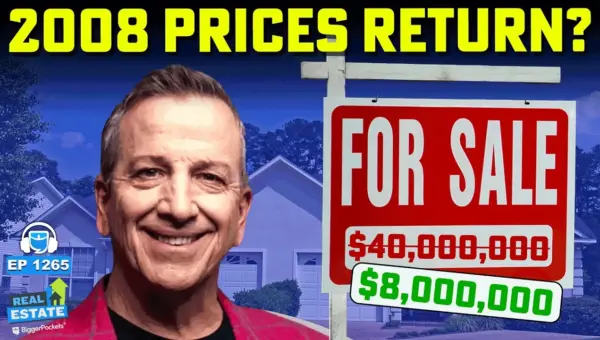
Real Estate Prices Mirror 2008 as Opportunities Emerge
Experienced investors Ken and Denil McElroy see current market conditions as a prime buying opportunity, with property prices mirroring 2008 levels. While the single-family market shows little distress due to low mortgage rates, the multifamily sector presents deeply discounted assets for those willing to negotiate and reposition properties. Their advice centers on fixed-rate debt, low loan-to-value ratios, and a focus on cash flow to navigate market cycles.


Buy Below Median for Safer Investment Returns
Buying investment properties above the median home price carries significant risk of financial loss, even at a discount. Smart investors focus on lower-priced homes to ensure positive cash flow and insulate themselves from market downturns.


Cash Flow Beats Debt Freedom for Security
While paying off all debt offers peace of mind, generating consistent cash flow may provide greater financial security. This income stream can cover living expenses and offer flexibility in uncertain economic times, challenging the traditional focus on debt freedom.