Cartels Unleash Terror: 20 Heinous Murders Revealed
A new exposé details 20 of the most shocking and infamous assassinations carried out by powerful cartels. From the gruesome murder of Hugo Hernandez to the massacres in Durango and San Fernando, these events reveal the brutal ruthlessness of organized crime.


Cartels Unleash Terror: 20 Heinous Murders Revealed
The world of organized crime is often shrouded in secrecy, but some acts of violence are too brutal to ignore. A recent exposé has brought to light 20 of the most shocking and infamous assassinations and hits carried out by powerful cartels. These events paint a grim picture of the ruthlessness and terror that these organizations can inflict.
A Reign of Fear: The Brutal Reality of Cartel Violence
When cartels clash, the consequences are devastating, often spilling over to innocent lives. One of the most disturbing examples occurred in 2010. Hugo Hernandez, a man known for his love of family and fishing, was captured in Sonora, a region known for growing illegal substances. He was taken to Sinaloa, and days later, his body was found brutally dismembered in Los Mochis. His remains were scattered, his face removed and reattached to a soccer ball, accompanied by a threatening note. This horrific scene was believed to be a message sent to the Juarez cartel by rivals, though the specific reason for Hernandez’s targeting remains unknown.
The year 2011 brought another wave of terror with the Durango massacres. Authorities discovered hundreds of bodies in mass graves throughout the city. Many victims were unidentifiable, but some were believed to be enemies of the infamous Sinaloa cartel. Internal tensions within the cartel may have also fueled the violence. Seven burial sites were found, even in unassuming places like auto shops. Despite the sheer number of victims, those responsible were never identified, leaving a chilling sense of impunity.
Attacks on Everyday Life and Those Who Speak Out
Not even national celebrations are safe from cartel cruelty. On September 15th, 2008, during Mexican Independence Day celebrations in Morelia, two grenades were thrown into a crowd of thousands. The blasts killed eight people and injured over 100, turning a joyous occasion into a scene of horror. La Familia Michoacana was blamed, though they pointed fingers at another cartel, Los Zetas. While some members of Los Zetas were arrested, the true culprits remain unclear.
Aligning with a cartel is dangerous, but turning against them is a death sentence. American citizen Barry Seal learned this the hard way. He began transporting illegal substances for the Medellin cartel in 1981. When the DEA caught him, he agreed to work with the government on a sting operation, earning his freedom but making him a target of the cartel. In 1986, he was assassinated by a contract killer, a stark reminder of the deadly consequences of crossing these crime syndicates.
Activists who dare to speak out also face extreme danger. Nepo Museno Moreno Nunees became an activist after his son disappeared in 2010. He spoke out against cartels, even taking his concerns to national leaders. Despite death threats, he was not offered protection. In November 2011, he was assassinated while crossing the street, a targeted attack meant to silence both him and his message. His murder sent a clear message: anyone speaking out against the cartels was not safe.
Journalists and Officials Targeted for the Truth
Journalists are also at high risk. Roberto Javier Mora Garcia, who wrote for several publications in Mexico, focused on the government’s relationship with the Gulf Cartel. He prioritized the truth, even when it meant exposing authorities or traffickers. On March 19th, 2004, Garcia was brutally stabbed over two dozen times. His assassin remains unknown, and with the one confirmed suspect having died in prison, the case is unlikely to be solved.
Sometimes, assassinations are not even intentional. In 1989, Antioquia Governor Antonio Rodan Betancur was killed when a car rigged with explosives detonated as he drove past. The blast killed five other people and severely damaged nearby homes. It was later revealed that the explosives were meant for the local police commander, not the governor, and that a prominent member of the Medellin cartel was involved.
The border city of Nuevo Laredo became a battleground in 2012 between the Gulf Cartel and Los Zetas. On May 4th, nine bodies were found hanging from a public structure, believed to be Gulf Syndicate members targeted by Los Zetas. Hours later, another 14 headless bodies were discovered in a car, likely a counterattack. These brutal acts showed the intense animosity between the groups and their complete disregard for human life.
Mistaken Identity and Betrayal: Fatal Consequences
Even law enforcement is not immune. In 2023, some police officers learned this when they intercepted a large shipment of illegal substances reportedly meant for the Sinaloa cartel. The cartel retaliated swiftly, shooting at federal buildings and killing six officers, while five more were injured. This incident highlighted the extreme violence and the fact that citizens couldn’t even trust the police to protect them.
In 1993, Cardinal Juan Jesus Posadas was shot over two dozen times by hitmen hired by the Tijuana cartel. Official reports suggest they were tasked with eliminating a rival kingpin, El Chapo, and mistook the Cardinal for him. However, some believe the Cardinal was targeted by the government to hide alleged connections to trafficking circles. The leader of the Tijuana syndicate was charged, but those close to Posadas claimed he had been threatened by the cartel beforehand.
Fernando Villavicencio, a former investigative journalist who criticized former President Rafael Correa, ran for president of Ecuador. Despite receiving threats from gangs, he continued his campaign. In August 2023, after leaving a rally, he was ambushed and fatally shot. The assassin also threw a grenade that thankfully did not detonate. The criminal group Los Lobos claimed responsibility, though this is disputed. Several people arrested in connection were later killed in prison.
Fighting Cartels: A Dangerous Calling
Rodrigo Lara, appointed Colombia’s Minister of Justice in 1983, began targeting criminal organizations, including Pablo Escobar and the Medellin cartel. His actions led to Escobar’s expulsion from Congress. In April 1984, Lara was ambushed and killed by hitmen paid by the Medellin cartel. One of the assassins was killed by Lara’s bodyguard, while the other was arrested and later paroled.
Colonel Ramirez, director of the Colombian Drug Enforcement Unit, worked alongside Rodrigo Lara. In 1984, he was involved in a DEA operation that led to a significant blow against the Medellin cartel, making him a target. In November 1986, assassins connected to the cartel attacked Ramirez and his family, wounding him and causing him to crash before finishing the job. He was posthumously awarded the title of Brigadier General.
Photojournalist Margarito Martinez, known for his crime reporting in Tijuana, Mexico, was falsely linked to a Facebook group critical of cartels. After receiving threats, he was seeking government protection when he was fatally shot in January 2022. Despite being incorporated into a journalist protection mechanism, he was still murdered. Two individuals were sentenced for the assassination, but the masterminds behind the order have not been charged.
Musician Valentín Elizalde was allegedly murdered by the Loetta’s group in 2006, and Sergio Gomez was fatally attacked by a gang a year later. These artists, like others, fell victim to the violence that plagues the music industry in certain regions.
Agents and Immigrants: Victims of Cartel Wars
In February 2011, US Immigration and Customs Enforcement agents Jaime Zapata and Victor Avila were traveling in Mexico when they were ambushed by speeding vehicles. Despite identifying themselves as US diplomats, the armed men continued shooting, injuring the agents and ramming their car off the road. Agent Zapata died from his injuries, while Avila was treated. The Los Zetas cartel was responsible, and their murderers were eventually arrested.
The 2010 San Fernando massacre stands as a horrific testament to cartel brutality. During a war between former allies Los Zetas and the Gulf cartel, an injured teenager survived a massacre. He told Marines that a group of immigrants heading to the US had been taken to a warehouse by Los Zetas members. There, 72 people were executed, supposedly to steal money, get information, and ensure they weren’t working with the rival cartel. Three individuals survived. Los Zetas are also believed to have killed investigators of the massacre. Eventually, 81 gang members were arrested, along with 16 corrupt police officers.
The Infamous DEA Agent and a Deadly Casino Attack
Enrique “Kiki” Camarena, a DEA agent working in Guadalajara, Mexico, made significant contributions to drug seizures. In February 1985, he was abducted by corrupt officials, believed to be retaliation for the seizure of a large illegal drug site known as Rancho Búfalo. Camarena’s body was found a month later, showing signs of abuse. The investigation concluded that Guadalajara cartel founders were responsible, leading to lengthy prison sentences. However, allegations of CIA involvement have also surfaced.
In August 2011, members of the Los Zetas cartel sought revenge on the Casino Royale in Monterrey, Mexico, because the owner had failed to pay a protection fee. The cartel stormed the casino, doused it with gasoline, and set it on fire, locking the emergency exits. 52 people died inside. By 2022, only five individuals linked to the attack had been arrested on unrelated charges.
The Zetas’ Reign of Terror and Other Notorious Hits
The Zetas, known as Mexico’s most violent and feared cartel, carried out another massacre in March 2011 in San Fernando. Over several days, they hijacked public transport buses filled with passengers. It’s speculated they did this to force people to work for them or to interrogate passengers suspected of being informants for the Gulf cartel. The kidnapped individuals were assaulted, and many were allegedly forced to fight each other. Over weeks, authorities discovered numerous mass graves, with a total of 193 bodies found. Later, 82 Zetas members and 16 corrupt police officers were arrested in connection with the massacre, leading to the imprisonment of cartel leaders like Miguel Treviño Morales.
This list of 20 infamous cartel assassinations and hits serves as a stark reminder of the brutal reality of organized crime and its devastating impact on individuals and communities. The question remains: which of these shocking events resonated most with you?
Source: 20 Infamous Cartel Assassinations And Hits (YouTube)

Related Articles
Art and Chocolate Heists Expose Global Security Gaps
Two major heists in Northern Italy, one involving $10 million in art and another 400,000 Kit Kat bars, expose significant security flaws. These thefts highlight the growing sophistication of organized crime and the challenges in protecting both cultural heritage and global supply chains.
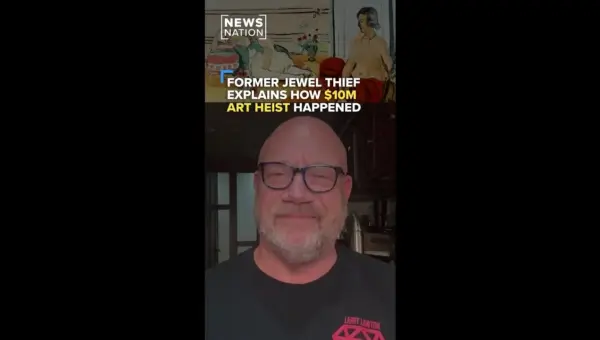
Art Heist Exposes Security Gaps, Fuels Crime Concerns
A sophisticated $10 million art heist, executed with precise timing, reveals critical security vulnerabilities in high-value institutions. The thieves' focused approach and rapid exit despite alarms highlight the need for enhanced security and response strategies.
Whistleblower Exposes Massive Fraud, Threatens State Government
A former Minnesota DHS employee, Scott Stillman, blew the whistle on massive fraud years ago but claims he was targeted. Now, U.S. Attorney Joe Thompson estimates $9 billion in fraud, validating Stillman's warnings and raising questions about government accountability.