Iran Agrees to Ceasefire, But Terms Spark Regional Fears
Iran has reportedly agreed to a two-week ceasefire, but conflicting interpretations of the terms are fueling regional anxiety. While Iran claims the U.S. has accepted key demands like regional base withdrawals and control of the Strait of Hormuz, the White House has focused on reopening the vital waterway. This divergence raises concerns about future stability in the Middle East.

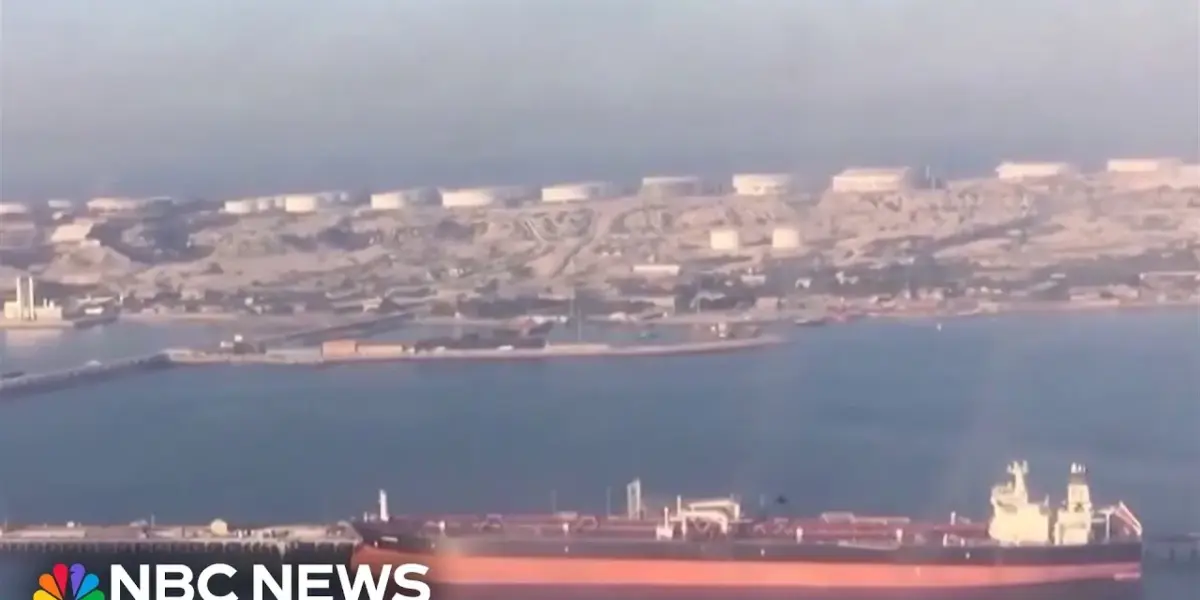
Iran Agrees to Ceasefire, But Terms Spark Regional Fears
In a rapidly developing situation, Iran has reportedly agreed to a two-week ceasefire, but the exact terms and implications of this agreement are causing significant uncertainty and concern across the Middle East. The announcement came after a period of heightened tensions, with reports of ongoing missile and drone attacks even as discussions for a pause in hostilities were underway.
Conflicting Interpretations Emerge
While Iran’s Supreme National Security Council has issued a statement indicating agreement, the specifics remain a point of contention. According to NBC News Chief International Correspondent Keir Simmons, reporting from Saudi Arabia, it is unclear if the understanding between the Trump administration and the Iranian regime is the same.
Simmons detailed Iran’s stated demands, which include the withdrawal of U.S. combat forces from the region and the establishment of a secure transit protocol in the Strait of Hormuz, giving Iran control over the agreed framework. Iran claims that Pakistan’s Prime Minister informed them that the U.S. side has accepted these principles as a basis for talks. This interpretation suggests Iran believes the U.S. has agreed to American bases leaving the region and Iranian control over the vital Strait of Hormuz.
However, President Trump’s public statements have focused on the reopening of the Strait of Hormuz, a critical chokepoint through which approximately 20% of the world’s oil and gas travels. The discrepancy between these narratives raises serious questions about the potential outcomes of future negotiations.
Iran Lists ‘Victory’ Points
Iranian television has been broadcasting key points from Iran’s perspective, which are being framed as a list of victories. These points reportedly include continued Iranian control over the Strait of Hormuz, acceptance of uranium enrichment, and the removal of all primary and secondary sanctions. Such demands, if accurately reflected in Iran’s agreement, are likely to be viewed very differently by the White House.
“This is a list of victory for Iran that I suspect in the White House, they do not think they have agreed to,” Simmons observed, highlighting the stark contrast in the perceived outcomes of the reported agreement.
Regional Relief and Lingering Worries
In the broader Middle East, the news of a potential ceasefire has brought a measure of relief. Gulf countries, including Saudi Arabia, had been preparing for the possibility of escalating conflict, with potential strikes from the U.S. and Israel against Iran, possibly followed by retaliatory attacks from Iran. While many of these nations have been effective in intercepting drones and missiles, some attacks have still caused significant damage, such as those targeting the U.S. embassy in Riyadh.
A shelter-in-place alarm was issued in Riyadh shortly before Simmons’ report, indicating continued concerns about imminent attacks. However, this warning was later lifted. “There will be a breathing out in many of these Gulf countries that were preparing for potentially an onslaught on Iran by the US and Israel,” Simmons stated.
Despite the temporary easing of tensions, governments in the region, like Saudi Arabia, are wary of a ceasefire that leaves Iran weakened but empowered. They are closely watching Iran’s stated terms and worry that the current proposal could lead to exactly that outcome. The desire has been not for an end to fighting that leaves Iran resentful and emboldened, but rather a stable resolution.
What’s Next?
The coming weeks will be crucial in determining the true nature of this ceasefire and its impact on regional stability. The conflicting interpretations of the agreement suggest that diplomatic efforts are far from over. The world will be watching to see if the U.S. and Iran can bridge the gap between their stated positions and forge a lasting peace, or if this pause in hostilities will only be temporary.
Source: Middle East reacts after Iran reportedly agrees to two-week ceasefire (YouTube)

Related Articles


Trump Halts Iran Attacks, Seeks Peace Deal
President Trump has agreed to a two-week suspension of attacks on Iran, contingent on Iran reopening the Strait of Hormuz. This move comes as the U.S. reports progress on a peace proposal and highlights the Iranian people's desire for freedom.

US-Iran Ceasefire Holds Amid Tensions, Strait of Hormuz Key
The US and Iran have agreed to a two-week ceasefire, brokered by Pakistan, with the crucial condition that Iran reopens the Strait of Hormuz. This development impacts global oil and gas supplies, as well as food security through fertilizer transport. However, concerns remain about potential Iranian mobilization and compliance, particularly following reports of post-ceasefire missile launches.

US, Iran Agree to 2-Week Ceasefire Centered on Strait of Hormuz
The U.S. and Iran have agreed to a two-week ceasefire, brokered by Pakistan, focusing on reopening the Strait of Hormuz. While a significant development, the deal's terms are complex and its fragility is a major concern due to the numerous actors involved.