Stars Could Power Galaxy-Sized Starships
Scientists explore the feasibility of Jupiter becoming a star to power galaxy-sized starships and revisit Project Orion's nuclear propulsion concept. The article also delves into the science behind meteor storms, lunar water ice, ring galaxies, and the exciting return of human missions to the Moon with Artemis.

Jupiter’s Star Potential and Galactic Engines
Could Jupiter, the king of our planets, ever become a star? The short answer is no, not without a colossal cosmic upgrade. To ignite fusion and become a red dwarf star, Jupiter would need to be about 77 times more massive than it is now. This means gathering the mass of roughly 76 more Jupiters and crashing them together.
Even if we could achieve this mega-engineering feat, the idea of using such a star to power a galaxy-spanning starship, known as a ‘scato thruster’ or ‘stellar engine,’ is a mind-bending concept rooted in real physics. Imagine a giant mirror placed next to a star. The star’s radiation would push this mirror, giving it momentum. But here’s the twist: the mirror’s gravity would pull on the star, dragging it along. This allows a star system to slowly move across the galaxy.
Project Orion: Nuclear Power for Space Travel
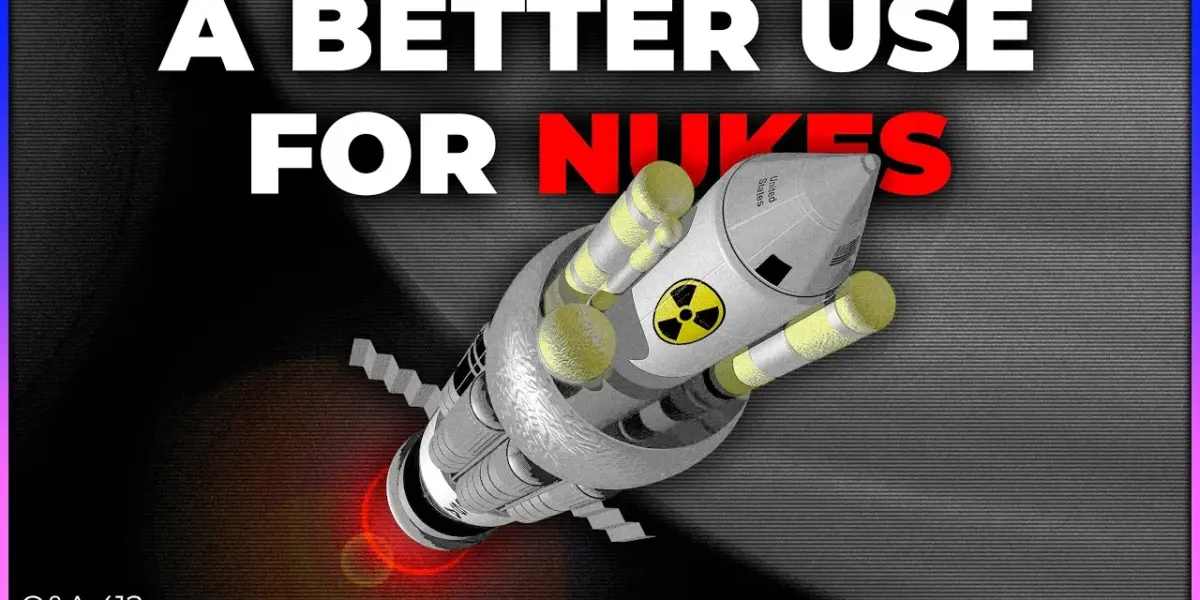
The concept of using nuclear explosions for spacecraft propulsion, famously explored in Project Orion, is another ambitious idea. The basic principle involves detonating nuclear bombs behind a spacecraft. The resulting blast wave would hit a massive ‘pusher plate’ at the back, propelling the ship forward. While theoretically possible for interstellar travel, the practical and geopolitical hurdles of detonating nuclear weapons, especially near Earth, make it highly unlikely. Modern research favors less destructive methods like laser sails or antimatter propulsion for journeys between stars.
Meteor Storms and Cosmic Debris
The dazzling spectacle of a meteor storm, where thousands of meteors streak across the sky per hour, is a rare but possible event. These celestial fireworks occur when Earth passes through a dense trail of debris left behind by comets or asteroids. Normal meteor showers, like the Perseids, offer a few dozen meteors each hour. However, a meteor storm, like the one last seen in the 1960s, is a much more intense experience. Astronomers can predict these events by tracking the paths of comets and the resulting debris trails, sometimes referred to as ‘tubes’ of dust and rock.
Comets and the Moon’s Watery Past
Could we intentionally crash a comet into the Moon? While technically possible, it wouldn’t be a gentle landing. Any comet impact would result in an explosion equivalent to a nuclear detonation, vaporizing the comet and a portion of the lunar surface. However, scientists theorize that cometary impacts might be responsible for the water ice found in the Moon’s permanently shadowed craters. When a comet struck billions of years ago, ice could have rained down. While ice on the sunlit side would have evaporated, the ice in permanently dark craters would have remained, preserving it to this day.
Forming an Atmosphere on the Moon
Creating a breathable atmosphere on the Moon is a long-term project, but not impossible. Instead of relying on comets, the more feasible approach involves large-scale, solar-powered factories on the lunar surface. These facilities would mine lunar soil (regolith), which is rich in oxides like silicon and iron. By breaking down these oxides, factories could release oxygen. Over vast timescales and with continuous operation, enough oxygen could be released to build up a substantial atmosphere, potentially even reaching one Earth-standard atmosphere.
Ring Galaxies: Cosmic Collisions
The striking ring shape of some galaxies, often looking like a cosmic bullseye, is usually the result of a galactic collision. When one galaxy passes directly through the center of another, it compresses the gas and dust. This compression triggers intense bursts of star formation. Over billions of years, this rapid star birth uses up the available gas, leaving a ring of older stars and a seemingly empty center. Similar phenomena include ‘jellyfish galaxies,’ where a galaxy’s passage through another creates trailing clouds of gas and dust that resemble tentacles.
The Artemis Mission: A New Era of Lunar Exploration
The Artemis program marks a significant return to lunar exploration, rekindling public excitement for space travel. For the first time in over 50 years, humans are venturing back to the Moon. This renewed focus on lunar missions signifies humanity’s enduring drive to explore the vast cosmos. The program not only aims to return astronauts to the Moon but also paves the way for future deep-space missions, inspiring a new generation with the possibilities of space exploration.
Source: Ring Galaxies' Origin, Project Orion, Comet Hitting The Moon | Q&A 412 (YouTube)

Related Articles


Middle East Tensions Flare as Trump Issues Iran Deadline
President Trump has issued an ultimatum to Iran, demanding the reopening of the Strait of Hormuz by tonight or face severe consequences, including targeting critical infrastructure. Meanwhile, the Artemis 2 crew is returning home after a historic journey around the far side of the Moon. In sports, the Michigan Wolverines have won their first national basketball championship in 37 years.

Artemis II Crew Makes History, Sees Full Far Side of Moon
The Artemis II astronauts have made history by becoming the first humans to see the entire far side of the Moon. The crew is now returning to Earth after a record-breaking journey. Meanwhile, Middle East tensions are high as President Trump issued a deadline to Iran, threatening military action.

NASA’s Moon Return: Rockets Blaze, Shields Glow, Risks Loom
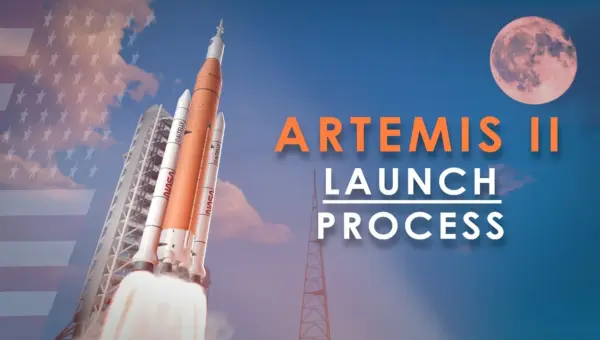
NASA's Artemis 2 mission prepares to launch the most powerful rocket ever built, the Space Launch System (SLS), sending astronauts back to the Moon after 50 years. This complex journey involves a powerful liftoff, a critical lunar injection burn, a gravitational slingshot maneuver around the Moon, and a dangerous re-entry through Earth's atmosphere. The mission highlights both incredible engineering achievements and the inherent risks of space travel.