Trump Weighs Iran Deal; Pakistan Seeks Ceasefire Extension
President Trump faces a critical deadline regarding Iran, with Pakistan proposing a two-week ceasefire extension to allow for peace talks. The White House is considering the proposal amid threats of military action.


Trump Faces Iran Deadline; Pakistan Proposes Ceasefire Extension
President Trump stands at a critical juncture regarding Iran, facing a looming 8:00 p.m. Eastern time deadline. He must decide whether to grant Iran more time to negotiate or to act on his threats to strike key infrastructure if Iran does not cease its actions. This decision point comes after Trump has previously extended deadlines for Iran, indicating a willingness to seek diplomatic solutions.
Pakistan’s Diplomatic Push
Pakistan has stepped forward with a new proposal, urging both the United States and Iran to agree to a two-week ceasefire extension. The goal of this extension is to create space for peace talks and de-escalate tensions. Pakistan’s Prime Minister has directly called upon President Trump and Iran’s leadership to accept this plan, highlighting the urgency for dialogue.
White House Response Pending
The White House has acknowledged receiving Pakistan’s proposal. Press Secretary Caroline Levit stated that President Trump has been briefed on the matter and a response is forthcoming. The exact nature and timing of this response remain uncertain, with speculation that it could be announced via President Trump’s social media platform, Truth Social, where he has previously communicated significant policy updates.
Stakes of the Strait
The immediate trigger for this high-stakes negotiation appears to be Iran’s actions related to the Strait of Hormuz, a vital waterway for global oil shipments. Trump has threatened retaliation, including strikes on bridges and power plants, if Iran continues to interfere with shipping through this strategic chokepoint. The potential disruption of oil flow through the Strait of Hormuz carries significant economic implications for the global economy.
Historical Context of Negotiations
This situation echoes previous diplomatic efforts and standoffs between the US and Iran. President Trump has consistently favored a tough stance on Iran, withdrawing the US from the Joint Comprehensive Plan of Action (JCPOA) in 2018. However, he has also shown a willingness to engage in direct talks, as evidenced by past extensions and his openness to Pakistan’s current mediation. Pakistan, historically maintaining relations with both countries, often plays a role in regional diplomacy.
Economic and Geopolitical Interests
The United States’ primary interests include ensuring freedom of navigation in the Strait of Hormuz, curbing Iran’s nuclear program, and countering its regional influence. Iran, on the other hand, seeks relief from US sanctions, which have severely impacted its economy, and aims to maintain its regional standing. Pakistan’s interest lies in regional stability, as conflict in the Persian Gulf could disrupt trade routes and increase regional instability, affecting its own economic and security interests.
Global Impact: Why This Reshapes the World Order
The outcome of this imminent deadline could significantly alter regional power dynamics and global energy markets. A failure to reach an agreement and subsequent military action could lead to a sharp rise in oil prices, impacting economies worldwide. Conversely, a successful diplomatic extension, even a temporary one, could provide a window for more comprehensive negotiations, potentially leading to a broader de-escalation. The involvement of a third-party mediator like Pakistan underscores the complex web of alliances and the constant search for diplomatic pathways in a multipolar world.
Future Scenarios
Several scenarios could unfold. One possibility is that President Trump accepts Pakistan’s proposal, granting a two-week extension for talks. Another is a rejection of the proposal, leading to potential US military action if Iran does not alter its course. A third scenario involves a modified extension or a different diplomatic approach emerging from ongoing back-channel communications. The likelihood of each depends heavily on the internal calculations within the White House and Tehran, as well as the sustained pressure from international actors like Pakistan.
Source: Will Trump, Iran agree to ceasefire deal extension ahead of deadline? (YouTube)

Related Articles


Congress Demands Trump Exit Amidst Global Tensions
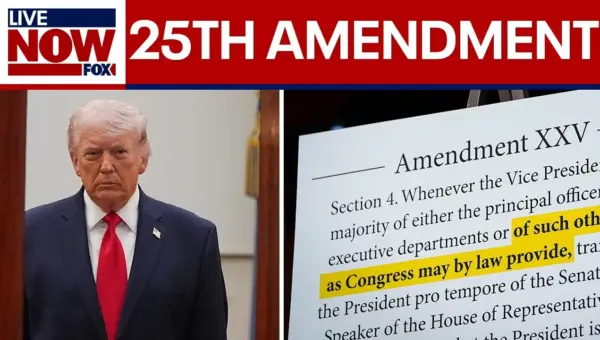
A growing number of Democrats are calling for Donald Trump's removal from office via impeachment or the 25th Amendment. This comes amidst escalating tensions with Iran and reports of a potential deal. The speaker questions Trump's aggressive rhetoric and the legality of the war's initiation.
Democrats Eye 25th Amendment Amid Trump’s Iran Ultimatum
Democrats are considering invoking the 25th Amendment against President Trump following his aggressive ultimatum to Iran. Constitutional expert Robert McDerer explains the amendment's complex provisions for presidential disability. Trump, however, has pushed back, suggesting such an attempt would fail.

US Tightens Iran Stranglehold with Deadline
The Trump administration has issued a firm deadline to Iran, threatening further military action if the regime does not alter its behavior. This escalation follows strikes on key oil infrastructure and highlights deep-seated U.S. grievances against Iran.