From Waiter to 51 Units: A Portfolio Scaling Strategy
A former waiter, Jose Martinez, shares his remarkable journey from acquiring his first quadplex to owning 51 rental units in just four years. His strategy emphasizes portfolio acquisition and creative financing, demonstrating a rapid path to financial independence.


From Waiter to 51 Units: A Portfolio Scaling Strategy
The path to financial freedom through real estate investing often conjures images of diligent saving, careful property selection, and gradual growth. However, for Jose Martinez, a former waiter who emigrated from the Dominican Republic with no English, the journey to owning over 50 rental units and replacing his income took a different, more accelerated route. His story, shared on the BiggerPockets Podcast, highlights a powerful strategy: shifting from buying individual rental properties to acquiring entire rental portfolios, leveraging unconventional financing and mentorship to achieve rapid scaling.
The Power of Portfolio Acquisition
The core message from Martinez’s experience is a stark departure from the traditional advice of buying one rental at a time. “Stop buying rentals and start buying rental portfolios,” he emphasizes. The logic is simple: instead of acquiring two properties that might take years to significantly impact income, imagine purchasing ten at once. This approach, he demonstrates, can drastically shorten the timeline to financial independence.
The First Step: A Value-Add Quadplex
Martinez’s real estate journey began in 2022 in Albany, Georgia. Despite admitting he “didn’t know anything” about interest rates or tenants, he purchased his first property: a quadplex for approximately $330,000. He invested an additional $20,000 in renovations, bringing his total investment to $350,000. At the time, rents were around $450 per unit. Today, these units command $1,195 each, showcasing significant value-add potential and appreciation, even if he didn’t initially recognize it as such. This initial deal was financed with a conventional loan, requiring a 15% down payment. He and his wife actively participated in the renovations, saving costs and gaining invaluable hands-on experience.
The Mentor and the Million-Dollar Deal
The true acceleration in Martinez’s portfolio growth came through a chance encounter at a gym. He met a seasoned investor who owned over 150 properties. This meeting led to a pivotal opportunity: the mentor offered to sell Martinez 10 houses as a package deal. Initially daunted by the prospect of buying ten units at once, Martinez was guided through the process by his new mentor. This second deal, a portfolio of 10 units, brought his total to 14 doors. The financing for this $1.4 million acquisition was secured through a single loan from a local bank, with Martinez contributing a 20% down payment. Crucially, he had saved this capital from his successful restaurant business, which he had built after his baseball career in the U.S. These properties were already occupied and well-maintained, requiring only rent adjustments to meet his desired returns.
Leveraging Equity with Cross-Collateralization
The relationship with his mentor proved instrumental for the next significant leap. A year later, the same mentor offered to sell Martinez an additional 18 properties. This time, Martinez was able to leverage the equity built in the 10 properties he had purchased previously. Through a strategy known as cross-collateralization, he used the equity in his existing portfolio as collateral for a new loan. This allowed him to acquire the 18 additional units with a minimal personal cash outlay of around $40,000. This strategy, often facilitated by smaller, community-focused banks, involves pledging equity from existing properties to secure financing for new acquisitions. It’s a powerful tool for scaling but requires careful consideration, as it amplifies risk if the acquired properties are not sound investments.
The Role of Community Banks and Mentorship
Martinez’s success with cross-collateralization underscores the importance of working with the right financial institutions. He highlights that many larger banks declined his requests, deeming them too risky. However, smaller community banks, often with less than $4 billion in assets, proved more flexible and willing to explore creative financing solutions. He stresses the need for investors to build relationships with these local banks and understand their lending preferences. The mentorship provided by the experienced landlord was invaluable, not only in facilitating deals but also in instilling a business mindset. “Run this as a business,” was the key lesson, transforming his approach from simply owning property to operating a real estate enterprise.
Economic Context and Regional Variations
While Martinez’s story is specific to Albany, Georgia, the principles of portfolio acquisition and creative financing are applicable across various markets. The current economic climate, characterized by fluctuating interest rates and inventory levels, presents challenges and opportunities. Investors who can navigate these conditions, perhaps by focusing on value-add properties or exploring seller financing, may find similar pathways to growth. The transcript doesn’t provide specific current market data like national average home prices or mortgage rates, but it implies that opportunities exist for those who actively seek them and are willing to adapt their strategies. Buyers looking to enter the market might find it more challenging due to higher interest rates, while sellers could benefit from continued demand in certain areas.
The Broader Impact: Financial Freedom and Community
Beyond the financial gains, Martinez’s real estate ventures have afforded him significant lifestyle benefits, including the ability to spend more time with his family and transition to full-time real estate investing. He is also committed to giving back, actively sharing his knowledge within the Spanish-speaking community to illuminate the opportunities available in the U.S. real estate market. This commitment to mentorship and community uplift mirrors the support he received, creating a virtuous cycle of growth and knowledge sharing within the investor ecosystem.
Jose Martinez’s journey from a newcomer with no English to a successful real estate investor with 51 units in just four years is a testament to strategic portfolio acquisition, leveraging mentorship, and utilizing creative financing. His story serves as an inspiration and a practical guide for those looking to accelerate their path to financial freedom in real estate.
Source: Stop Buying Rentals and Start Buying Rental Portfolios (Retire Faster) (YouTube)

Related Articles

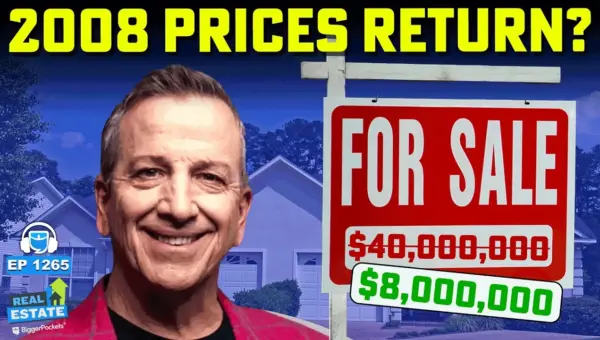
Real Estate Prices Mirror 2008 as Opportunities Emerge
Experienced investors Ken and Denil McElroy see current market conditions as a prime buying opportunity, with property prices mirroring 2008 levels. While the single-family market shows little distress due to low mortgage rates, the multifamily sector presents deeply discounted assets for those willing to negotiate and reposition properties. Their advice centers on fixed-rate debt, low loan-to-value ratios, and a focus on cash flow to navigate market cycles.


Buy Below Median for Safer Investment Returns
Buying investment properties above the median home price carries significant risk of financial loss, even at a discount. Smart investors focus on lower-priced homes to ensure positive cash flow and insulate themselves from market downturns.


Cash Flow Beats Debt Freedom for Security
While paying off all debt offers peace of mind, generating consistent cash flow may provide greater financial security. This income stream can cover living expenses and offer flexibility in uncertain economic times, challenging the traditional focus on debt freedom.