Global Crisis Looms: US Debt, AI, and Digital Control Grid
Escalating global tensions and the closure of the Strait of Hormuz point towards a potential economic crisis. Experts warn that U.S. debt levels, combined with AI advancements, could lead to a new digital financial control system where corporations distribute U.S. debt via digital wallets, posing significant risks of financial control.

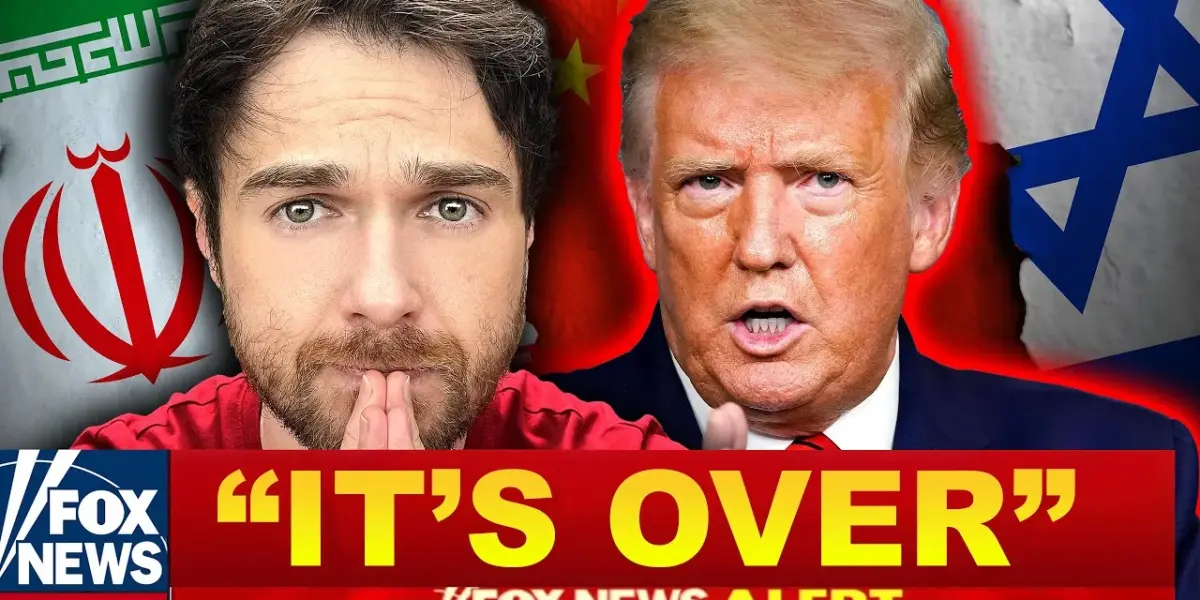
Global Crisis Looms: US Debt, AI, and Digital Control Grid
Recent pronouncements from the U.S. President, instead of signaling an end to ongoing global conflicts, have heightened tensions. Remarks warning Iran of severe consequences if a deal isn’t reached, including the potential destruction of infrastructure, sent ripples through financial markets. Stock market futures dipped, oil prices surged further, and Bitcoin saw a decline. These reactions are tied to the continued closure of the Strait of Hormuz, a critical global oil chokepoint responsible for 20 million barrels of oil daily.
Data tracking tanker movements shows a significant drop in transit calls, indicating the Strait remains effectively closed. Economists warn that if this situation persists for another two to three weeks, it could push the global economy to a breaking point. Some theories suggest this potential crisis might be part of a planned event to usher in major changes to the world and its monetary systems, drawing parallels to how past crises have presented opportunities for significant shifts.
The ‘Great Reset’ and Historical Precedents
The concept of a “Great Reset” has gained traction, particularly following global events like the pandemic. Prominent figures, including the founder of the World Economic Forum, have described the pandemic as a unique window to rethink and reset the world. This aligns with a historical pattern where crises, whether real or perceived, have often led to increased centralization of wealth and power.
Examples include the 2008 financial crisis, which saw the Federal Reserve implement quantitative easing, and the 2020 pandemic, which led to widespread economic shutdowns and discussions about global economic coordination. Historically, every major crisis has been followed by an outcome that concentrates power and wealth among fewer entities. The question facing markets and policymakers is not if a crisis will occur, but what the next one will be and how it might be used to centralize more power.
America’s Financial Vulnerability: The Net International Investment Position
A key economic indicator to watch is the U.S. Net International Investment Position (NIIP), which measures America’s financial balance with the rest of the world. Currently, this figure stands at a negative 87% of GDP. This means foreigners own significantly more U.S. assets than Americans own foreign assets. For perspective, after the first Gulf War, the NIIP was -7%, and after the 2008 crisis, it was -15%.
Over years, the U.S. has sold vast amounts of its assets, including stocks, real estate, and Treasury bonds, to countries like China, Europe, and Japan. Foreigners now hold approximately $70 trillion in U.S. dollar assets, with $9.4 trillion alone in U.S. Treasury bonds. This situation becomes precarious as many of these same nations rely heavily on oil passing through the Strait of Hormuz. With the Strait closed and oil priced in dollars, these countries will need dollars to purchase oil. A primary source for these dollars is their holdings of U.S. assets.
The Bond Market’s Danger Zone
Foreign central banks have already begun reducing their holdings of U.S. Treasuries, with holdings at the New York Fed reaching their lowest point since 2012. Tens of billions of dollars have left these holdings in just four weeks. This selling pressure can cause Treasury yields to rise. As yields increase, the cost of financing America’s nearly $40 trillion national debt escalates.
The 10-year Treasury yield, which was in the low 3% range when the conflict began, has been climbing. Economists point to a danger zone for bond yields between 4.6% and 4.8%. Reaching this level could trigger a “debt death spiral.” This occurs when higher borrowing costs lead to larger deficits, necessitating more borrowing, which in turn drives rates even higher—an unsustainable loop. Given the U.S. debt level, this spiral could accelerate rapidly.
Potential U.S. Responses and Their Consequences
There are three primary outcomes the U.S. might face:
- Outcome 1: Let Yields Rise. Allowing Treasury yields to climb to 5-6% or higher would likely crush the U.S. stock market. Investors would opt for safer bond returns. This would also reduce tax revenues, explode deficits, weaken housing, collapse consumer spending, and lead to bank losses, potentially triggering a recession. Given the negative NIIP, this recession could drag the global economy down with it.
- Outcome 2: Print Money Amidst Rising Oil Prices. The Federal Reserve could engage in quantitative easing (QE), buying Treasuries to cap yields and control the yield curve. However, injecting liquidity into an economy facing an oil shock could lead to severe inflation, potentially making the 2021 inflation rates seem mild, with double-digit or worse inflation possible.
- Outcome 3: Withdraw from the Conflict. Announcing a retreat from the conflict might seem appealing. However, if the U.S. withdraws and fails to reopen a critical shipping lane, it could signal a decline in American global power and influence, potentially accelerating the shift away from the dollar as the world’s primary reserve currency, similar to Britain’s loss of global dominance after its “Suez Canal moment” in 1956. This could also lead to inflation and a weaker dollar.
Based on current trends, Outcome 2—printing money to counter rising oil prices—appears the most likely path. This would involve the Fed’s balance sheet expanding again, a scenario often referred to as “money printer go brrr.”
The Evolution of Quantitative Easing and Inflation
The type of QE matters significantly for investment portfolios and inflation. Type 1 QE, seen in 2008, involved the Fed buying toxic assets directly from banks to clean up their balance sheets. This was largely contained within the banking system and did not directly flood the broader economy with new money, thus avoiding significant consumer price inflation.
Type 2 QE, implemented in 2020, was different. The Fed bought assets from non-banks, corporations, and pension funds. The proceeds from these sales were deposited into bank accounts, creating new money that entered the broader economy. With no corresponding increase in the supply of goods and services, this led to significant inflation approximately 12-18 months later, with CPI reaching 9%. This type of QE is considered inflationary.
The Next Phase: Debt Privatization and Digital Control
Looking ahead, two core problems central planners may seek to address are the displacement of jobs by AI and automation, and the escalating U.S. national debt. The theory suggests a future where AI-driven abundance might necessitate universal basic income (UBI), potentially leading to a more politically engaged populace. Simultaneously, the growing U.S. debt needs a global distribution mechanism.
The proposed solution involves a digital currency system. The idea is to privatize U.S. debt and upload it globally. Major corporations could act as banks, offering digital wallets that hold U.S. Treasuries as backing. Consumers would use these corporate wallets, earning rewards or yields, while unknowingly becoming creditors to the U.S. government. This system could fund government operations, manage UBI payments for those displaced by AI, and provide central planners with unprecedented financial control.
Legislation like the “Genius Act” is seen as a step in this direction, requiring companies issuing stablecoins to hold U.S. Treasuries as collateral. Companies like Tether already hold over $120 billion in U.S. Treasuries, serving as a test case. This model, scaled across major corporations like Tesla, Apple, and Amazon, could distribute trillions in debt globally.
The Risks of a Digital Financial Control Grid
While this system might offer convenience and yield, it also presents the risk of creating a sophisticated financial control grid. Companies like Tether have already demonstrated the ability to freeze wallets and sanction addresses. Scaling this capability to a system where every major corporation’s digital wallet is regulated by U.S. law could give authorities the power to turn off access to funds based on various criteria—political speech, health choices, or consumption patterns.
This system would be able to target individuals globally, irrespective of their country’s laws. The potential response from opposing nations could involve disabling app stores or the internet. The concerning aspect is that participation in this system might be voluntary, with individuals already signed up through existing apps and services.
Preparing for Uncertainty
Regardless of the specific crisis—be it stagflation, hyperinflation, war, or lockdowns—the development of a digital financial control grid is seen as a potential opportunity for centralization. To prepare, experts suggest securing real assets, using cash, building local networks, and developing skills. Self-custody of assets, such as holding physical gold and silver, is also recommended over digital or ETF versions, as these are harder to track and control digitally.
Staying informed about these complex financial developments is crucial. Understanding the directional trends, even if specific predictions are uncertain, can help individuals make better choices about protecting their assets outside of centralized digital systems. Due diligence and personal research are strongly encouraged.
Source: The War Is About To Get A Lot Worse (YouTube)

Related Articles


NVIDIA Unveils Free, Open AI Model
NVIDIA has launched Nemotron 3 Super, a powerful AI assistant that is completely free and open-source. It matches the performance of top proprietary models from a year ago but is significantly faster, especially with its NVFP4 version. This release democratizes access to advanced AI technology.

Iran Crisis Sparks Global Economic Shocks, Expert Warns
Economist Mohamed El-Erian warns that the Iran crisis is triggering a multi-phase economic shockwave across the globe. He explains how rising energy prices, inflation, and potential demand destruction are impacting nations, with Asia and Europe facing the brunt. El-Erian also points to a broader trend of increased global instability and weakened rule of law as drivers of these violent economic events.


AI Will Plan Your Trips with Google Maps
Google's new 'Ask Maps' feature uses AI to help plan your life, while a tech policy expert argues cookie banners are broken and should be removed. Learn about the future of AI-powered navigation and the debate over online privacy tools.