New Missiles Outsmart Israel’s Billion-Dollar Shield
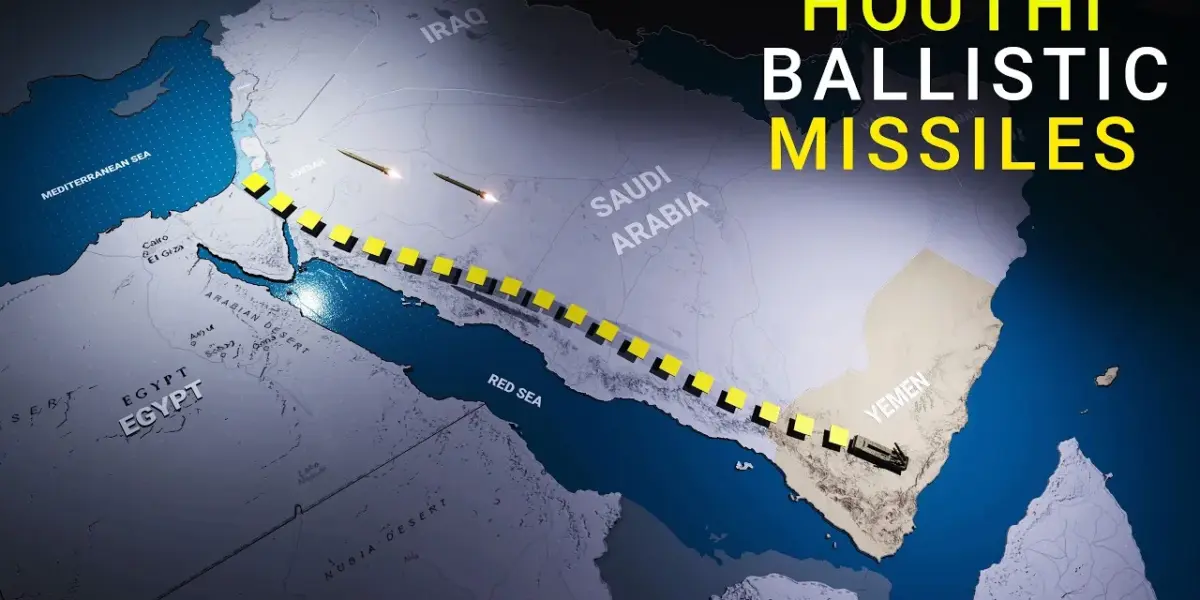
New Iranian-engineered ballistic and semi-hypersonic missiles used by the Houthis have shown a surprising ability to bypass Israel's advanced Iron Dome and Arrow defense systems. These weapons' maneuverability and skip-gliding flight paths confuse traditional radar, highlighting a vulnerability in even the most sophisticated defenses and signaling a shift in asymmetric warfare.

New Missiles Outsmart Israel’s Billion-Dollar Shield
Israel’s advanced defense systems, including the Iron Dome and Arrow networks, are designed to protect the country from missile attacks. However, a recent strike by the Houthi rebels from over a thousand miles away highlighted a critical vulnerability. The Houthis used Iranian-engineered ballistic and semi-hypersonic missiles that employed a tricky flight path, managing to bypass these sophisticated defenses.
The Secret is Maneuverability
Unlike older ballistic missiles that follow a predictable, arcing path, these newer weapons can change direction mid-flight. They shift their course at extremely high speeds, confusing the radar systems that are built to track expected trajectories. This was evident with the Houthi’s “Palestine 2” missile, described as a hypersonic ballistic weapon reportedly reaching speeds up to Mach 16. Such speed, combined with the ability to change course, gave Israel’s defense systems very little time to react effectively.
A Skip-Gliding Mechanism
Experts believe the missile’s ability to change course mid-flight is thanks to a sophisticated “skip-gliding” mechanism. Instead of a simple arc, the missile can essentially bounce along the edge of the atmosphere. This allows it to adjust its path in ways that make interception incredibly difficult. While not fully hypersonic in the traditional sense, this semi-hypersonic design allows for sharp, unpredictable maneuvers that older ballistic missile defense systems like Israel’s Arrow 3 and the U.S.-made THAAD are not designed to counter.
Adding to the challenge, there’s speculation the missile may have flown at a lower altitude than usual. This could have allowed it to slip under the radar coverage that typically guards against high-flying threats. The Palestine 2, based on Iran’s advanced missile technology, features a hypersonic glide vehicle that detaches. This allows the missile to maneuver and glide at speeds between Mach 5 and 16. Its range is around 1,500 km, similar to its predecessor, the Palestine 1 (Fattah 1). The key difference is its ability to accelerate outside the Earth’s atmosphere and use aerodynamic controls to evade systems like the Arrow.
A Shift in Power Dynamics
This incident highlights a significant trend: non-state actors are gaining access to advanced weaponry previously only held by major world powers. The Houthi militia possessing such a missile poses a serious threat not just to Israel but also to naval forces like the U.S. Navy. To understand this development, we need to look at Iran’s missile capabilities and Israel’s defense strategies.
Understanding the Technology
Iran has a history of using ballistic missiles, including variants of the Shahab 3, as the basis for its medium-range weapons. These missiles typically use liquid propellant and can carry substantial warheads. The basic flight path involves launching vertically, ascending outside or near the edge of the atmosphere, then separating the warhead to descend towards the target. Older Scud variants had a significant margin of error, meaning half of the missiles fired might land within a 300-450 meter radius of the target.
Israel’s Multi-Layered Defense
Israel’s defense system is built in layers. The long-range Arrow system is designed to intercept missiles outside the atmosphere, specifically targeting threats like those from Iran. Each Arrow interceptor costs millions of dollars. Below that is the David’s Sling system, designed for missiles and drones. Finally, the Iron Dome handles short-range rocket attacks.
The Arrow system can target threats up to 1,500 miles away, while David’s Sling has a range of about 180 miles, and Iron Dome covers around 40 miles. Despite this multi-layered approach, the recent attack saw many missiles get through. The primary reason was the glide vehicle’s ability to change trajectory after separating from its booster. This maneuverability confused the Arrow missiles, allowed the attack to bypass David’s Sling, and ultimately overwhelmed the Iron Dome, which is not equipped to handle hypersonic threats like the Fattah 2.
The Cost of Defense
The financial implications of such attacks are staggering. In one instance, Iran reportedly spent over $200 million on launching ballistic missiles and drones. Israel, in contrast, spent $1 billion to defend itself. This cost disparity is significant: an Iranian ballistic missile might cost around $200,000, while a single Arrow interceptor can cost millions. David’s Sling interceptors cost around $1 million, and Iron Dome missiles range from $20,000 to $100,000. Iranian drones are even cheaper, costing $20,000 to $50,000 each.
How the Arrow Works
The Arrow system includes the missile launcher, the Green Pine radar, and the Arrow missile itself. The radar is crucial for detecting and guiding interceptors. The Arrow missile is a two-stage weapon. It uses solid propellant boosters for initial launch and acceleration. The key component is the “kill vehicle” at the front, which has its own propulsion system and a seeker to track the target. Unlike some U.S. systems like THAAD that use divert attitude control thrusters, the Arrow 3 kill vehicle uses a thrust vectoring nozzle with solid fuel. This allows for adjustments to its trajectory based on updated radar data, which is vital for intercepting high-speed targets. However, if the kill vehicle cannot fully adjust its course to a newly identified target, the interception can fail.
Why This Matters
This incident reveals a critical shift in military technology and asymmetric warfare. The ability of a non-state actor like the Houthis to deploy advanced, maneuverable missiles challenges the effectiveness of even the most sophisticated and expensive defense systems. It suggests that the arms race is not just about speed and range, but also about unpredictability and evasion. This forces nations to rethink their defense strategies and investments, potentially leading to a new generation of interceptor technologies designed to counter these evolving threats. The economic disparity in attack versus defense costs also raises questions about the long-term sustainability of purely defensive measures against a determined adversary.
Implications and Future Outlook
The success of these maneuverable missiles indicates that current defense networks may need significant upgrades or complete redesigns. We could see a future where defense systems rely more on artificial intelligence for real-time threat assessment and rapid course correction, or perhaps even novel methods of electronic warfare to disrupt missile guidance. The proliferation of such technology to other non-state groups is a serious concern, potentially destabilizing regions further. For the U.S. and its allies, this means a constant need to adapt and innovate to stay ahead of emerging threats. The focus may shift from simply intercepting missiles to disrupting their launch or guidance systems earlier in their flight path.
Historical Context
The development of ballistic missile defense systems like Israel’s Arrow dates back decades, largely driven by concerns over missile programs in countries like Iran. Early ballistic missiles, like the Soviet Scud, were relatively inaccurate. However, advancements in guidance systems and propulsion have led to more precise and faster weapons. The concept of hypersonic weapons, traveling at speeds above Mach 5, has been a focus for major military powers for years. What is new is the apparent success of these technologies falling into the hands of groups like the Houthis, who can then use them to challenge established military superiority.
Source: Why Israel’s Billion-Dollar Defense System Missed Houthi Missiles (YouTube)

Related Articles

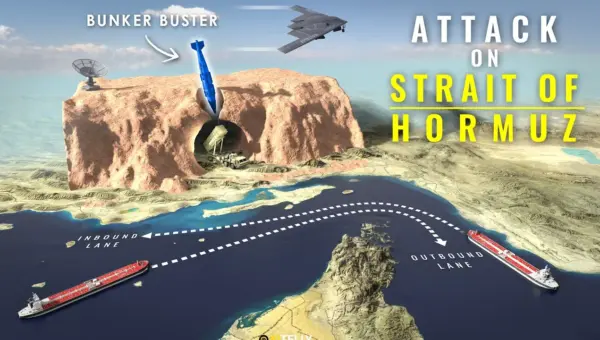
Iran’s Strait of Hormuz Trap: How the US Fights Back
Iran's strategy to control the Strait of Hormuz involves using islands as bases for anti-ship missiles and launching swarm attacks with small boats. The US counters with advanced defense systems, surveillance drones, and powerful bunker-buster bombs, highlighting the ongoing tension in this vital global shipping lane.

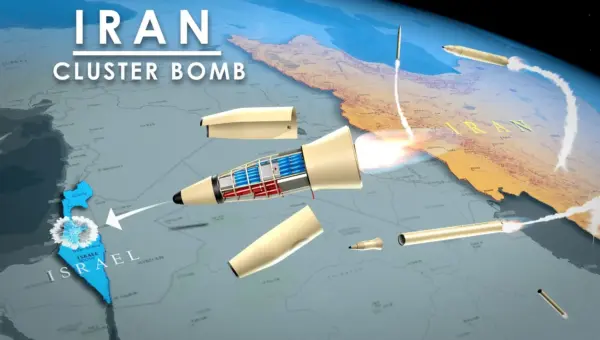
Iran’s Cluster Bombs: A Calculated Gamble to Overwhelm Defenses
Iran's use of cluster bombs against Israel was a deliberate tactic to overwhelm advanced missile defenses. These weapons scatter numerous smaller explosives, making interception difficult. While tactically advantageous, they raise serious humanitarian concerns due to their indiscriminate nature and unexploded ordnance.


Iran’s Shadow Navy Fuels Global Oil Price Fears
Iran's conventional navy may be weakened, but its IRGC Navy employs asymmetric tactics that continue to threaten global oil shipping. This shadow force's ability to disrupt the Strait of Hormuz can create market uncertainty and drive up gas prices, proving that military victories aren't always clear-cut.