US Replicates Iran’s Deadly Drone, But Makes It Smarter
The US has reverse-engineered Iran's Shahed drone, creating its own Lucas version. While externally similar, the Lucas boasts advanced terrain-matching navigation, allowing it to strike with pinpoint accuracy even without GPS. This highlights a trend towards affordable, high-tech drone warfare.

US Replicates Iran’s Deadly Drone, But Makes It Smarter
The United States has taken a page from Iran’s playbook, essentially copying the design of a cheap but effective Iranian drone. This move highlights how simple, low-cost technology can have a major impact on modern warfare. The original Iranian drone, known as the Shahed 136, is a basic but deadly weapon. Its design focuses on simplicity and mass production, making it a cost-effective way to overwhelm enemy defenses.
The Iranian Shahed: A Discount Cruise Missile
Iran’s Shahed 136 drone is described as a “discount cruise missile.” It costs around $35,000, a stark contrast to the $2.5 million price tag of a US Tomahawk missile. This low cost allows for large numbers of drones to be deployed, a tactic known as swarming. The Shahed 136 is designed as a “blind flying bomb,” intended to be launched in large groups to overwhelm enemy air defense systems.
The drone’s attack method is straightforward. When its warhead hits a target, a firing pin strikes a primer, setting off a detonator and causing a large explosion. The Shahed carries a warhead weighing between 40 to 50 kilograms, designed to produce both a blast wave and a spray of metal fragments. When it’s time to hit the target, the drone dives steeply at an 80-degree angle, leaving defenders very little time to react.
However, the Shahed 136 is not without its limitations. Its precision relies on commercial inertial navigation systems, like Russia’s GLONASS, which can be jammed or disabled. The drone also uses a simple engine, similar to a scooter engine, which can make a terrifying, siren-like sound as it dives, reminiscent of World War II dive bombers. This sound is intended to create psychological fear on the battlefield.
The American Lucas: Smarter, Not Just Cheaper
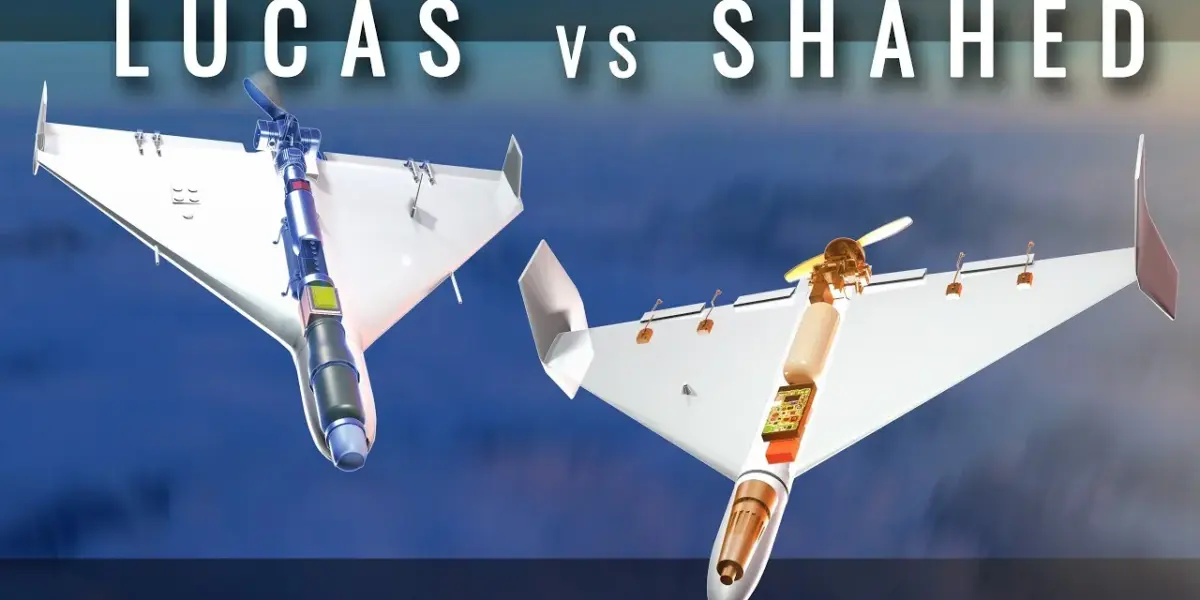
The US, after capturing and studying an Iranian Shahed 136, developed its own version called the Lucas drone. While the exterior looks almost identical to the Shahed, featuring the same delta-wing frame, the internal technology is vastly different. The US didn’t just copy the design; they significantly upgraded it, focusing on advanced navigation and targeting capabilities.
The key difference lies in the navigation system. Instead of relying solely on GPS, which can be jammed, the Lucas drone uses advanced optical terrain matching software. This technology allows the drone to “look down” and identify its location by comparing the landscape below with highly detailed 3D topographical maps stored in its memory. This system is similar to the technology found in Tomahawk cruise missiles but at a fraction of the cost.
When the GPS signal is lost, the Lucas drone seamlessly switches to its backup system, known as digital scene matching area correlation. A high-definition camera on the drone captures images of the terrain, such as ridges, rivers, and roads. An onboard artificial intelligence compares these live images to the pre-loaded maps, identifying landmarks to pinpoint the drone’s exact location, altitude, and speed. This allows the drone to navigate and correct its course even in GPS-denied environments.
The Lucas drone is also equipped to handle mobile targets, like tanks. With a specialized anti-tank warhead, it can fire a molten metal slug through heavy armor, functioning much like a rocket-propelled grenade (RPG). This makes it a versatile weapon capable of destroying armored vehicles.
Range and Intentional Trade-offs
There are differences in range between the two drones. The Iranian Shahed 136, with its larger engine and fuel capacity, can travel between 2,000 to 2,500 kilometers. The US Lucas drone, however, has a shorter range of about 800 kilometers. This reduced range is a deliberate choice by the US military. They traded long-distance capability for enhanced precision guidance and the ability to dynamically reassign the drone to new targets while it’s in the air.
Interestingly, when US engineers examined the captured Iranian Shahed drone, they found it already contained American-made GPS modules and microchips. This suggests a complex global supply chain for drone components, even for weapons used by adversaries.
Why This Matters
The development of drones like the Shahed and Lucas highlights a significant shift in military technology. Low-cost, precision-guided munitions are becoming increasingly important. These drones offer a cost-effective way to achieve battlefield objectives that previously required much more expensive and complex systems.
The US adoption and improvement of the Iranian drone design show a willingness to learn from potential adversaries. It also demonstrates how advanced technology can be integrated into simpler platforms to create highly effective weapons. The emphasis on terrain matching and AI-powered navigation suggests a future where drones can operate with greater autonomy and accuracy, even in challenging electronic warfare environments.
Implications and Future Outlook
The proliferation of these types of drones raises concerns about global security. Their affordability and effectiveness could make them accessible to a wider range of actors, including non-state groups. The ability of drones to swarm and overwhelm defenses, combined with precision targeting, presents a serious challenge to traditional military strategies.
The trend towards increasingly sophisticated but still relatively inexpensive unmanned aerial vehicles is likely to continue. Future developments may focus on further improving AI capabilities, enhancing electronic warfare resistance, and developing specialized payloads for various targets. The competition to develop and counter these drone technologies will remain a critical aspect of modern defense planning.
Historical Context
The concept of swarming attacks is not new; it has roots in historical military tactics. The use of flying bombs and guided missiles has evolved significantly since World War II. Early examples, like the German V-1 flying bomb, paved the way for modern cruise missiles and drones. The German Stuka dive bomber’s siren was an early example of using sound for psychological impact, a tactic echoed in the Shahed’s engine noise.
The development of GPS and advanced computing has allowed for the miniaturization and integration of complex guidance systems into small, affordable platforms. This has democratized precision strike capabilities, moving them from the exclusive domain of major military powers to a more accessible level.
Conclusion
The story of the US Lucas drone and its Iranian counterpart, the Shahed 136, is a fascinating case study in modern military innovation. It shows how a basic, low-cost design can be adapted and enhanced with advanced technology to create a formidable weapon. The US has taken Iran’s effective but simple drone and given it a “brain,” enabling it to navigate and strike with unparalleled precision, even when electronic signals are jammed. This evolution underscores the dynamic nature of drone warfare and its growing importance on the global stage.
Source: US LUCAS vs Iran Shahed Drone | Explained in Detail (YouTube)

Related Articles

US Aims to Cripple Iran’s Power Grid to Secure Strait of Hormuz
A new US strategy reportedly targets Iran's power grid, including major plants like Damavand, to force open the Strait of Hormuz. The plan involves multi-stage air attacks using advanced bombers and precision munitions to cripple energy infrastructure and cause cascading failures.


US Air Power Strikes Iran, Warns on Strait of Hormuz
The U.S. military has conducted air strikes on Kharg Island, Iran, targeting military assets. This action follows President Trump's ultimatum for Iran to reopen the Strait of Hormuz. The U.S. warns of further infrastructure action if Iran fails to comply.
US Strikes Iran’s K Island, Targeting IRGC Hub
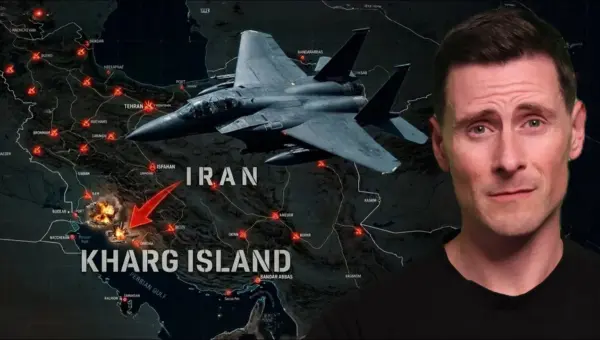
U.S. forces launched precise strikes on Iran's K Island, a key IRGC naval and logistics hub. The operation targeted military infrastructure, avoiding oil terminals, in an effort to degrade Iran's threat to maritime shipping in the Straits of Hormuz. The move signals a significant escalation amid heightened regional tensions.