A-10 Warthog Defies Retirement in Hormuz Strait
The U.S. Air Force's plan to retire the A-10 Thunderbolt faces a challenge in the Strait of Hormuz. Its unique design, built for low-and-slow flight and extreme durability, makes it essential for countering small boats and drones in the narrow waterway. The Warthog's ruggedness and specialized firepower prove its continued value.

A-10 Warthog Defies Retirement in Hormuz Strait
The U.S. Air Force has wanted to retire the A-10 Thunderbolt, nicknamed the “Warthog,” for years. The goal was to save money and focus on newer, fifth-generation stealth fighters like the F-35. However, the unique challenges of the Strait of Hormuz have made this older aircraft temporarily essential.
Why the A-10 is Perfect for the Strait
The Strait of Hormuz presents a very specific kind of battlefield. It’s a narrow, busy waterway with many small islands and coastal areas. Threats can come from many directions at once, often from small, fast boats or drones. Modern jets typically fly very fast and high, which makes it hard for them to spot and track these small, agile targets in such a crowded environment.
The A-10, on the other hand, is designed to fly low and slow. This allows pilots to clearly see and identify small, erratic targets. Another major advantage is its ability to stay in the air for a long time. The A-10 can circle the Strait for hours, waiting patiently for threats to appear from hidden coves before attacking. This persistent watch is something faster jets can’t easily do.
Built to Survive
The Strait of Hormuz is also defended by dangerous weapons, like portable anti-aircraft systems and small arms. The A-10 is built to take a beating. Its cockpit is protected by a thick titanium “bathtub” armor, and its flight systems are designed to keep working even if parts are damaged. This ruggedness means it can absorb heavy fire and keep flying, a risk the military might be less willing to take with a much more expensive F-35.
The A-10 isn’t operating alone. It works as part of a larger team. It flies with Apache attack helicopters, which also hunt boats and drones. This teamwork creates a strong defense network in the Strait.
A Look Under the Hood: The Warthog’s Engineering
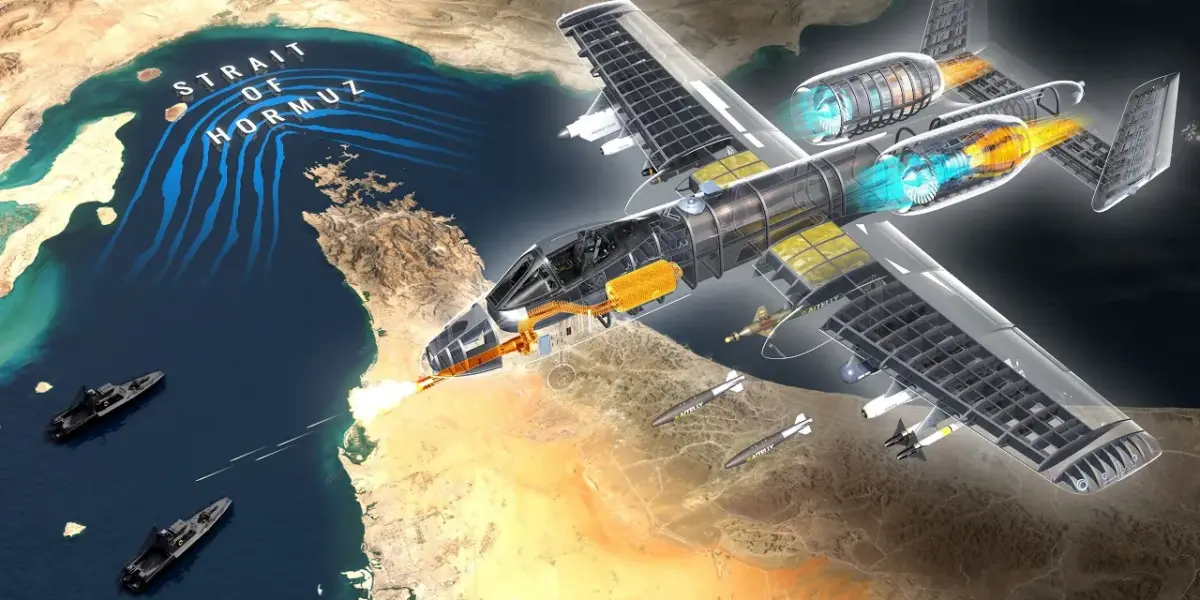
The reason the A-10 keeps flying comes down to its tough design. The aircraft is mainly made of aluminum alloys. Its body has strong beams running through the length of the plane and wings, giving it great strength. Because it flies low to support troops on the ground, it often faces enemy fire. Its strong frame can handle a lot of damage. The armor around the cockpit and critical parts makes it very durable.
The A-10’s most famous feature is its massive gun. This is the GAU-8 Avenger, a 30mm cannon with seven barrels. It can fire 3,900 rounds per minute. This gun is so big that the plane’s landing gear had to be moved to the sides to make space for it. The gun is also angled slightly downward to help balance the powerful recoil it creates.
The ammunition for the GAU-8 is enormous, much larger than a standard bullet or even a .50 caliber round. These 30mm rounds are designed to penetrate thick steel armor. The plane carries over 1,100 rounds for the gun, and reloading it can take hours.
Staying Safe and Aware
To protect itself from missiles, the A-10 has radar warning receivers. These are placed around the plane, including on the wings and tail. They can detect when a radar is trying to lock onto the aircraft. When this happens, the pilot is alerted, and the plane can release flares to trick heat-seeking missiles. This system is vital for a ground-attack jet that flies at low altitudes.
Flying the Warthog
Getting into the A-10 is also unique. It has a built-in ladder to climb into the cockpit, making it one of the few military jets with this feature. Inside, the controls are clearly labeled. The pilot uses a stick for control, with a button for releasing weapons and a trigger for the gun.
To fire the GAU-8, the pilot arms the gun and locks onto a target. They then hold the trigger to aim and squeeze it fully to unleash a barrage of fire powerful enough to destroy tanks.
For bombing runs, the pilot dives towards the target and releases the bomb partway through the maneuver. Physics helps the bomb keep moving forward at the plane’s speed, and GPS guidance helps it hit the target precisely. The cockpit displays show the pilot where the plane is going and where the bomb is expected to land, helping them align it correctly.
Support on the Ground
In a combat situation, the A-10’s mission is to support troops pinned down by enemy fire. After receiving target information, the A-10s fly low, using the terrain for cover. They communicate constantly with ground units. Once in position, they use their powerful gun and can also fire missiles like Hellfires at moving targets. Even after the first attack, the A-10s often stay nearby to provide ongoing support as ground troops advance.
Engine Design and Fuel
The A-10’s engines are mounted high on its body. This design helps prevent damage from debris when flying on rough or damaged airfields. The engines work by drawing in air, compressing it, mixing it with fuel, and burning it. The hot gas expands and spins turbines, which drive the compressor and fan. The exhaust gases create thrust.
The engines produce exhaust that is cooler and slower than some other jets. This reduces the plane’s heat signature, making it harder for infrared sensors to detect. The A-10 has four fuel tanks, holding a large amount of fuel – enough to fill about 20 school buses.
Flight Controls
The A-10 has large flaps and slats on its wings. When extended, these change the wing’s shape and surface area. This helps the plane fly smoothly at slow speeds, during takeoff and landing, and during sharp turns. The rudder on the tail controls side-to-side movement. Air brakes, large panels that extend from the body, create drag. They allow the A-10 to slow down quickly without losing control, which is crucial for precise attacks.
Starting the Warthog
Starting the A-10 involves a sequence of steps: setting the inverter, turning on battery power, starting the auxiliary power unit (APU), and then starting each engine one by one. Once both engines are running, the APU is turned off. Finally, the displays are set for day or night operations, and the plane is ready for takeoff.
Why This Matters
The continued use of the A-10 in places like the Strait of Hormuz highlights a key debate in military aviation: the balance between advanced technology and proven, specialized capabilities. While the Air Force pushes for expensive, stealthy, multi-role fighters, the A-10’s unique design makes it incredibly effective in specific, dangerous situations where its durability, loitering ability, and heavy firepower are unmatched. This shows that even in an era of advanced technology, older, well-designed aircraft can remain vital assets, especially when their specific strengths match the threats encountered.
Implications and Future Outlook
The A-10’s temporary indispensability in the Strait of Hormuz suggests that the military might need to reconsider its retirement timeline. The unique geography and the specific nature of the threats there – small, fast boats and drones – play directly to the Warthog’s strengths. This situation could lead to a debate about whether a diverse fleet, including specialized aircraft like the A-10, is more effective than relying solely on a few high-tech, multi-role platforms. The future might involve finding ways to keep the A-10 operational longer or developing new aircraft that can replicate its unique capabilities in environments where stealth and speed are less critical than survivability and persistent presence.
Historical Context
The A-10 Thunderbolt II was designed in the 1970s specifically for close air support during the Cold War. Its primary mission was to destroy Soviet tanks and armored vehicles. The design focused on survivability, firepower, and low-speed maneuverability. Its distinctive shape and the massive GAU-8 cannon quickly made it a legend. Despite being a single-mission aircraft, its ruggedness and effectiveness in ground combat led to it being widely used in conflicts like the Gulf War and operations in Afghanistan and Iraq. The Air Force has sought to replace it for decades, seeing it as too slow and vulnerable for modern air combat, but its continued relevance in specific scenarios, like the current operations in the Strait of Hormuz, proves its lasting value.
Source: A-10's Ruthless Hunt in the Strait of Hormuz? (YouTube)

Related Articles

US Aims to Cripple Iran’s Power Grid to Secure Strait of Hormuz
A new US strategy reportedly targets Iran's power grid, including major plants like Damavand, to force open the Strait of Hormuz. The plan involves multi-stage air attacks using advanced bombers and precision munitions to cripple energy infrastructure and cause cascading failures.
Marines’ Hovercraft: Iran Invasion’s Secret Weapon
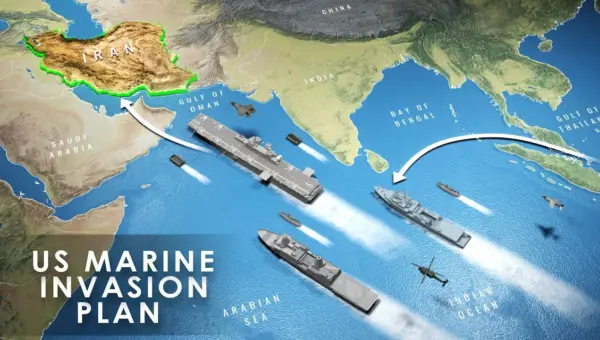
Big aircraft carriers can't handle Iran's coastal defenses. U.S. Marines use specialized amphibious ships and hovercraft to clear the Strait of Hormuz. These vessels bring troops and heavy equipment ashore, securing territory and creating safe zones.


US Air Power Strikes Iran, Warns on Strait of Hormuz
The U.S. military has conducted air strikes on Kharg Island, Iran, targeting military assets. This action follows President Trump's ultimatum for Iran to reopen the Strait of Hormuz. The U.S. warns of further infrastructure action if Iran fails to comply.